
Abiotic synthesis refers to the formation of organic compounds using non-living agents like light, temperature, and pressure, essential for CSIR NET Life Sciences exam preparation, which involves understanding the Abiotic synthesis of organic monomers and polymers for CSIR NET.
Syllabus: Physical Chemistry for CSIR NET – Atkins, Physical Chemistry
Preparing for the CSIR NET Life Sciences or Chemical Sciences exam can feel like an absolute marathon. One minute you are memorizing metabolic pathways, and the next, you are staring at physical chemistry equations wondering how it all connects. If you are tracking the syllabus, you know that understanding how the basic building blocks of life first came together is a major milestone.
That is where abiotic synthesis of organic monomers and polymers comes into play. It is a core concept that bridges the gap between raw chemistry and the birth of biology. Let’s break it down together—no heavy, dry textbook jargon required.
Overview: Abiotic Synthesis of Organic Monomers and Polymers for CSIR NET
To get a grip on Abiotic synthesis of organic monomers and polymers, let’s look at the word “abiotic.” Literally, it means “without life.” So, abiotic synthesis is just the chemical process of creating organic molecules from scratch without any living organisms helping out.
Think of early Earth as a massive, chaotic kitchen before anyone actually showed up to cook. You had a wild mix of gases, intense heat from volcanic activity, constant bombardment by UV radiation, and massive lightning storms. Abiotic synthesis is what happened when those non-living energy sources essentially shook up that raw chemical soup and forced simple molecules to bond into complex ones.
For the CSIR NET exam, you need to know how this chaotic environment managed to produce two things:
Monomers: Single building blocks like amino acids, simple sugars, and nitrogenous bases (purines and pyrimidines).
Polymers: Long chains of those building blocks linked together, forming proteins, polysaccharides, and nucleic acids.
At VedPrep, we always remind students that checking out the thermodynamics behind these reactions is half the battle. The transition from a simple gas to a complex polymer requires a lot of energy, and figuring out how nature bypassed that energy barrier is exactly what the examiners love to test.
Abiotic synthesis of organic monomers and polymers for CSIR NET
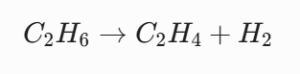
As per Abiotic synthesis of organic monomers and polymers, a classic textbook example used to explain this non-living chemistry is the transformation of ethane (C2H6) into ethylene (C2H4). While this specific reaction is a staple in industrial chemistry today, it perfectly mirrors the dehydrogenation reactions that happened under prebiotic conditions.
Let’s look at how this happens abiotically. Imagine you have ethane gas passing over a hot, metallic mineral surface on early Earth—say, a patch of platinum or palladium tucked away near a hydrothermal vent.
The Reaction Mechanism
Adsorption: The ethane molecule lands on the catalyst’s surface and sticks to it.
First Radical Formation: The intense heat (around 773 to 873 K) weakens the bonds, and the surface pulls away a hydrogen atom, leaving a highly reactive radical behind.
The Double Bond: A second hydrogen atom gets stripped away. The remaining carbons are forced to share a double bond to stay stable, creating ethylene and releasing hydrogen gas (H2).
For your prep, remember the recipe: high temperatures, low pressures, and a solid catalytic surface. Based on Abiotic synthesis of organic monomers and polymers, change any of these variables, and the reaction equilibrium shifts completely.
Importance: Abiotic synthesis of organic monomers and polymers
Here is a trap that trips up a lot of aspirants during mock tests. People often mix up abiotic synthesis with biogenic synthesis.
Let’s clear the air with a quick comparison:
| Feature | Abiotic Synthesis | Biogenic Synthesis |
| Driving Force | Non-living agents (UV light, lightning, thermal energy) | Living cells and metabolic machinery |
| Catalysts | Mineral surfaces, clay, heavy metals | Enzymes (like RNA polymerase or ribosomes) |
| Environment | Prebiotic earth, meteorites, hydrothermal vents | Inside a living organism or cellular matrix |
Imagine a fictional scenario where an alien spacecraft lands on a barren, sterile asteroid and collects a rock sample. Back in the lab, they find complex amino acids inside that rock. Because there are absolutely no microbes or trees on that asteroid, those amino acids were built via abiotic synthesis—likely triggered by space radiation hitting cosmic ice. On the flip side, when your own liver cells link amino acids together to make albumin, that is biogenic synthesis.
Industrial Applications of Abiotic synthesis of organic monomers and polymers for CSIR NET
We aren’t just talking about ancient history here. Human beings have actually copied these exact prebiotic principles to build the modern world. Take polyethylene, the most common plastic on Earth used for everything from grocery bags to shampoo bottles.
As per Abiotic synthesis of organic monomers and polymers, we take ethylene monomers (which we get from cracking petroleum) and link them together into massive polymer chains. Instead of waiting for a random lightning strike, we speed things up using specialized tools like Ziegler-Natta catalysts.
The industrial setup runs at high temperatures (100–200°C) and high pressures (10–20 bar). It is a pure, controlled version of abiotic synthesis of organic monomers and polymers happening inside a chemical plant every single day.
Key Takeaways: Abiotic synthesis of organic monomers and polymers for CSIR NET
When you sit down to study this for the upcoming exam, do not try to memorize every single reaction pathway. Instead, focus your energy on the landmark theories and experiments.
Make sure you can comfortably explain:
The Primordial Soup Hypothesis (Oparin and Haldane).
How clay minerals acts as a scaffold to line up monomers so they can polymerize without enzymes.
The basic thermodynamic hurdles of turning monomers into polymers in an environment full of water (since polymerization releases water, trying to do it in water is a major equilibrium challenge!).
Practicing dynamic questions is the best way to make these concepts stick. Our team at VedPrep regularly spots students who know the definitions by heart but falter when a question tweaks the temperature or pressure variables.
Practice Questions: Abiotic synthesis of organic monomers and polymers
Let’s look at a typical multiple-choice question you might run into during your practice sessions.
Practice Question
Amino acids are the essential building blocks of life. Which of the following statements is correct regarding the prebiotic synthesis of amino acids?
A) Amino acids can be synthesized abiotically through the interaction of lightning and simple atmospheric gases.
B) Amino acids can only be synthesized biotically by living translational machinery.
C) Amino acids cannot be formed abiotically because the peptide bond requires ATP to form.
D) Amino acids can only be formed through the breakdown of pre-existing environmental proteins.
Solution
The correct answer is A.
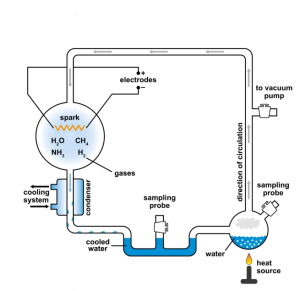
This was famously proven by the Miller-Urey experiment back in the 1950s. They set up a closed glass apparatus filled with methane, ammonia, water vapor, and hydrogen to mimic the early atmosphere. They fired electrical sparks through it to simulate lightning. Within a week, the clear water turned deep red and cloudy, packed with newly formed amino acids like glycine and alanine. It proved once and for all that nature doesn’t need a living cell to create the foundational pieces of biology.
Key Textbooks for Abiotic Synthesis and Physical Chemistry
If you want to look at the exact mathematical and thermodynamic frameworks behind these reactions, you need the right reference material. While this topic sits right at the intersection of biochemistry and physical chemistry, the core physical principles are beautifully detailed in these standard texts:
Physical Chemistry by P. W. Atkins and Julio de Paula (9th ed.) – This is your gold standard for understanding kinetics, catalysis, and surface adsorption.
Physical Chemistry: A Modern Approach by I. R. Morrison and G. S. Schweitzer (2nd ed.) – Great for breaking down complex thermodynamic equilibrium concepts into manageable pieces.
Final Thoughts
Mastering the abiotic synthesis of organic monomers and polymers gives you a massive advantage when tackling the trickier parts of the CSIR NET syllabus. It forces you to stop looking at chemistry and biology as separate subjects and helps you see them as a continuous timeline.
Keep your preparation consistent, focus on the fundamental parameters like Abiotic synthesis of organic monomers and polymers. We are all figuring out these complex systems one step at a time. VedPrep provides comprehensive guidance and specialized resources to help you navigate these intricate topics with ease.
To know more in detail from our faculty, watch our YouTube video:
Frequently Asked Questions
What are organic monomers?
Organic monomers are single units of organic compounds that can combine to form larger molecules called polymers.
What are the conditions required for abiotic synthesis?
Abiotic synthesis requires the presence of energy sources, such as lightning or ultraviolet radiation, and simple inorganic compounds, like water, ammonia, and methane.
What is the significance of abiotic synthesis in evolution?
Abiotic synthesis is significant in evolution as it provides a mechanism for the origin of organic compounds, which are essential for life.
What are some examples of abiotic synthesis?
Examples of abiotic synthesis include the formation of amino acids, sugars, and nucleotides from inorganic substances.
How do abiotic synthesis and biotic processes differ?
Abiotic synthesis occurs without the involvement of living organisms, whereas biotic processes involve living organisms and their biological molecules.
What role do polymers play in living organisms?
Polymers, such as proteins, carbohydrates, and nucleic acids, play crucial roles in living organisms, including structural support, energy storage, and genetic information transmission.
How is abiotic synthesis relevant to CSIR NET?
Abiotic synthesis is a key concept in the CSIR NET exam, particularly in the context of evolution and molecular biology.
What types of questions can be expected on abiotic synthesis in CSIR NET?
CSIR NET questions on abiotic synthesis may include multiple-choice questions, short-answer questions, and descriptive questions that test understanding of the concept and its applications.
What are common misconceptions about abiotic synthesis?
Common misconceptions about abiotic synthesis include assuming it requires living organisms or that it is a slow and inefficient process.
How can I avoid mistakes when answering questions on abiotic synthesis?
To avoid mistakes, carefully read the questions, understand the concepts, and provide clear and concise answers that demonstrate knowledge of abiotic synthesis.
What are some recent developments in the field of abiotic synthesis?
Recent developments in abiotic synthesis include the discovery of new pathways for the formation of complex organic molecules and the use of advanced computational models to simulate abiotic synthesis.
How does abiotic synthesis relate to the origin of life?
Abiotic synthesis is a key process in the origin of life, as it provides a mechanism for the formation of organic compounds, which are essential for life.
What are some potential applications of abiotic synthesis?
Potential applications of abiotic synthesis include the development of new technologies for the production of biofuels, chemicals, and pharmaceuticals.
What are some recent advances in understanding the origin of cells?
Recent advances in understanding the origin of cells include the discovery of new mechanisms for the formation of cellular structures and the use of advanced computational models to simulate cellular evolution.