
In this article, we will examine the intricacies of protein structure, a critical concept for IIT JAM aspirants. Understanding the primary, secondary, tertiary, and quaternary structures of proteins is essential for a solid grasp of biochemistry.
Syllabus: Understanding the Basics of Protein Structure for IIT JAM
If you are gearing up for the IIT JAM, you already know that biochemistry isn’t just a subject—it’s a massive chunk of your syllabus that can make or break your rank. Today, we are diving deep into the intricacies of protein structure.
Protein structure sits right under the “Structure and Function of Biomolecules” unit. Honestly, whether you are prepping for IIT JAM, CSIR NET, or GATE, mastering how proteins fold is pretty much your rite of passage.
When we talk about protein structure, we are looking at four distinct levels:
-
Primary structure: The basic, linear sequence of amino acids.
-
Secondary structure: Local folding patterns like alpha helices and beta sheets, kept in shape by hydrogen bonds.
-
Tertiary structure: The grand, three-dimensional look of a single polypeptide chain.
-
Quaternary structure: The ultimate spatial arrangement when multiple polypeptide chains decide to team up.
If you want to go old-school with textbooks, you can always flip through Biochemistry by Berg (often listed as Bergey) or Proteins: Structure and Function by Creighton. They give you a deep look into these molecular shapes. But if you want to skip the dry academic jargon and get straight to the conceptual core, we at VedPrep have got you covered right here.
Worked Example: Determining the Primary Structure of a Protein
Think of the primary structure as a long train where every compartment is a specific amino acid. It is the exact linear sequence of these building blocks, held together by tough covalent peptide bonds.
Let’s say you get a question on a simple peptide sequence: Ala-Glu-Leu-Lys-Arg-His. How do you figure out its primary structure?
Well, the sequence itself is the primary structure! The peptide bonds lock in place between the carboxyl group of one amino acid and the amino group of the next. To make things clean for your notes (and exam questions), we map them out using standard codes:
| Amino Acid | Three-Letter Code | One-Letter Code |
| Alanine | Ala | A |
| Glutamic Acid | Glu | E |
| Leucine | Leu | L |
| Lysine | Lys | K |
| Arginine | Arg | R |
| Histidine | His | H |
So, the short-hand version is just A-E-L-K-R-H. Getting comfortable with these one-letter codes is a neat little trick that saves precious seconds during the exam.
Misconception: The Relationship Between Protein Structure and Function
Here is a trap many students fall into: assuming that if two proteins look alike, they must do the exact same job.
While it is true that the primary structure dictates how a protein folds into its secondary, tertiary, and quaternary forms, biology loves to throw curveballs. Sometimes, completely different amino acid chains end up folding into shapes that perform the exact same task. This is called convergent evolution. Imagine two people from different parts of the world who have never met, but they both invent the exact same tool to open a coconut.
On flip side, two proteins can look like identical twins structurally but have totally different chemical personalities at their active sites. So, you can’t just look at a 3D model and assume you know its exact biological day job. Protein function comes down to a super delicate balance of both shape and local chemistry.
Application: Protein Structure in Biotechnology and Medicine
Why do we care so much about protein structure anyway? Because it runs the show in biotech and pharma.
To make it easier to visualize, let’s imagine a fictional scenario. Say a biotech lab wants to design a brand-new enzyme to chew up plastic waste in oceans. The scientists can’t just guess the blueprint. They need to know the exact 3D coordinates of the enzyme’s active site to ensure it fits the plastic molecules perfectly, like a key in a lock.
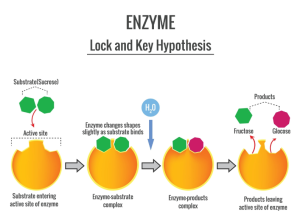
In medicine, it is the same deal. When researchers design drugs to fight diseases, they are essentially building tiny obstacles to block specific rogue proteins. If a drug molecule doesn’t match the shape and charge of the protein’s active site (which depends on its tertiary and quaternary structure), it won’t bind, and it won’t work.
What happens when things go wrong? When proteins misfold, it leads to serious conditions like Alzheimer’s and Parkinson’s. By understanding exactly where the folding process goes off the rails, scientists can design smart molecules to keep these proteins in line.
Exam Strategy: Mastering Protein Structure for IIT JAM
Alright, let’s talk strategy. You can’t just memorize definitions if you want to crack the IIT JAM.
When you study protein structure, look closely at the forces keeping everything together. For secondary structures, pay attention to the hydrogen bonding patterns in alpha helices and beta sheets.
To really lock this in, you need to solve actual problems. We talk to a lot of students at VedPrep, and the ones who score high are always the ones practicing:
-
Ramachandran plots: Understand those A, φ (phi), and ψ (psi) dihedral angles. Know which regions represent alpha helices and beta sheets.
-
Thermodynamics of folding: Look at how the hydrophobic effect drives a protein to hide its non-polar sides inside its core.
-
Bonding types: Learn where disulfide bonds, ionic interactions, and Van der Waals forces come into play.
Try taking quick quizzes on protein sequencing techniques (like Edman degradation or mass spectrometry) to test your speed.
Challenges in Determining Protein Structure: Challenges and Limitations
Figuring out the exact structure of a protein isn’t as simple as snapping a photo. Historically, scientists have relied heavily on X-ray Crystallography, which requires turning a flexible protein into a perfectly still, frozen crystal. That is incredibly tough for stubborn, floppy membrane proteins.
While newer tools like Cryo-EM and AI-driven prediction models have changed the game, tracking how a protein moves and shifts in real-time inside a living cell remains a major hurdle.
Real-World Implications of Protein Structure: Case Studies
Let’s look at Hemoglobin to see quaternary structure in action. Hemoglobin is made of four separate polypeptide subunits working together.
Because of this specific layout, it exhibits “cooperativity.” When the first subunit grabs an oxygen molecule, it shifts the shape of the remaining subunits, making it way easier for them to snap up oxygen too. When it reaches tissues that need oxygen, the reverse happens. If hemoglobin stayed as a single, isolated chain (like myoglobin), it wouldn’t be able to transport and drop off oxygen throughout your body nearly as efficiently.
Understanding these structural quirks is exactly what helps researchers design better treatments for blood disorders like sickle cell anemia.
Final Thoughts
Mastering protein structure isn’t about memorizing lists of amino acids—it’s about understanding the spatial puzzles that drive living systems. When you look at an exam question on Ramachandran plots or cooperative binding, try to visualize the physical forces pushing and pulling those molecular chains into place. At VedPrep, we know how daunting the sheer volume of biochemistry can feel, but taking the time to truly connect a protein’s structural geometry to its real-world function will give you a massive edge on test day.
To know more in detail from our faculty, watch our YouTube video:
Frequently Asked Questions
Why is a peptide bond considered rigid if it's drawn as a single bond?
This is a favorite theme for IIT JAM questions! Even though we draw a peptide bond as a single C-N bond, it actually shares electrons with the neighboring carbonyl group (resonance). This gives it a partial double-bond character, meaning it cannot rotate freely. It stays completely flat (planar).
If the peptide bond is rigid, how does a protein fold at all?
While the peptide bond itself is locked, the bonds on either side of the alpha carbon (α-carbon) are completely free to rotate. These are the single bonds connecting the nitrogen to the α-carbon (φ, phi) and the α-carbon to the carbonyl carbon (ψ, psi). This flexibility is what allows the chain to fold into complex shapes.
Where do alpha helices and beta sheets look on a Ramachandran plot?
They sit in very specific, predictable neighborhoods. Right-handed alpha helices cluster in the lower-left quadrant (negative φ, negative ψ). Beta sheets (both parallel and antiparallel) hang out in the upper-left quadrant (negative φ, positive ψ). Memorizing these zones is a total lifesaver for matching-type questions in the exam.
Why is Proline often called an "alpha-helix breaker"?
Proline is a bit of an oddball because its side chain loops back and bonds directly to its own amino group, forming a rigid ring. This structural constraint prevents it from twisting into the required angle for an alpha helix, creating a destabilizing kink instead.
Is Glycine found inside alpha helices?
Rarely. Glycine’s side chain is just a single hydrogen atom, making it incredibly tiny and flexible. Because it has so much conformational freedom, forcing it into a rigid alpha helix causes a significant loss of entropy. It prefers staying in flexible loop or turn regions instead.
What drives a protein to fold from a random chain into a compact tertiary structure?
The primary driver is the hydrophobic effect. In an aqueous cellular environment, non-polar (water-fearing) amino acid side chains naturally want to hide away from water. They clump together in the interior core of the protein, while polar, hydrophilic side chains stay on the outside to interact with water.
What is the difference between a parallel and an antiparallel beta sheet?
It comes down to the direction of the strands. In antiparallel sheets, the strands run in opposite directions (N → C next to C → N), which aligns the hydrogen bonds perfectly straight and makes them incredibly stable. In parallel sheets, the strands run in the same direction, resulting in slanted, slightly weaker hydrogen bonds.
Which chemical bonds stabilize the tertiary structure of a protein?
Tertiary structure is locked down by a mix of interactions between amino acid side chains (R-groups). This includes non-covalent interactions like hydrophobic forces, hydrogen bonds, and ionic bonds (salt bridges), alongside strong covalent disulfide bonds formed between two cysteine residues.
Do all proteins have a quaternary structure?
No, not all of them. Many proteins are perfectly functional as independent, single-chain units (monomers) at the tertiary level. Quaternary structure only applies to oligomeric proteins—multitasking molecular machines made of two or more distinct polypeptide chains working together (like hemoglobin).
What forces keep the multiple chains of a quaternary structure together?
Mostly the same non-covalent forces that stabilize tertiary structures: hydrophobic interactions, hydrogen bonding, and ionic bonds. Covalent bonds between separate chains are much less common, though they do pop up occasionally.
What is "cooperativity" in hemoglobin, and how does it relate to structure?
Cooperativity means that when one subunit of hemoglobin binds to an oxygen molecule, it triggers a conformational shift that mechanically pulls on the neighboring subunits. This physical shift changes their state from a "tense" (T) low-affinity state to a "relaxed" (R) high-affinity state, making it much easier for subsequent oxygen molecules to bind.
Can two proteins with completely different primary structures have the same 3D shape?
Yes! Thanks to convergent evolution, nature often finds that a specific structural fold is perfect for a particular job. Unrelated proteins can evolve to share the same basic 3D structure and function, even if their underlying amino acid sequences look entirely different.
What happens on a molecular level when a protein denatures?
When a protein is exposed to extreme heat, pH shifts, or urea, its weak non-covalent bonds (hydrogen bonds, hydrophobic interactions) break apart. The protein unfolds, losing its tertiary and secondary shapes. Crucially, the covalent peptide bonds of the primary sequence remain entirely intact.
Why doesn't urea break disulfide bonds during denaturation?
Urea is excellent at disrupting hydrogen bonds and destabilizing the hydrophobic core, but it lacks the chemical power to break covalent bonds. To cleave a disulfide bond, you need a specific reducing agent like β-mercaptoethanol or DTT to reduce the S-S bond back to individual -SH thiol groups.