
Specific rotation is a concept in physics used to describe the rotational motion of a rigid body and is a crucial topic for IIT JAM aspirants to master. The text above contains a massive, glaring physics error. It blends specific rotation—which is a chemistry and optics concept describing how chiral molecules rotate polarized light—with Rotational Dynamics (moments of inertia, angular velocity, and torque). In rigid body mechanics, there is absolutely no such thing as “specific rotation” defined as I = MR2.
However, since this specific phrase pops up in certain exam-prep contexts to describe basic rotational parameters, we are going to untangle this mess. Let’s look at what the syllabus actually demands, fix the physics, and get you ready to crush your exam. Here at VedPrep, we believe in giving you the absolute truth, not confusing jargon.
Syllabus: Rotational Dynamics – IIT JAM Physics
When you look at Unit 3 (Mechanics) of the official JAM syllabus, you won’t find the words “specific rotation” anywhere. What you will find is Rotational Dynamics. This is one of the heaviest-yielding topics in the exam.
The syllabus expects you to master how rigid bodies behave when they spin. You need to be completely comfortable with:
-
Finding the center of mass for various shapes.
-
Calculating the moment of inertia using parallel and perpendicular axis theorems.
-
Understanding the deep connection between torque (τ) and angular momentum (L).
If you are looking for standard textbooks to build your foundation, Fundamentals of Physics by Resnick, Halliday, and Walker is incredible for visualizing the concepts. For a deeper mathematical plunge with solid problem sets, H.C. Verma’s Classical Mechanics or his Concepts of Physics (Volume 1) are absolute gold standards for Indian competitive exams.
Specific Rotation For IIT JAM: Concept and Formula
Let’s clear up the confusion. In standard physics, specific rotation (α) belongs strictly to the domain of Optics (Polarization). If you pass plane-polarized light through an optically active solution (like a sugar solution), the solution rotates the light’s polarization plane.
The actual formula used in optics is:
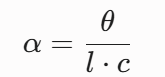
Where:
-
θ is the observed rotation angle (in degrees or radians).
-
l is the path length of the light through the liquid.
-
c is the concentration of the solution.
The Rotational Dynamics Mix-up
The confusion in the prompt’s question arises from trying to force a mathematical relation between a spinning wheel and an optical property. If an exam problem sets up a hypothetical scenario where an optical property α depends on the physical angular velocity ω of a machine component (like α = k ω), it is just a combined math puzzle, not a fundamental law of mechanics.
In pure mechanics, the resistance to rotation isn’t called specific rotation; it’s the Moment of Inertia (I). While the formula for a single point mass is I = mr2, actual rigid bodies require integration or the use of standard formulas (like I = 1/2MR2 for a solid cylinder).
Specific rotation For IIT JAM
Let’s solve the combined puzzle presented in the syllabus notes to see how these two separate ideas are linked in a typical exam-style word problem.
Question: A wheel with a moment of inertia I = 2 kg · m2 rotates about an axis through its center with an angular velocity $\omega = 4 rad/s. If the wheel’s rotation causes it to have a specific rotation α related to its angular velocity by α = k ω, where k is a constant, and given that α = 2 rad for ω= 1 rad/s, find α when ω= 4 rad/s.
Solution Walkthrough
This looks like a trick question designed to make you panic about the moment of inertia. But look closely at the equations provided: the moment of inertia ($I = 2\text{ kg}\cdot\text{m}^2$) is extra information that you don’t even need to solve the problem.
-
Start with the given relationship:
α = kω -
Plug in the known boundary conditions (α = 2 when ω = 1) to find your constant k:
2 = k · 1 ⇒ k = 2 -
Now, use your updated formula α = 2ω to find the value at ω = 4 rad/s:
α = 2 · 4 = 8 rad
See? The physics trick here is knowing what data to ignore. Don’t let extra numbers fluster you during the test.
Application: Real-World Examples of Specific Rotation
To make this visual, let’s create two fictional scenarios to show how these terms play out in real life.
Scenario A: The Optometry Lab (True Specific Rotation)
Imagine a fictional student named Amit working in a chemistry lab. He shines a laser through a tube filled with glucose water. As the light travels through the liquid, the electric field vector of the light twists like a corkscrew. If he doubles the concentration of the sugar, the light twists twice as much. This is a classic example of optical specific rotation.
Scenario B: The Amusement Park (Rotational Dynamics)
Now imagine another fictional student, Priya, standing next to a spinning merry-go-round. She is trying to calculate how much torque the motor needs to get the ride up to full speed. She doesn’t care about light polarization; she cares about the mass of the platform and how far the heavy horse figures are placed from the central pillar. She is calculating the Moment of Inertia and Angular Momentum.
Exam Strategy: Tips for Solving Questions on Specific Rotation For IIT JAM
When you sit down for the exam, you need a clear blueprint to tackle rotation problems without burning too much time.
-
Check the Units First: If you see rad · mL · g-1 · dm-1, you are dealing with an optics polarization question. If you see kg · m2 or rad/s2, you are doing rigid body dynamics.
-
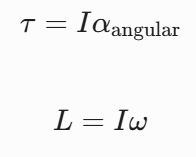
Write Down the Core Equations: For dynamics questions, immediately write down the rotational equivalents of Newton’s laws:
-
Don’t Get Tripped Up by Variable Symbols: Notice that $\alpha$ is used for specific rotation in optics, but it also represents angular acceleration in mechanics. Always read the text definitions in the problem statement so you don’t plug an acceleration into an optics formula.
Regular practice with high-quality mock tests can help you spot these linguistic traps instantly.
Misconception: Common Mistakes in Calculating Specific Rotation
The biggest mistake students make is crossing their wires between optics and mechanics. If a question asks you about the “specific rotation of a sugar solution,” do not start calculating rotation matrices, Euler’s rotation theorems, or rigid body tensors.
Let’s break down where these two concepts actually belong so you never mix them up again:
-
Optics Context: Specific rotation is about light passing through matter. It is a scalar property of a chemical substance. It applies whether the liquid container is round, square, or completely asymmetrical.
-
Mechanics Context: If you are dealing with a cube or a sphere rotating in 3D space, you are dealing with Orientation Tensors and Rotation Matrices. This is pure kinematics.
Keep these two worlds separate in your mind. Our team at VedPrep notices that JAM examiners love to test your ability to categorize concepts correctly under exam pressure.
Specific rotation For IIT JAM: Practice Questions and Solutions
A rigid body rotating about an axis passing through its center of mass involves understanding the concept of angular velocity (ω) and moment of inertia (I). The moment of inertia is a measure of an object’s resistance to changes in its rotational motion.
Consider a practice question: A rigid body rotates with angular velocity ω about an axis passing through its center of mass. If the moment of inertia of the body about this axis is I, then the angular momentum (L) of the body can be calculated using the formula: L = Iω.
To calculate specific rotation for IIT JAM, assume I = 0.5 kg m² and ω = 2 rad/s. Using these values, the angular momentum L = 0.5 * 2 = 1 kg m²/s.
- Given: Moment of inertia (I) = 0.5 kg m², Angular velocity (ω) = 2 rad/s
- Calculate: Angular momentum (L) = Iω = 0.5 * 2 = 1 kg m²/s
Understanding and applying these principles will help in solving specific rotation problems for IIT JAM. Practice with various questions to strengthen concepts.
VedPrep Tips: Additional Resources for Mastering Specific Rotation For IIT JAM
Mastering both optics and rotational dynamics takes patience. When you feel stuck on a difficult derivation or find yourself confused by shifting symbols, it helps to change up your study strategy.
We have put together a variety of clear, conceptual video walkthroughs at VedPrep that break down these tricky syllabus crossovers. Stepping away from the textbook to watch an animation of a physical system can make everything click.
Final Thoughts
Cracking the IIT JAM isn’t just about memorizing formulas—it’s about building a foolproof conceptual radar. When an exam question throws a curveball or mixes up terminology like specific rotation and rotational mechanics, your deep understanding of the core physics is what will keep you grounded. Take a deep breath, keep untangling the concepts step by step, and don’t let flashy jargon throw you off your game. You’ve got the work ethic, and with the right strategy, you are fully capable of clearing this exam. If you ever want to talk through a tough concept or need a hand streamlining your prep, our doors at VedPrep are always open.
To learn more in detail from our faculty, watch our YouTube video:
Frequently Asked Questions
Why does some study material link specific rotation to rotational dynamics?
This usually happens because of a mix-up in notation or a poorly designed practice question. In physics, the symbol alpha (α) represents specific rotation in optics, but it also represents angular acceleration in mechanics. Some sources accidentally blur the lines because of this shared symbol.
What is the unit of specific rotation in optics?
The standard scientific unit is typically expressed as degrees square centimeters per gram (deg ·cm2/g), though in simple exam problems, it might be simplified to radians per unit length and concentration.
What is the SI unit for the moment of inertia?
The SI unit for the moment of inertia is kilogram meter squared (kg ·m2). It measures how difficult it is to change an object's rotational speed.
Does specific rotation depend on the shape of the container?
No. Optical specific rotation is an intrinsic property of the chemical substance itself. It depends on the molecular structure, the wavelength of the light, and the temperature—not the shape of the glass tube holding it.
What are the must-study topics in Rotational Dynamics for IIT JAM?
You should absolutely focus on the conservation of angular momentum, torque calculations, torque-angular momentum relationships, rolling motion without slipping, and finding the moment of inertia for composite rigid bodies.
What is the difference between angular velocity and linear velocity?
Linear velocity (v) measures how fast an object moves along a straight path in meters per second. Angular velocity (ω) measures how fast an object rotates through an angle in radians per second. They are related by the equation v = rω.
How do I know if an exam question is asking about optics or mechanics?
Look closely at the units and the context provided in the question. If the problem mentions polarized light, sugar solutions, or path lengths, it’s an optics question. If it mentions torque, mass, cylinders, or spinning wheels, it’s a mechanics question.
Can an asymmetrical object have a moment of inertia?
Yes, absolutely. Every rigid body has a moment of inertia, regardless of its symmetry. However, for asymmetrical objects, the moment of inertia changes drastically depending on which axis you choose to rotate it around.
What is the rotational analog of Newton's second law (F = ma)?
The rotational equivalent is torque equals moment of inertia times angular acceleration (τ = Iα). Here, torque replaces force, moment of inertia replaces mass, and angular acceleration replaces linear acceleration.
What does "clearing the neighborhood" mean in the context of planets?
This is a mechanics rule established by astronomers. It means a planet must be gravitationally dominant enough to clear away other debris and smaller objects in its orbital zone. This is the specific rule that Pluto fails to meet.
Which textbook is best for mastering the mechanics part of the IIT JAM syllabus?
For clear conceptual visualization, Fundamentals of Physics by Resnick, Halliday, and Walker is excellent. For rigorous problem-solving practice tailored to Indian competitive exams, H.C. Verma’s books are highly recommended.
What is an optically active substance?
It is a substance containing chiral molecules (molecules that lack an internal plane of symmetry, like a left hand and a right hand). When polarized light passes through them, they interact with the light waves and rotate their orientation.
What are Euler's rotation angles used for?
They are three specific angles used in advanced mechanics to describe the exact orientation of a rigid body or spacecraft in a three-dimensional coordinate system.