
Grignard reagents are a class of organometallic compounds that organic synthesis, particularly in the formation of carbon-carbon bonds. For IIT JAM aspirants, understanding Grignard reagents is essential to excel in the chemistry section.
Syllabus – Organic Chemistry (CSIR NET, IIT JAM, CUET PG)
If you look at the official syllabus for competitive exams in India, this topic is everywhere. For IIT JAM, it sits right inside Paper 1, Section 2 under organic mechanisms and reagents.
When it comes to the IIT JAM, it is a core component of the Organic Chemistry section. While standard textbooks like Clayden, Greeves, & Warren or Carey & Sundberg give you great in-depth coverage, here at VedPrep, we like to slice through the academic jargon so you can actually apply these concepts under exam-room pressure.
Grignard Reagents: Preparation and Mechanism
At its core, making a Grignard reagent is like introducing two friends who don’t naturally get along, using a mediator to keep things stable.
You take an alkyl halide (R-X, where X is a halogen like chlorine, bromine, or iodine) and stir it with magnesium metal (Mg). To make this happen safely, you need an anhydrous solvent—meaning absolutely zero water—like diethyl ether or tetrahydrofuran (THF).
The general reaction looks simple enough:

But why do we do this? Normally, the carbon in an alkyl halide is electron-deficient because the halogen pulls away electron density. By jamming a magnesium atom right between the carbon and the halogen, we completely flip the script. Magnesium is a metal; it wants to give up electrons. This polarizes the carbon-magnesium bond, turning that carbon into an electron-rich, highly reactive nucleophile (Rδ- – Mgδ+-X).
A Quick Analogy: Imagine carbon is usually a polite guest at a party, waiting to be handed a drink (an electrophile). But the moment it bonds with magnesium, it turns into an aggressive treasure hunter, actively searching for any positive charge it can attack. This polar flip is known as umpolung (polarity reversal), and it is the secret behind why Grignard Reagents are so powerful in synthesis.
Grignard Reagents For IIT JAM: Key Reactions and Applications
Named after Victor Grignard, these organometallic powerhouses are represented as $RMgX$. In the context of the IIT JAM exam papers, you will mostly see them doing two things: acting as a strong nucleophile or acting as a fierce base.
Because that carbon carries a strong partial negative charge, it will undergo addition, substitution, and condensation reactions. The classic textbook application is adding a Grignard reagent to a carbonyl compound (like an aldehyde or a ketone) to form a brand-new carbon-carbon bond. Follow that up with a quick acid workup, and you get an alcohol.
Outside of the exam hall, this reaction is a cornerstone for building complex pharmaceuticals like antibiotics and hormones, as well as agrochemicals like pesticides. For an IIT JAM aspirant, understanding these pathways is bread-and-butter chemistry. Our team at VedPrep constantly sees students miss easy marks here simply because they forget just how versatile—and reactive—these compounds truly are.
Worked Example: Synthesis of Alcohols Using Grignard Reagents
Let’s look at how this plays out on paper. When a Grignard reagent hits a carbonyl group, it launches a nucleophilic attack on the carbonyl carbon, pushing electrons up onto the oxygen to form a tetrahedral intermediate.
Let’s try a classic problem you might encounter.
Question: Predict the final product of the reaction between ethylmagnesium bromide (CH3CH2MgBr) and acetone (CH3COCH3), followed by an acid workup.
Solution:
-
Step 1: The ethyl group (CH3CH2–) acts as our nucleophile. It attacks the partial-positive carbonyl carbon of the acetone molecule. The double bond breaks, pushing the electrons onto the oxygen atom, creating a tetrahedral intermediate with an O– group.
-
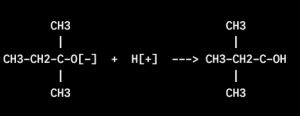
Step 2: When you introduce the acid workup (H+ / H2O), that negative oxygen grabs a proton.
The final structure is a tertiary alcohol: 3-methyl-3-pentanol (CH3CH2C(OH)(CH3)2).
This simple two-step dance lets you build highly complex, oxygen-containing frameworks from very basic starting blocks.
Common Misconceptions About Grignard Reagents
A huge trap that catches students off guard is thinking that Grignard reagents are stable enough to sit on a shelf in a plastic bottle. They aren’t. They are incredibly sensitive to air, moisture, and even light. If you leave a Grignard reagent out on the lab bench, it will react with the moisture in the air and turn back into a boring old alkane before you can even start your experiment. Lab technicians always prepare them fresh or store them under a strict blanket of inert gas like nitrogen or argon.
Another misconception is that Grignard Reagents can only create carbon-carbon bonds. While that is their claim to fame, they can also be used to introduce other functional groups—like hydroxyl, carbonyl, or amino groups—depending on what you react them with. Keeping an open mind about their synthetic flexibility is exactly what differentiates a top-ranker from the rest of the pack.
Application of Grignard Reagents in Organic Synthesis
In advanced organic synthesis, these reagents are the heavy lifters. If you look at industrial pharmaceutical manufacturing, chemists rely on them to stitch together the core structures of common antihistamines and anticonvulsants.
They are also incredibly useful for synthesizing complex natural products like steroids, cholesterol, and even the complex anti-cancer drug Taxol. Because they allow chemists to build intricate carbon rings and long chains under relatively mild temperatures, they mimic the complex biosynthetic pathways found in nature.
The biggest advantage is their sheer predictability and power. But as any seasoned chemist will tell you, the trade-off is that you have to keep your reaction environment absolutely pristine. One drop of water, and the whole synthesis goes up in smoke.
Grignard Reagents For IIT JAM: Exam Strategy and Study Tips
When you are tackling IIT JAM questions, always look at what else is in the reaction flask. Before you let the Grignard reagent act as a nucleophile to attack a carbonyl, check if there are any acidic protons around (like an –OH, -NH2, or -COOH group)
Remember: Grignard reagents are superb bases first and nucleophiles second. If there is an acidic proton available, they will steal it instantly, killing your reagent and ruining your intended nucleophilic addition.
At VedPrep, we always tell our students to map out the reaction step-by-step. Don’t rush to guess the final product. Draw out the partial charges, find your nucleophile, locate the best electrophile, and watch out for competing acid-base reactions.
Limitations and Safety Precautions of Grignard Reagents
Because they are so energetic, handling these compounds safely requires some serious respect. They react violently with water and oxygen. If you accidentally expose a large batch of Grignard reagent to water, the reaction is highly exothermic—meaning it releases a massive amount of heat very quickly—which can easily trigger a fire or an explosion.
-
Always keep the entire system under anhydrous conditions using dry nitrogen or argon gas.
-
Avoid any contact with protic substances like alcohols, water, or acids until you are intentionally ready for the final workup step.
-
In a real lab, you would use specialized glassware like Schlenk lines or dryboxes, alongside proper personal protective equipment (PPE) like heavy-duty gloves and face shields.
Key Textbooks and References for Grignard Reagents
If you want to dig deeper into the exact mechanics of these reactions, your absolute best bet is Organic Chemistry by Clayden, Greeves, and Warren. It has incredibly clear orbital diagrams that show exactly how the bonds break and form. For those of you wanting to look at more advanced synthetic applications, check out Advanced Organic Chemistry by Carey and Sundberg.
Balancing your textbook reading with focused problem-solving is the ultimate strategy to ace the IIT JAM organic chemistry section.
Final Thoughts
Mastering Grignard reagents comes down to recognizing their dual personality: they are fantastic carbon-carbon bond builders, but they are also incredibly aggressive bases that will ruin your reaction if a single drop of moisture creeps in. When you are sitting in the IIT JAM exam hall, don’t let complex-looking structures intimidate you. Strip the question down to its basics, locate your nucleophile, check for any tricky acidic protons, and map out the mechanism step by step. With a solid grasp of these fundamental principles and plenty of practice, you will be able to lock in those crucial organic chemistry marks easily.
To learn more in detail from our faculty, watch our YouTube video:
Frequently Asked Questions
Why can't we use water or alcohol as a solvent for preparing a Grignard reagent?
Grignard reagents are incredibly strong bases. If even a trace amount of a protic solvent like water (H2O) or ethanol (CH3CH2OH) is present, the Grignard reagent will instantly steal an acidic proton (H+) from it. This destroys the reagent, converting it into a completely unreactive alkane (R-H).
Why are diethyl ether and THF preferred over other solvents?
Besides being aprotic (lacking acidic protons), ethers like diethyl ether and tetrahydrofuran (THF) have lone pairs of electrons on their oxygen atoms. These lone pairs coordinate with the magnesium atom in the Grignard reagent, stabilizing the complex in the solution. Without this coordination, the reagent would precipitate out or fail to form efficiently.
Can we use benzene or hexane as a solvent to prepare a Grignard reagent?
No, non-polar hydrocarbon solvents like benzene or hexane cannot stabilize the magnesium atom. They lack the coordinating oxygen atoms found in ethers (like THF or diethyl ether) that are absolutely necessary to solvate and stabilize the organomagnesium complex.
Why is it difficult to make a Grignard reagent using an alkyl chloride compared to an alkyl bromide?
The C-Cl bond is significantly stronger and more polar than the C-Br bond, making it tougher for the magnesium metal to insert itself. While alkyl bromides usually react smoothly at room temperature, alkyl chlorides often require higher temperatures or more activating solvents like THF.
What happens when a Grignard reagent reacts with formaldehyde (HCHO})?
Nucleophilic addition of a Grignard reagent to formaldehyde yields a primary alcohol (1°) after acid workup. The nucleophilic R group attacks the carbonyl carbon, adding exactly one carbon atom to the chain.
How do you synthesize a secondary alcohol using a Grignard reagent?
To get a secondary alcohol (2°), you react your Grignard reagent with any aldehyde other than formaldehyde (such as acetaldehyde, CH3CHO), followed by an acid workup.
What is the product when a Grignard reagent reacts with a ketone?
Reacting a Grignard reagent with a ketone (like acetone) yields a tertiary alcohol (3°) after acid workup. This is because the carbonyl carbon already has two alkyl groups attached to it before the attack.
What happens if a Grignard reagent is added to an ester?
If you add an excess of Grignard reagent to an ester, it reacts twice. The first equivalent undergoes a nucleophilic substitution to displace the alkoxide leaving group, generating a ketone intermediate. The second equivalent then immediately attacks that ketone to yield a tertiary alcohol containing two identical R groups.
Why can't a Grignard reagent be prepared from a compound containing both a bromide and a carboxylic acid group?
If a molecule contains both a halogen (like -Br) and an acidic group (like -COOH, -OH, or -NH2), the Grignard reagent will destroy itself the moment it starts to form. A newly formed molecule of the reagent will immediately undergo an acid-base reaction with the acidic proton of a neighboring unreacted molecule.
How can we protect an alcohol group if we want to run a Grignard reaction on another part of the molecule?
To prevent the Grignard reagent from acting as a base and stealing the proton from an alcohol (-OH), chemists use a protecting group. A common choice is converting the alcohol into a silyl ether (like a TMS or TBDMS ether). Once the Grignard reaction is complete, the protecting group is easily stripped off using an acid or fluoride ions.
What is the product of the reaction between a Grignard reagent and an acid chloride?
Similar to its reaction with esters, an excess of Grignard reagent will react with an acid chloride twice. The first attack kicks out the chloride ion to form a ketone, and the second attack converts that ketone into a tertiary alcohol.
Do Grignard reagents act as nucleophiles or bases first?
They are bases first, nucleophiles second. Acid-base reactions have a much lower activation energy and happen incredibly fast compared to nucleophilic attacks. If a molecule has an acidic proton, the Grignard reagent will always act as a base and abstract that proton before it ever tries to attack a carbonyl.