
If you are eyeing that RPSC Assistant Professor seat, you already know that inorganic chemistry isn’t just about memorizing the periodic table. It is about understanding the “why” behind chemical behavior. Ligand Field Theory (LFT) is one of those heavy-hitter topics that can really boost your score. It bridges the gap between basic bonding and the actual magnetic and colorful spectral properties of transition metal complexes.
Mastering Ligand Field Theory helps you predict how metal complexes behave under different conditions, which is exactly the kind of conceptual depth RPSC loves to test.
Syllabus: Ligand Field Theory (LFT) For RPSC Assistant Professor
Let’s look at the bigger picture. If you are preparing for the RPSC Assistant Professor exam, chances are you are also tracking exams like CSIR NET, IIT JAM, CUET PG, or GATE. The great news is that Ligand Field Theory is a staple across all these higher-tier syllabi.
When you look at standard reference material, you will find LFT discussed in detail in classic books like Atkins’ Physical Chemistry. On the flip side, you might see Lehninger Principles of Biochemistry listed in general chemistry resources, but let’s be real—that is a biochemistry book and won’t help you much here. Stick to Atkins or Huheey for the deep physical-inorganic insights you need for RPSC. Here is a quick breakdown of where this topic sits across major exams:
- CSIR NET: Section D, Inorganic Chemistry
- IIT JAM & CUET PG: Core Coordination Chemistry
- GATE: Advanced Inorganic Chemistry
- RPSC Assistant Professor: Paper-I, Coordination Chemistry Section
At VedPrep, we always remind our students that preparing for RPSC isn’t about studying in a vacuum. Mastering LFT for this exam naturally strengthens your grip for CSIR NET and GATE too.
Overview: Ligand Field Theory (LFT) For RPSC Assistant Professor
So, what actually is Ligand Field Theory? Think of it as a smart marriage between Crystal Field Theory (CFT) and Molecular Orbital Theory (MOT). While CFT treats ligands like simple negative points of charge, LFT acknowledges that real life involves a bit of give-and-take—specifically, covalent sharing.
Imagine a transition metal ion sitting quietly. When ligands approach to form a complex, they bring their own electron clouds into the mix. This environment alters the energy of the metal’s d-orbitals. Ligand Field Theory maps out this interaction by mixing the metal’s d-orbitals with the ligand’s molecular orbitals.
This helps us accurately calculate magnetic properties and interpret electronic spectra. For an RPSC aspirant, knowing how these orbitals split and overlap is the key to solving questions on high-spin vs. low-spin states and intense color transitions.
Worked Example: Solved Question on Ligand Field Theory for CSIR NET
Let’s work through a classic problem that frequently pops up in competitive exams to see how this works in practice.
Consider the complex [Fe(H₂O)₆]²⁺.
- Find the state of the metal: The electronic configuration of neutral Fe is [Ar] 3d⁶ 4s². In the Fe²⁺ state, it loses the two 4s electrons, leaving us with a [Ar]3d⁶ system.
- Determine the geometry: Since six water molecules surround the iron ion, this is an octahedral complex. In an octahedral field, the five degenerate d-orbitals split into two groups: the lower-energy t2g set dxy, dxz, dyz) and the higher-energy eg set (dx²-y², dz²).
- Analyze ligand srength: Water is a weak-field ligand. This means the crystal field splitting energy (Δo) is relatively small—smaller than the energy it takes to pair up electrons.
- Fill the orbitals: Following Hund’s rule, we place electrons singly before pairing them. So, the six electrons fill the orbitals like this: t₂g⁴eg.
Counting them up, we see 4 unpaired electrons.
We can find the magnetic moment (μ) with the spin-only formula:
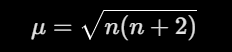
Where n is the number of unpaired electrons. Plugging in our n = 4:
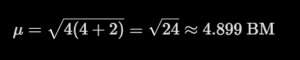
Because it has unpaired electrons, the complex is paramagnetic. The d-d band energy observed in its spectrum matches the transition of an electron from the t2g to the eg level, which equals Δo. For this specific aquo complex, Δo sits right around 10,000 cm⁻¹..
Misconception: Common Mistakes in Understanding Ligand Field Theory (LFT)
When studying for a high-stakes exam like the RPSC Assistant Professor test, clearing up subtle misunderstandings can save you from negative marking.
- Misconception 1: LFT completely replaces Crystal Field Theory. Many students assume CFT is completely useless once LFT comes along. That isn’t true. Ligand Field Theory doesn’t throw CFT out the window; it builds on top of it by factoring in covalent interactions and orbital overlapping.
- Misconception 2: LFT only cares about magnetism. While Ligand Field Theory is amazing for figuring out unpaired electrons, it does way more. It explains optical absorption spectra, charge transfer bands, and thermodynamic stabilities.
- Misconception 3: LFT is strictly for transition metals. We mostly talk about d-block elements, but you can apply the principles of Ligand Field Theory to main group element complexes too to map out their electronic layouts.
| Myth | Reality |
| LFT makes CFT obsolete | LFT is an advanced extension of CFT |
| It only explains magnetic traits | It explains optical, magnetic, and thermal traits |
| It never applies to main group elements | It can apply to main group coordinates as well |
Application: Real-World Applications of Ligand Field Theory (LFT) in Materials Science
To make this concrete, let’s step out of the textbook for a second. Imagine a tech company trying to build a faster, smaller hard drive. They need materials that can switch their magnetic states instantly at the molecular level. Materials scientists use LFT to tailor these exact magnetic behaviors, helping engineer advanced ferromagnetic and antiferromagnetic materials for data storage and sensors.
Think about the chemical plants running massive industrial reactions, like making ammonia. The catalysts used there are often transition metal complexes. By using Ligand Field Theory, researchers can tweak the electronic structure of these metal centers to make reactions run faster at lower temperatures.
Even the screen you are reading this on relies on coordination chemistry. Designing efficient LEDs and solar cells requires a deep understanding of how metal complexes absorb and emit light, which is exactly what LFT maps out.
Exam Strategy: Tips for Solving Ligand Field Theory (LFT) Questions in Competitive Exams
When you are sitting in the exam hall, time is your most precious asset. To clear the RPSC Assistant Professor exam, you need to spot the patterns in questions quickly.
First, focus heavily on Ligand Field Stabilization Energy (LFSE). RPSC loves numerical and conceptual questions on LFSE calculations. Make sure you can write down the electron configurations for both octahedral and tetrahedral fields without hesitation.
Second, understand how factors like metal oxidation state, principal quantum number (3d vs 4d vs 5d), and spectrochemical series affect the splitting value (Δ).
We at VedPrep recommend setting up a daily practice routine for these specific problems. If you want a structured breakdown, you can check out the free resources and video breakdowns over at the VedPrep platform to see how these questions are unpacked step-by-step.
Ligand Field Theory (LFT) For RPSC Assistant Professor: Important Subtopics to Focus On
When planning your study calendar, make sure you highlight these core areas:
- Ligand Field Stabilization Energy (LFSE): Know how to calculate it for different geometries and understand how it influences the thermodynamic stability of complexes.
- Crystal Field Splitting Energy (Δ): Focus on the spectrochemical series and why certain ligands create a strong field while others create a weak field.
- Molecular Orbital Diagrams: Practice drawing and interpreting σ and π bonding diagrams for octahedral complexes. Understanding π-donor and π-acceptor ligands will give you a massive edge.
Ligand Field Theory: Study Tips and Resources
Getting through the RPSC syllabus requires consistent, smart work. Start by making short notes of the orbital splitting patterns. Use color codes for t2g and eg levels if it helps your visual memory.
If you are looking for a bit of guidance, VedPrep offers targeted study guides and video lectures designed for competitive exams like CSIR NET, GATE, and state-level Assistant Professor exams. Watching a dedicated lecture on Ligand Field Theory can help clear up the math behind orbital mixing.
The secret to mastering inorganic chemistry is simple: read the concept, look at the exceptions, and practice as many questions as you can get your hands on.
Practice Questions and Solutions
Let’s look at how spectral transitions link back to our theory. The color of transition metal complexes comes from electrons jumping between split d-orbitals, and we can calculate the energy associated with these jumps.
Problem: A [Co(H₂O)₆]²⁺ complex shows a d-d transition band at 8000 cm⁻¹. Calculate this transition energy in kJ mol⁻¹, assuming a high-spin state. The orbital splitting energy (Δo) for Co²⁺ in this environment is 8500 cm⁻¹..
To convert wavenumber to energy (E) per mole, we use the relationship:
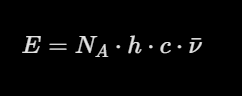
Where:
- NA (Avogadro’s number) ≈ 6.022 × 10²³ mol⁻¹
- h (Planck’s constant) ≈ 6.626 × 10⁻³⁴ J s
- c (Speed of light) ≈ 3 × 10¹⁰ cm/s (we use cm/s to match the cm-1 unit)
Let’s combine the constants (NA · h · c) to find a handy conversion factor:
Factor = (6.022 × 10²³) × (6.626 × 10⁻³⁴) × (3 × 10¹⁰) ≈ 11.96 J · cm · mol⁻¹
To get the energy in kJ for a wavenumber value, a reliable shortcut rule of thumb is to multiply the wavenumber by 1.196 × 10⁻².
Let’s calculate the energy for the observed transition at 8000 cm⁻¹:
E = 8000 × 1.196 × 10⁻² ≈ 95.68 kJ mol⁻¹
This gives you the actual energy change taking place when the complex interacts with light.
Final Thoughts
Cracking the RPSC Assistant Professor exam comes down to mastering exactly this kind of conceptual depth. Ligand Field Theory might feel like a lot of moving parts at first—juggling orbital overlaps, splitting energies, and spectral math—but once you see how it all connects, it becomes a major scoring asset.
To know more in detail from our faculty, watch our YouTube video:
Frequently Asked Questions
How does LFT differ from Crystal Field Theory?
LFT considers the covalent interaction between metal and ligands, whereas Crystal Field Theory (CFT) treats the interaction as purely ionic. LFT provides a more accurate description of transition metal complexes.
What are the key factors influencing the ligand field splitting energy?
The ligand field splitting energy is influenced by the metal ion, its oxidation state, and the type of ligands attached. Different ligands have varying abilities to split the metal d-orbitals.
What is the significance of the spectrochemical series?
The spectrochemical series ranks ligands according to their ability to split the metal d-orbitals. It helps predict the electronic structure and properties of transition metal complexes.
How does LFT explain the color of transition metal complexes?
LFT explains the color of transition metal complexes by describing the energy gaps between metal d-orbitals. These gaps correspond to specific wavelengths of light, which are absorbed or emitted, resulting in color.
What are the limitations of LFT?
LFT assumes a simplified model of metal-ligand interactions and neglects dynamic effects. It also does not account for electron correlation and relativistic effects.
How does LFT relate to molecular orbital theory?
LFT can be viewed as a simplified version of molecular orbital theory, focusing on the metal d-orbitals and their interactions with ligand orbitals.
What are the implications of LFT for understanding transition element chemistry?
LFT provides a powerful tool for understanding the chemistry of transition elements. It explains the unique properties and reactivity of these elements in various complexes.
How can LFT be applied to predict the properties of transition metal complexes?
LFT can be used to predict the magnetic properties, color, and reactivity of transition metal complexes. It helps understand the relationships between metal-ligand interactions and complex properties.
What are some common applications of LFT in inorganic chemistry?
LFT is applied in understanding the properties of catalysts, pigments, and magnetic materials. It also helps design new transition metal complexes with specific properties.
How can LFT be used to explain the stability of transition metal complexes?
LFT explains the stability of transition metal complexes by describing the energy changes associated with metal-ligand interactions. It helps predict the stability of different complexes.
What is a common misconception about LFT?
A common misconception is that LFT is only applicable to octahedral complexes. However, LFT can be applied to various geometries, including tetrahedral and square planar complexes.
How can one avoid confusion between LFT and CFT?
To avoid confusion, one should focus on the key differences between LFT and CFT, including the treatment of metal-ligand interactions and the resulting electronic structures.
How does LFT relate to density functional theory?
LFT provides a conceptual framework for understanding the electronic structure of transition metal complexes, while density functional theory (DFT) offers a computational method for studying these systems. LFT can guide DFT calculations.
What are some recent developments in LFT?
Recent developments in LFT include the incorporation of relativistic effects and the application of LFT to new classes of transition metal complexes.