

This article explores the hydrogen atom, focusing on its electronic configuration, atomic radius, and ionization energy, critical topics for the RPSC Assistant Professor chemistry exam.
Chemical Periodicity and Hydrogen Atom For RPSC Assistant Professor: Syallabus
Preparing for the RPSC Assistant Professor chemistry exam can feel like a massive undertaking, especially when diving into Unit 1: Atomic Structure and Chemical Bonding of the CSIR NET / NTA syllabus. If you look at standard textbooks like Physical Chemistry by Atkins or Theoretical Chemistry by Levine, these topics are treated with heavy mathematical rigor. But let’s break it down into something much more digestible.
Chemical Periodicity is just a fancy way of saying that elements show repeating patterns in their behavior. The periodic table organizes everything by atomic number, electronic configuration, and recurring traits.
- The Periodic Table: Think of it as a well-organized filing cabinet. It’s split into blocks, periods, and groups, letting you predict how an element will behave before you even see it in a lab.
- Electronic Configuration: This is the specific arrangement of electrons. It is the ultimate driving force behind an element’s personality and chemical habits.
- s-block elements: These elements have their outermost electrons sitting in an s-orbital, giving them highly reactive, predictable traits.
Right at the start of this layout is the hydrogen atom. With its simple structure, it serves as the ultimate baseline model for understanding chemical bonding and reactivity. Its configuration is 1s1, which makes it a fascinating misfit in the periodic table.
Electronic Configuration of Hydrogen Atom For RPSC Assistant Professor
With an atomic number of 1, the hydrogen atom is the simplest system you will deal with. It has just one proton in its nucleus and a single electron orbiting around it, giving it a 1s1 configuration.
That lonely electron lives in the K-shell (the first shell). While this shell has room for two electrons, hydrogen only holds one. This electron occupies a 1s orbital, which is perfectly spherical and completely free of nodal planes.
Key Features of the Hydrogen Atom:
- Atomic number: 1
- Electronic configuration: 1s1
- Electron shell structure: One shell (K-shell)
Because it is so simple, the hydrogen atom is the literal birthplace of quantum mechanics. At VedPrep, we often remind aspirants that mastering this single-electron system is your gateway to cracking tougher questions on multi-electron atoms in competitive exams.
Hydrogen Bonding and Polarity in Hydrogen Atom For RPSC Assistant Professor
A common trap many smart students fall into is oversimplifying how polarity and hydrogen bonding work together. You might hear people say that hydrogen bonding only happens when hydrogen is covalently bonded to super electronegative atoms like oxygen, nitrogen, or fluorine. While that is the textbook definition, relying on it blindly without understanding why can cost you marks.
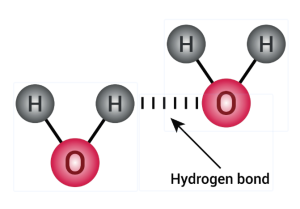
Some folks mix this up with Fajans’ Rule. To keep things straight, remember that Fajans’ Rule is all about predicting how much covalent character an ionic bond has based on how easily an anion’s electron cloud gets distorted by a tiny, highly charged cation. But in purely covalent molecules, polarity comes down to a simple tug-of-war: unequal sharing of electrons between two different atoms.
- Electronegativity: An atom’s power to pull shared electrons closer to itself.
- Polarity: The charge split that happens when one side of a molecule ends up slightly negative and the other side stays slightly positive.
Think of hydrogen bonding as a very strong dipole-dipole attraction. Imagine a fictional scenario where a hydrogen atom is bonded to a greedy partner like oxygen. The oxygen pulls the electron density away, leaving the hydrogen feeling exposed and highly positive. If another nearby molecule has an oxygen with a lonely pair of electrons, that exposed hydrogen is going to be strongly attracted to it. It’s like a magnetic pull between neighbors, not a true chemical bond sharing electrons.
Worked Example: Hydrogen Atom and Atomic Radius For RPSC Assistant Professor
The atomic radius is simply the distance from the center of the nucleus to the outermost electron. For single-electron, hydrogen-like atoms, you can calculate this radius using Bohr’s formula:
rn=4π2mZkee2n2h2
Where:
- n = principal quantum number
- h = Planck’s constant
- m = mass of the electron
- Z = atomic number
- ke = Coulomb’s constant
- e = elementary charge
For a standard hydrogen atom, we plug in Z=1 and n=1. The formula shrinks down to the Bohr radius (a0 or r0), which gives us a value of roughly 0.529 A˚.
Question: Calculate the atomic radius of a hydrogen atom in the n=2 state.
Solution: > Let’s substitute n=2 and Z=1 into our handy formula:
r²=4π²mkee²h²=4×4π²mkee²h²
r₂=4×a₀=4×0.529 Å=2.116 Å
The takeaway for the exam? The radius grows quadratically (n2). As the electron jumps to higher energy levels, it moves much further away from the nucleus because the central positive pull loses its grip.
Application of Hydrogen Atom in Chemistry For RPSC Assistant Professor
The physics of the hydrogen atom isn’t just theoretical; it drives major industrial chemistry. Take the production of hydrogen peroxide (H2O2). This compound is a staple in everything from detergents to pharmaceuticals, and its industrial synthesis relies heavily on controlling reactions involving hydrogen atoms and oxygen molecules.
Another massive application is hydrogenation. This is where you add hydrogen atoms across double or triple bonds in unsaturated compounds (like alkenes and alkynes) to make them saturated. The petroleum sector uses this to upgrade fuels, and the food industry relies on it to process edible oils.
Looking ahead, hydrogen storage materials are a massive frontier in green energy. These substances act like sponges, absorbing and releasing huge amounts of hydrogen gas on demand. This technology is vital for making commercial fuel cells viable for clean power generation and transportation.
Exam Strategy: Tips for Solving Hydrogen Atom Questions For RPSC Assistant Professor
When you’re staring down exam questions, don’t let the calculus scare you. Focus your energy on the core pillars: the Bohr model, electronic transitions, spectral series, and basic wave functions. You need to be comfortable with the Bohr radius, the Rydberg constant, and what the fine structure constant actually implies.
Make sure you memorize these two formulas so you can recall them instantly under exam pressure:
- For spectral lines:
λ1=R(n121−n221) - For orbital energy:
En=n2−13.6 eV
If you want a bit of help structuring your study routine, we have put together a free VedPrep video lecture on the hydrogen atom tailored specifically for the RPSC Assistant Professor exam. We also offer detailed notes and breakdowns of past exam questions to help you skip the guesswork and study what actually matters.
Hybridization and Molecular Orbital Theory of Hydrogen Atom For RPSC Assistant Professor
Valence Bond Theory explains bond formation through the mixing or overlapping of atomic orbitals. For an isolated hydrogen atom, the 1s orbital is all it has. When two hydrogen atoms get close enough to form an H₂ molecule, their spherical 1s orbitals overlap head-on to form a tough σ (sigma) bond.
But things get more interesting with Molecular Orbital (MO) Theory, specifically the Linear Combination of Atomic Orbitals (LCAO) approach. Instead of keeping their orbitals separate, the two 1s atomic orbitals mix completely to create two brand-new molecular orbitals that belong to the whole molecule: one bonding and one antibonding.
- Bonding Molecular Orbital (σ1s): This orbital features a high electron density right between the two nuclei. It sits at a lower energy state than the original isolated atomic orbitals, making the system incredibly stable.
- Antibonding Molecular Orbital (σ1s∗): This orbital features a node (zero electron density) between the nuclei. It sits at a much higher energy level.
In a normal, ground-state hydrogen molecule, both available electrons drop into the cozy, lower-energy bonding orbital, leaving the high-energy antibonding orbital completely empty.
Solved Question: Hydrogen Atom and Ionization Energy For RPSC Assistant Professor
Ionization energy is simply the tax you have to pay to completely rip an electron away from an isolated gaseous atom. The energy of an electron in any given shell is determined by:
E=n²−13.6 eV
Let’s look at how this applies to a standard question.
Question: Find the ionization energy of a hydrogen atom resting in its ground state.
Solution: > The term “ground state” tells us that n=1. Let’s plug that into the energy equation:
E=12−13.6 eV=−13.6 eV
The negative sign just means the electron is trapped in the nucleus’s attractive potential well. To free it, you need to provide the exact opposite amount of energy. So, the ionization energy is the absolute value: 13.6 eV.
As n gets larger (n=2, 3, 4…), the electron climbs closer to the edge of the well. Because it’s farther from the positive nucleus, the electrostatic hold weakens, and the energy required to remove it drops significantly.
Hydrogen atom For RPSC Assistant Professor: Key Teaxtbooks
At the end of the day, the hydrogen atom is a core part of Unit 2: Atomic Structure in your syllabus. Skipping the fundamentals here will make advanced quantum chemistry feel like a mountain you can’t climb.
If you want to read deeper during your prep sessions, grab these classic textbooks:
- Atkins’ Physical Chemistry by P. W. Atkins & Julio De Paula. It is unmatched for visualizing atomic structure.
- Introduction to Quantum Mechanics by David J. Griffiths. This is the gold standard if you want to understand the actual math behind the hydrogen wave functions and spectral lines without getting lost in jargon.
Final Thoughts
Frequently Asked Questions
What is the role of the electron in a hydrogen atom?
The electron in a hydrogen atom orbits the nucleus in specific energy levels or shells. It occupies the lowest available energy level, and its movement is governed by the principles of quantum mechanics.
What is the significance of the hydrogen atom in quantum mechanics?
The hydrogen atom is a fundamental system in quantum mechanics, as it is the simplest atom and exhibits many of the principles of quantum theory, such as wave-particle duality and energy quantization.
How is the energy of the electron in a hydrogen atom calculated?
The energy of the electron in a hydrogen atom is calculated using the Bohr model, which takes into account the electron's orbital radius, velocity, and energy level. The energy is quantized, meaning it can only take on specific discrete values.
What is the relationship between the energy levels of the electron in a hydrogen atom?
The energy levels of the electron in a hydrogen atom are inversely proportional to the square of the principal quantum number (n). As n increases, the energy level increases, and the electron is less tightly bound to the nucleus.
What is the concept of wave function in the context of a hydrogen atom?
The wave function is a mathematical description of the quantum state of the electron in a hydrogen atom. It encodes the probability of finding the electron within a particular region around the nucleus.
How does the spin of the electron affect the energy levels in a hydrogen atom?
The spin of the electron has a negligible effect on the energy levels in a hydrogen atom, as the spin-orbit interaction is very small. However, it plays a crucial role in determining the magnetic properties of the atom.
What is the Bohr radius of a hydrogen atom?
The Bohr radius of a hydrogen atom is approximately 0.53 Å, and it is the most probable distance between the electron and the nucleus.
What is the ionization energy of a hydrogen atom?
The ionization energy of a hydrogen atom is approximately 13.6 eV, and it is the energy required to remove the electron from the ground state.
How does the hydrogen atom relate to other atoms?
The hydrogen atom serves as a reference point for understanding the behavior of other atoms. Its simplicity and well-understood properties make it a useful model for understanding atomic physics.
How can I apply the concept of the hydrogen atom to solve problems in RPSC Assistant Professor exams?
To solve problems related to the hydrogen atom in RPSC Assistant Professor exams, focus on understanding the Bohr model, energy quantization, and wave-particle duality. Practice solving problems involving energy level calculations, electron transitions, and spectral lines.
What types of problems related to the hydrogen atom can I expect in RPSC Assistant Professor exams?
You can expect problems involving calculations of energy levels, electron transitions, and spectral lines, as well as questions on the application of quantum mechanics to the hydrogen atom.
What are common mistakes students make when solving problems related to the hydrogen atom?
Common mistakes include incorrect application of the Bohr model, neglecting the spin of the electron, and failing to account for energy quantization. Ensure you carefully read and understand the problem, and double-check your calculations.
What are some advanced topics related to the hydrogen atom?
Advanced topics include relativistic effects, quantum field theory, and the application of group theory to understand the symmetry of the hydrogen atom. These topics are relevant to research and advanced studies in physics.
How can I use the concept of the hydrogen atom to understand more advanced topics in quantum mechanics?
The hydrogen atom provides a foundation for understanding more advanced topics in quantum mechanics, such as quantum field theory and many-body physics. By mastering the principles of the hydrogen atom, you can develop a deeper understanding of these advanced topics.