

Electromagnetic Theory outlines the way electrical charges and magnetic phenomena interface to generate the electromagnetic influence. This structure merges the concepts of electricity and magnetism within one unified discipline. It elucidates the nature of visible light, broadcast waves, and electrical networks via Maxwell’s equations. Grasping Electromagnetism is crucial for competence in the RPSC Assistant Professor Physics Syllabus and contemporary technological uses.
Electrostatic Foundations and Gauss’s Law and its applications
The study of electrostatics concentrates on how electric charges at rest behave and the fields that consequently arise. Gauss’s Law and its applications, offers a strong technique for determining electric fields whenever charge distributions exhibit symmetry. This fundamental law asserts that the overall electric flux passing through any sealed surface is equivalent to the total charge within that boundary divided by the vacuum’s permittivity.
Gauss’s Law eases intricate field computations for forms like spheres, cylinders, and boundless flat surfaces. Applying this rule to a uniformly charged sphere results in the exterior field acting as though the charge were concentrated at the core. Your RPSC Assistant Professor Physics Syllabus requires showing how Gauss’s Rule yields the field from a charged line or a charged surface. These applications form the basis for understanding more complex boundary value problems.
The differential form of Gauss’s Law relates the divergence of the electric field to the local charge density. This relationship is a fundamental pillar of Electromagnetic Theory. It ensures that electric field lines originate from positive charges and terminate on negative charges.
Mathematical Modeling with Laplace and Poisson equations
Laplace and Poisson equations serve as the mathematical core for solving electrostatic potential problems in regions without or with charge. These second order partial differential equations allow you to find the potential distribution when you know the boundary conditions. The Poisson equation relates the Laplacian of the electrical potential to the charge density.
When a region contains no free charge, the Poisson equation reduces to the Laplace equation. Finding solutions to the Laplace and Poisson equations is essential for understanding how conductors and dielectrics act within an electric field. These equations are frequently employed to address boundary value problems where either the electric potential or its gradient is defined over a boundary surface.
Issues encountered with the RPSC Assistant Professor Physics Syllabus frequently necessitate these formulas to ascertain the capacitance across different shapes. They yield a singular answer for the potential, thereby maintaining coherence in physical representations. These mathematical instruments connect abstract field concepts with tangible electrical parts.
Magnetostatics and the Biot-Savart law
Magnetostatics explores magnetic fields stemming from constant electric currents. The Biot-Savart rule serves as the core method for determining the magnetic field created by a tiny piece of current-bearing wire. The complete magnetic field is determined by summing these minor inputs across the conductor’s full extent.
The Biot-Savart law stands as the magnetic counterpart to Coulomb’s law in the realm of electrostatics. It demonstrates that the magnetic field scales directly with the current and inversely with the square of the separation distance. This principle aids in examining the fields generated by concentric rings, solenoids, and intricate wire arrangements.
Within Electromagnetic Theory, the Biot-Savart rule evolves into examining forces existing between currents. Grasping this principle is crucial for candidates preparing for the RPSC Assistant Professor Physics Syllabus, since it describes the magnetic effect of moving charges. It establishes the basis for later ideas such as vector potentials.
Circulation and Ampere’s theorem
Ampère’s law connects the line integral of the magnetic field circling an enclosed path with the net electric current traversing that path. This principle offers a handy method for determining magnetic fields in systems exhibiting high symmetry. Considering an infinitely long, straight conductor, Ampère’s law rapidly provides the field magnitude, bypassing the intricate integration demanded by alternative approaches.
Ampère’s law proves especially valuable when analyzing solenoids and toroids. It streamlines the examination of magnetic pathways and aids in characterizing the attributes of magnetic substances. It is vital to recognize this theorem’s shortcomings when magnetic fields are changing with time, which ultimately necessitated the addition of the displacement current term.
The RPSC Assistant Professor Physics outline stresses using Ampere’s rule within both empty space and magnetic materials. It stays a central pillar of Magnetostatics and a vital part of the integrated Electromagnetic Theory. Understanding this principle enables accurate forecasting of how electromagnets and inductors operate.
The Synthesis of Maxwell’s equations
Maxwell’s equations signifies the definitive merging of electrical and magnetic occurrences. These four principles detail how electric and magnetic fields arise from charges, flows of current, and mutual alterations between the fields. Maxwell’s equations foretell the presence of electromagnetic waves propagating at the velocity of light.
The formulae demonstrate that a fluctuating magnetic field generates an electrical field, and a varying electric field brings about a magnetic field. This mutual connection permits waves to travel across a vacuum. Within the RPSC Assistant Professor Physics Syllabus, these equations are examined in both empty space and uniform, isotropic materials.
Maxwell’s equations integrate charge conservation via the continuity equation. They form the theoretical basis for fields like optics, telecommunications, and electrical power systems. All technology that utilizes electricity or magnetism depends upon the concepts laid out in these equations.
Wave Propagation and Fresnel’s Law
Electromagnetic radiation carries energy and impetus across open areas. Upon encountering a boundary separating dissimilar materials, this radiation experiences bouncing back and bending. Fresnel’s Law explains how light acts at these division points, detailing the strength of the waves that bounce back and pass through for various alignments of the electrical field.
Fresnel’s principles are vital for grasping light’s conduct within lenses, prisms, and optical conduits. These describe the origin of reflections at specific inclinations and how polarization develops at Brewster’s angle. Comprehensive knowledge of these optical exchanges is mandated by the RPSC Assistant Professor Physics Syllabus for tackling physical optics challenges.
Wave propagation research also encompasses interference, coherence, and diffraction. These occurrences clearly illustrate the wave characteristics of electromagnetic radiation. Utilizing Fresnel’s Law allows for the computation of coating effectiveness and metal reflectivity, positioning it as a crucial element within Electromagnetic Theory.
Summary of Mathematical Expressions in Electromagnetic Theory
The following table summarizes the primary mathematical expressions used in the study of Electromagnetic Theory and the RPSC Assistant Professor Physics Syllabus.
| Concept | Mathematical Expression |
|---|---|
| Gauss’s Law (Differential) | ∇.E=ρ/ε0 |
| Poisson Equation | ∇2.V=-ρ/ε0 |
| Laplace Equation | ∇2.V=0 |
| Biot-Savart Law | 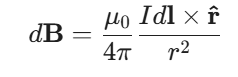 |
| Ampere’s Theorem (Static) | 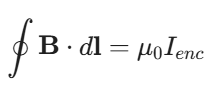 |
| Faraday’s Law | ∇.E=-∂B/∂t |
| Ampere-Maxwell Law | ∇×B=μ0J×μ0ε0∂E/∂t |
| Fresnel’s Law (Reflection) | 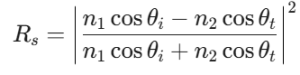 |
Potentials and Gauge Invariance
Electromagnetic Theory employs scalar and vector potentials to streamline field computations. The electric field is connected to the scalar potential, and the magnetic field is linked with the vector potential. Since these potentials lack uniqueness, the idea of Gauge invariance arises.
Symmetry under gauge transformations allows for alterations to the potentials without impacting the actual electric and magnetic fields. This mathematical latitude proves essential when tackling Maxwell’s equations in intricate situations. The RPSC Assistant Professor Physics Syllabus specifically mandates examining the Lorentz and Coulomb gauges as convenient selections for simplifying computations.
Grasping gauge transformations is likewise crucial for higher level physics, encompassing quantum mechanics and field theory. It guarantees that the rules governing electromagnetism stay coherent across varied mathematical frameworks. This part of Electromagnetic Theory underscores the profound symmetry inherent in physical laws.
Relativistic Electrodynamics and Lorentz Invariance
Lorentz invariance of Maxwell’s equations shows that the laws of electromagnetism are the same for all observers moving at constant velocity. This principle was a major motivation for the development of special relativity. It demonstrates that electric and magnetic fields can transform into one another depending on the observer’s frame of reference.
The dynamics of charged particles in static and uniform electromagnetic fields follow these relativistic principles. As particles gain considerable velocity, their trajectories are shaped by the combined electric and magnetic aspects of the Lorentz force. The RPSC Assistant Professor Physics Syllabus addresses these mutual effects to illuminate particle accelerators and cosmic radiation.
Critical Analysis of Classical Limitations
Although Electromagnetic Theory proves very effective, it encounters constraints at extremely tiny dimensions. The traditional view considers charges and fields as unbroken, yet quantum phenomena take precedence at the scale of atoms. The conventional depiction of an electron in orbit implies it should continuously emit power and spiral inward toward the nucleus, a behavior that is not observed.
To settle these differences, Quantum Electrodynamics (QED) must be employed. A further problem arises when dealing with charges existing at a single point, leading to an unbounded field energy. Addressing these difficulties necessitates either employing renormalization methods or examining the possibility of particles having physical extent.
In the RPSC Assistant Professor Physics Syllabus, recognizing these boundaries is important. Classical Electromagnetic Theory remains perfect for macroscopic engineering, but you must shift to quantum frameworks for semiconductor physics and nanotechnology. Understanding where the theory fails is as important as knowing where it succeeds.
Practical Application: Telecommunications and Signal Integrity
Electromagnetic Theory enables the modern telecommunications industry. Engineers use Maxwell’s equations to design antennas that radiate and receive signals efficiently. The propagation of waves through conductors and dielectrics determines the speed and quality of data transmission.
In high speed circuit design, signal integrity depends on managing electromagnetic interference (EMI). You must use shielding and proper grounding to prevent unwanted coupling between components. These practices are direct applications of boundary conditions and field theory.
Space-based communication also depends on the propagation characteristics within plasma when signals travel across the ionosphere. Determining the plasma’s refractive index allows for frequency adjustments to sustain strong links. This real-world application of Electromagnetic Theory underscores its continued importance in our electronic era.
Conclusion
Grasping Electromagnetic Theory is a core necessity for success within the RPSC Assistant Professor Physics curriculum. This structure offers the vital mathematical and physical instruments needed to comprehend reality, spanning from tiny particles up to large-scale cosmic energy. By thoroughly absorbing the link between Maxwell’s formulations and real-world phenomena such as Fresnel’s Principle, you establish a solid base for higher-level study and competitive instructor positions. For thorough readiness and skilled direction on these intricate subjects, the materials offered by VedPrep are dependable. Steady application of these principles guarantees you stay ahead in contemporary physics instruction.
To know more in detail from our faculty, watch our Youtube video:
Frequently Asked Questions (FAQs)
What are the primary components of the RPSC Assistant Professor Physics Syllabus for electromagnetics?
The syllabus covers electrostatics, magnetostatics, and Maxwell's equations. Key topics include Gauss’s Law, Laplace and Poisson equations, and the Biot-Savart law. You must also master electromagnetic induction, wave propagation in different media, and relativistic electrodynamics. These subjects prepare you for advanced academic and research roles in India.
How does Gauss’s Law relate to electric flux?
Gauss’s Law states that the total electric flux through any closed surface is proportional to the enclosed electric charge. You calculate this by dividing the charge by the permittivity of free space. This principle allows you to determine electric field strength for symmetric objects like spheres and cylinders.
Why are Maxwell's equations considered the synthesis of electromagnetism?
Maxwell's equations combine separate laws into one consistent system. They include Gauss's Law for electricity and magnetism, Faraday's Law, and the Ampere-Maxwell Law. These four equations show that changing electric fields create magnetic fields and vice versa. This synthesis predicts the existence of light as a wave.
What is the significance of the Biot-Savart law in magnetostatics?
The Biot-Savart law calculates the magnetic field produced by a steady electric current. It treats the current as a series of small segments and sums their contributions. This law is the magnetic counterpart to Coulomb’s law. It helps you analyze magnetic field distributions in wires and loops.
How do you apply the Laplace and Poisson equations in electrostatics?
You use the Poisson equation when a region contains a known charge density. You apply the Laplace equation when the region is charge free. Solving these second order partial differential equations requires specific boundary conditions. These solutions provide the electric potential at every point in the volume.
How is Ampere's theorem used to find magnetic fields?
Ampere's theorem relates the magnetic field around a closed loop to the electric current passing through it. You choose a path that follows the symmetry of the magnetic field. For a long straight wire, this theorem quickly yields the field strength without complex integration.
When should you use Fresnel’s Law in optics?
Use Fresnel’s Law to calculate how much light reflects or refracts at a boundary. You must consider the refractive indices of both materials and the angle of incidence. This law determines the intensity and polarization of waves as they move from one medium to another.
How do you calculate displacement current in the Ampere-Maxwell Law?
Displacement current arises from a changing electric field rather than moving charges. You calculate it by taking the time derivative of the electric flux and multiplying by permittivity. This term ensures that magnetic fields exist in capacitors where no actual current flows through the dielectric.
Why does Gauss’s Law fail to solve fields for non-symmetric objects?
Gauss’s Law remains physically valid for all surfaces. However, it only provides a simple solution for E when the field is constant over the Gaussian surface. Without high symmetry, the dot product and integration become mathematically impossible to solve by hand.
What happens if you ignore displacement current in Maxwell's equations?
Ignoring displacement current violates the law of charge conservation in time varying circuits. Without this term, you cannot explain how electromagnetic waves travel through a vacuum. It leads to incorrect results when analyzing high frequency circuits or radio wave propagation.
Why do classical interpretations of Electromagnetic Theory fail at the atomic scale?
Classical theory predicts that accelerating electrons should lose energy and spiral into the nucleus. Observations show that atoms remain stable. You must replace classical electrodynamics with Quantum Electrodynamics to explain phenomena at the subatomic level.
What causes divergence in the solutions for point charges?
The electric field of a point charge increases as the distance approaches zero. This leads to an infinite field energy at the center of the charge. Modern physics uses renormalization techniques to handle these mathematical infinities in quantum field theories.
How does dispersion affect signals in a plasma medium?
Plasma causes different frequencies of electromagnetic waves to travel at different speeds. High frequency signals may pass through while low frequency signals reflect. You must account for this frequency dependence to maintain signal integrity in satellite communications.
What is the role of Gauge invariance in potential theory?
Gauge invariance allows you to change the scalar and vector potentials without altering the physical fields. This flexibility simplifies the math required to solve Maxwell's equations. You often choose the Lorentz or Coulomb gauge to suit specific problem symmetries.
How does Lorentz invariance impact Maxwell’s equations?
Lorentz invariance ensures that Maxwell’s equations hold true in all inertial frames of reference. This principle proves that electricity and magnetism are two aspects of the same force. It leads directly to the relativistic transformation of fields during high speed motion.
What is the physical meaning of a vanishing divergence in magnetism?
Gauss's Law for magnetism states that the divergence of the magnetic field is always zero. This implies that magnetic monopoles do not exist. Magnetic field lines always form closed loops, entering at the south pole and exiting at the north.
What are the consequences of the Liénard-Wiechert potentials?
These potentials describe the electromagnetic field of a point charge in arbitrary motion. They account for both the velocity and acceleration of the charge. These formulas are essential for understanding synchrotron radiation and the behavior of particles in accelerators.