

Fundamental Definition of Permutation Groups
Permutation groups on a set X that possess a group structure are termed permutation groups. A permutation itself is a mapping that rearranges the members of X whilst preserving a bijection. Function composition serves as the group’s binary operation. If the set X has n elements, the set of all possible permutations is the symmetric group Sn. This group contains n! elements. You define a subgroup of Sn as a permutation group.
These groups are central to the RPSC Assistant Professor Maths Paper 1 Syllabus. They provide a concrete way to visualize abstract group properties. Each member within a permutation group possesses an inverse. This counterpart nullifies the precise rearrangement of the constituents. The identity element signifies the reordering that retains all items in their starting locations. One can depict these reorderings through Cauchy’s dual-line format or the more streamlined cycle notation.
Cycle Notation and Decomposition
Cycle notation depicts a permutation group by tracking where each member goes. A cycle such as (a1, a2, …, ak) signifies that a1 relocates to a2, a2 shifts to a3, and ak returns to a1. Every permutation within a finite permutation group has a singular representation as a multiplication of non-overlapping cycles. This breakdown assists in finding the permutation’s order by computing the least common multiple of the lengths of these cycles.
Within Abstract Algebra, swaps are cycles having exactly two elements. Any permutation can be expressed as a sequence of these swaps. A permutation is classified as even if its factorization requires an even quantity of swaps, and odd if it involves an odd quantity. The collection of all even permutations constitutes the Alternating Group An. This segregation is crucial when examining solvable groups and their characteristics.
Theorems and Formulas in Permutation Groups
This chart outlines key formulas and theorems relevant for computations in Group Theory. These mathematical guidelines enable the measurement of the scale and actions of symmetric and alternating arrangements inside finite collections.
| Concept | Formula or Theorem | Significance |
|---|---|---|
| Order of Sn | |Sn| = n! | Total permutations of n elements. |
| Order of An | |An| = n! / 2 | Size of the alternating group for n > 1. |
| Cayley’s Theorem | G ≅ H ⊆ SG | Every group is a permutation group. |
| Disjoint Cycles | σ = c1c2…ck | Unique decomposition of permutations. |
| Order of Permutation | lcm(length(c1), …) | Calculation of element order. |
Role of Cayley’s Theorem in Group Theory
Cayley’s Theorem asserts that any group G can be mapped isomorphically onto a subgroup within the symmetric group that permutes the elements of G. As per permutation groups, this result connects the abstract structure of groups with tangible permutation representations. It proves that the study of all groups is essentially the study of permutations. You can represent any abstract group element as a permutation of the group’s own elements via left multiplication.
This theorem simplifies the classification of finite groups. It allows you to use the tools of permutation groups to investigate complex structures. For the RPSC Assistant Professor Maths Syllabus, understanding this link is crucial. It shows how Group Theory relies on permutations to validate the existence of different group types. You can use this to prove Cauchy’s Theorem for finite abelian groups by looking at specific permutation representations.
Symmetry and the Symmetric Group
The symmetric group Sn encapsulates every possible arrangement of $n$ distinguishable items. Within Abstract Algebra, Sn is leveraged to explore polynomial roots. For instance, S3 describes the symmetries inherent in an equilateral triangle. It comprises six members: the trivial operation, a pair of turns, and three flips. These physical transformations can be associated with permutations of the triangle’s corners.
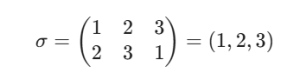
This mathematical expression shows a rotation in cycle notation. The item 1 transitions to 2, 2 moves to 3, and 3 shifts to 1. Incorporating this alongside a mirror operation such as (1, 2) produces the whole set. Grasping the makeup of Sn is fundamental before delving into sophisticated subjects like solvable groups and Galois theory.
Transitivity and Group Actions
Permutation groups exert influence on sets via group actions. A group is considered transitive if any member of the set can be transferred to every other member by some permutation within that group. This characteristic gauges the extent of the permutation group’s spread throughout the set. To comprehend these interactions, one examines orbits and stabilizers. The Orbit-Stabilizer Theorem offers the formal structure for this examination.
Within the framework of the RPSC Assistant Professor Maths Paper 1 Syllabus, the property of transitivity aids in categorizing finite groups. It enables the division of a substantial set into more compact, workable orbits. Every orbit functions similarly to a reduced permutation group. These principles are employed to examine the internal makeup of groups, encompassing concepts like normal subgroups and factor groups. Clear knowledge of these actions is necessary for higher-level research in mathematics.
Normal Sub-groups and Permutation Parity
The alternating group An is a normal sub-group of Sn. This status means that for any permutation g in Sn, the set g An g-1 is equal to An. Normal sub-groups are essential for constructing quotient groups. As per Permutation groups, the parity of a permutation determines its membership in An. You define the sign of a permutation as +1 for even permutations and -1 for odd permutations.
The sign operation functions as a homomorphism from Sn to the group {1, -1}. The kernel for this mapping is An. This connection illustrates how permutation groups relate to the idea of group homomorphism and isomorphism. Examining these subgroups provides understanding regarding group solvability. Solvable groups are characterized by a particular sequence of normal subgroups whose quotients are all abelian.
Practical Application in Combinatorial Design
Group theory, specifically Permutation groups, proves useful for tackling puzzles in combinatorial arrangements and secret-keeping codes. Burnside’s Lemma assists in determining the quantity of unique items when accounting for symmetries. For instance, to ascertain the various distinct colorings of a cube’s faces using three hues, one utilizes the cube’s rotational permutation set. This technique ensures that equivalent configurations are not counted more than once.
Consider a simple set X = {1, 2, 3, 4} and a permutation α = (1, 2)(3, 4). The following calculation shows the result of repeating this action:
α2 = (1, 2)(1, 2)(3, 4)(3, 4) = e
This computation reveals the permutation α possesses an order of two. In practical data concealment, sizable permutation groups jumble information bits. The intricacy of these sets guarantees that the initial data stays protected from illicit entry. You utilize these concepts when devising sturdy methods needing substantial uniformity and rearrangement.
Limitations of Permutation Representations
A prevalent idea suggests permutation groups are the sole means to grasp group theory. Though Cayley’s Theorem establishes this theoretically, it’s frequently unworkable for sizable groups. Portraying a group with order n as a subgroup within Sn necessitates a set of $n$ elements. This results in enormous permutations proving difficult to calculate. You must use more efficient representations like matrix groups or generators and relations for large-scale calculations.
This limitation does not apply when the group is small or has a natural action on a smaller set in Permutation groups. You mitigate the size issue by finding the smallest k such that your group is isomorphic to a subgroup of Sk. This constant k is frequently considerably less than the group’s order. Knowing when to opt for permutations instead of alternative representations is a crucial ability in Abstract Algebra.
Conclusion
Permutation groups function as the essential link connecting abstract algebraic concepts with practical mathematical uses. Grasping these formal structures equips you to manage the intricacies of Group Theory and tackle difficult questions concerning symmetry and finite arrangements. Investigating permutation groups guarantees a solid base for every following subject within the RPSC Assistant Professor Maths Paper 1 Syllabus. VedPrep delivers complete materials and specialized instruction to assist your success in these higher-level mathematical areas for your test preparation.
To know more in details from our expert professionals, watch our Youtube video:
Frequently Asked Questions (FAQs)
What is the symmetric group Sn?
The symmetric group Sn contains all possible permutations of a set with n elements. The order of Sn is exactly n factorial. You use this group as a universal container because every finite group of order n is isomorphic to a subgroup of Sn.
How does cycle notation work for permutation groups?
Cycle notation tracks the movement of elements in a sequence where each element maps to the next. A cycle ends when an element maps back to the first one. You write these as parenthetical sequences. This notation simplifies calculations like finding the order of a permutation.
What defines a subgroup of a permutation group?
A subgroup of a permutation group is a subset of permutations that remains closed under composition and inversion. It must also include the identity permutation. These subgroups often represent specific geometric symmetries like rotations or reflections within a larger set of permutations.
How do you calculate the order of a permutation?
You find the order of a permutation by decomposing it into disjoint cycles. The order is the least common multiple of the lengths of these cycles. For example, a permutation with disjoint cycles of lengths 2 and 3 has an order of 6.
How do you determine if a permutation is even or odd?
You count the number of transpositions, or 2-element cycles, needed to express the permutation. An even number of transpositions indicates an even permutation. An odd number indicates an odd permutation. This property determines membership in the alternating group An.
What is the process for multiplying two permutations?
You multiply permutations by composing the functions from right to left. You track the image of each element through the first permutation and then the second. The resulting mapping defines the product permutation within the group.
How do you find the inverse of a permutation in cycle notation?
To find the inverse, you reverse the order of elements within each cycle. For a cycle (1 2 3), the inverse is (3 2 1). This operation undoes the original reordering and returns the set to its initial state.
Why is the product of disjoint cycles commutative?
Disjoint cycles move different elements of the set. Because the sets of elements moved by each cycle do not overlap, the order in which you apply them does not change the final arrangement. This commutativity is a unique property of disjoint cycles.
Why are non-disjoint cycles not commutative?
Non-disjoint cycles move at least one common element. The final position of that common element depends on which cycle you apply first. This lack of commutativity is typical in the non-abelian structure of larger symmetric groups.
What happens if a permutation has no inverse?
By definition, every element in a permutation group must have an inverse. If a mapping is not a bijection, it is not a permutation. If you cannot find an inverse, the collection of mappings does not form a group.
What is a transitive permutation group?
A permutation group is transitive if it can move any element of the set to any other element. This means there is only one orbit for the entire set. Transitivity is a measure of how thoroughly the group acts on the set.
What is the alternating group An?
The alternating group An is the group of all even permutations of n elements. It is a normal subgroup of Sn with an index of 2. For n greater than or equal to 5, the alternating group is a simple group.
How does Cayley’s Theorem apply to permutation groups?
Cayley’s Theorem proves that every abstract group is isomorphic to a permutation group. You can represent any group as a subgroup of the permutations of its own elements. This provides a concrete way to study abstract algebraic structures.
What are solvable groups in the context of permutations?
A group is solvable if it has a series of normal subgroups where each factor group is abelian. You use this to determine if a polynomial equation is solvable by radicals. The symmetric group Sn is only solvable for n less than 5.