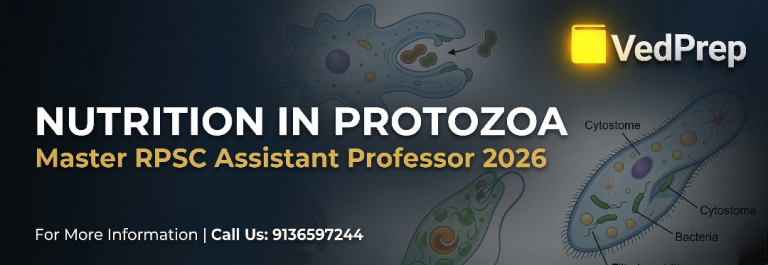

Nutrition in Protozoa involves a variety of techniques employed by these single-celled eukaryotes for energy and nutrient acquisition. Protozoans display several feeding strategies such as self-nourishing, whole organism ingestion, absorption of dissolved organic matter, and acting as parasites. These activities rely on specific components like false feet, cell mouths, and digestion bubbles to take in, break down, and absorb biological material vital for cell operations and replication.
Overview of Nutritional Strategies from Protozoa to Echinodermata
The developmental shift from Protozoa to Echinodermata reveals a distinct advance in the intricacies of digestion. Following the patterns of Nutrition in Protozoa, whereas these single-celled organisms use digestion inside the cell, more advanced groups evolve external systems. Protozoa acquire sustenance via membrane invagination or dedicated feeding structures. This cellular method establishes the groundwork for the sophisticated nutrient handling observed in many-celled life. Grasping these initial processes is crucial for those studying for the RPSC Assistant Professor Zoology Paper 1. The straightforward feeding of protozoans belies an extremely effective biochemical action supporting existence across varied settings.
In Nutrition in Protozoa, the plasma membrane serves as the primary interface for nutrient intake. Unlike the specialized organs found in the sequence from Protozoa to Echinodermata, these organisms use organelles. Vacuoles act as temporary stomachs where enzymes break down complex molecules. This internal method guarantees the being’s endurance in watery or parasitic environments. Applicants preparing for the RPSC Assistant Professor Zoology Paper 1 ought to grasp these variations in bodily magnitude. The effectiveness of digestion inside the cell enables Protozoa to vie with more intricate organisms for sustenance.
Holozoic Nutrition in Protozoa
Nutrition in Protozoa of the holozoic type comprises taking in solid organic matter via phagocytosis. This mechanism is typical for motile species such as Amoeba and Paramecium. The creature spots a food item, for instance, bacteria or simple plant life, and envelops it with extensions of its outer substance. After the food is taken in, a vacuole for digestion develops inside the cell body. This feeding style necessitates particular structures to handle both the physical crushing and chemical dissolving of the captured organism. It represents the most animal like feeding behavior among unicellular organisms.
The mechanics of holozoic feeding vary by species in Nutrition in Protozoa. Amoeboids use pseudopodia to engulf prey at any point on their cell surface. Ciliates like Paramecium possess a fixed site called the cytostome for food entry. Cilia create water currents that direct food particles into the oral groove. This structural differentiation holds a central place in the RPSC Assistant Professor Zoology Paper 1 curriculum. The food vacuole cycles through acidic and basic stages to finalize digestion. This process guarantees optimal nutrient absorption before residuals are ejected through exocytosis or a specific cytoproct.
Autotrophic and Mixotrophic Capabilities
Autotrophic nutrition in Protozoa occurs in species containing chlorophyll or other photosynthetic pigments. Phytoflagellates like Euglena can synthesize their own food using sunlight, carbon dioxide, and water. This ability places them at a unique intersection of plant and animal characteristics. Under specific conditions, some species switch between autotrophy and heterotrophy. This flexibility is known as mixotrophy. It allows the organism to survive in dark environments where photosynthesis is impossible by consuming organic matter from the water.
Mixotrophic behavior provides a significant survival advantage in fluctuating ecosystems. When light is abundant, the organism functions as a producer. In the absence of light, it adopts a saprozoic or holozoic lifestyle. This dual capability is a frequent area of inquiry in RPSC Assistant Professor Zoology Paper 1 exams. As per Nutrition in Protozoa, the presence of chromatophores distinguishes these protozoans from their strictly heterotrophic relatives. Studying these transitions helps researchers understand the metabolic diversity that exists from Protozoa to Echinodermata. This versatility ensures that Protozoa remain dominant in various ecological niches.
Saprozoic and Parasitic Feeding Mechanisms
Nutrition in Protozoa take in soluble organic sustenance from their immediate environment. This transfer frequently happens via simple diffusion or cell drinking across the boundary layer. Organisms inhabiting rotting detritus or still pools commonly employ this approach. Protozoan parasites also heavily depend on this technique to flourish inside a living being. They soak up already broken-down nourishment straight from the host’s tissues or internal liquids. Consequently, they do not require the elaborate feeding structures seen in holozoic types.
Parasitic nutrition requires specialized adaptations to survive host immune responses and chemical environments. Many parasites lack a mouth and use their entire body surface for nutrient uptake. This streamlined physiology is essential for species like Plasmodium or Trypanosoma. Students analyzing the RPSC Assistant Professor Zoology Paper 1 curriculum must compare these simplified forms with the complex feeders in the line from Protozoa to Echinodermata. The loss of certain structures is often an evolutionary trade off for high reproductive rates. Effective nutrient absorption directly correlates with the virulence of the parasite within the host system.
Structural Components and Functions
The efficiency of nutrition in Protozoa depends on specific cellular structures. These components manage everything from food capture to the expulsion of undigested remains. While higher animals use tissues, Protozoa use specialized regions of their single cell. The table below outlines the primary structures involved in these processes and their specific roles.
| Structure | Function in Nutrition | Typical Examples |
|---|---|---|
| Pseudopodia | Engulfing solid food via phagocytosis | Amoeba, Entamoeba |
| Cytostome | Permanent cell mouth for food entry | Paramecium, Vorticella |
| Food Vacuole | Intracellular digestion and nutrient transport | Most Protozoa |
| Cytopyge | Fixed point for waste elimination | Ciliates |
| Chromatophores | Photosynthesis and light energy capture | Euglena, Volvox |
A Critical Perspective on Digestive Efficiency
A common belief suggests that intracellular digestion is less efficient than the extracellular digestion seen in the path from Protozoa to Echinodermata. However, this perspective fails when considering the surface area to volume ratio of a single cell in Nutrition in Protozoa. For a protozoan, intracellular digestion is nearly 100 percent efficient because nutrients are released directly into the cytoplasm. There is no loss during transport through a long digestive tract. The limitation arises only when the organism increases in size, making diffusion an ineffective way to distribute nutrients.
The transition to extracellular digestion is a necessity of multicellularity, not necessarily an improvement in chemical breakdown. For big organisms, dedicated cells need to generate large quantities of enzymes, demanding considerable power. Protozoa evade this by synthesizing enzymes solely when a food vacuole is accessible. Concerning Nutrition in Protozoa, this focused method proves very cost-effective. When studying for the RPSC Assistant Professor Zoology Paper 1, remember that “basic” characteristics frequently represent peak efficiency for their particular size. The protozoan design excels for tiny life but proves unsuitable as a model for bigger creatures.
Practical Application in Environmental Science
Research into how nutrition in Protozoa holds immediate relevance for processes involving wastewater management and keeping tabs on environmental conditions. Heterotrophic protozoans are key players in regulating the number of bacteria within facilities treating sewage. Through the ingestion of significant amounts of bacteria, they contribute to making water clearer and sustaining environmental equilibrium. Grasping the methods these life forms take in nourishment enables technicians to enhance the living components of water refinement. This applied aspect of the animal kingdom is frequently emphasized in the RPSC Assistant Professor Zoology Paper 1 to demonstrate the importance of life at the microscopic level.
In a real world scenario of Nutrition in Protozoa, a sudden decline in protozoan activity can lead to a bacterial bloom, ruining the treatment process. Monitoring the feeding rates of these organisms provides a fast indicator of water quality. This application demonstrates that the principles of Protozoa to Echinodermata biology are not just theoretical. They are functional tools used in modern industry. You can see the impact of these microscopic feeders in every healthy aquatic ecosystem. Their ability to recycle nutrients keeps the foundation of the food web stable and productive.
Conclusion
Nutrition in Protozoa stays a key part of zoological analyses because of its variety and evolutionary importance. From the self-feeding Euglena to the consuming Amoeba, these life forms show the basic approaches creatures keep themselves going. Aspiring educators and researchers should focus on these mechanisms to master the RPSC Assistant Professor Zoology Paper 1. Understanding the shift from Protozoa to Echinodermata provides a complete view of animal physiology. VedPrep supports your academic journey with expert guidance to help you secure top ranks in competitive examinations.
To know more in detail from our faculty, watch our YouTube video:
Frequently Asked Questions (FAQs)
How does autotrophic nutrition function in unicellular organisms?
Autotrophic species like Euglena contain chromatophores with chlorophyll. They synthesize organic food from inorganic substances using sunlight. This process provides energy when light is available. These organisms transition to other feeding modes when environmental light levels drop.
What role does the cytostome play in feeding?
The cytostome acts as a permanent oral opening for food entry. Ciliates use this specialized region to funnel nutrients into the cell. Cilia surrounding the cytostome create water currents to trap prey. This structure ensures consistent food intake in complex unicellular life
How do food vacuoles facilitate digestion?
Food vacuoles serve as temporary digestive chambers. After ingestion, the vacuole fuses with lysosomes containing hydrolytic enzymes. The internal environment shifts from acidic to alkaline to optimize chemical breakdown. Digested nutrients then diffuse into the surrounding cytoplasm.
What distinguishes parasitic nutrition from other modes?
Parasitic protozoans absorb pre digested nutrients from host tissues or fluids. They often lack specialized ingestion organelles like mouths or pseudopodia. These organisms rely on the host metabolic processes for their survival. This mode supports rapid reproduction within a host.
How does Amoeba capture food without a mouth?
Amoeba uses pseudopodia to surround and engulf prey. These temporary cytoplasmic extensions flow around the food particle. The tips of the pseudopodia fuse to trap the food in a vacuole. This flexible mechanism allows feeding on various surfaces.
How is waste eliminated after intracellular digestion?
Undigested remains are expelled through the cell membrane. Ciliates use a specific point called the cytopyge for this purpose. Amoeboid species discharge waste at any point on the cell surface. This process prevents the accumulation of toxic byproducts.
What chemical changes occur inside a protozoan food vacuole?
The vacuole first becomes acidic to kill prey and begin breakdown. It later becomes alkaline to support the action of various enzymes. This sequence mimics the digestive processes seen in higher animals. The pH shift is critical for complete nutrient extraction.
Why do some protozoans lose their chromatophores?
Extended periods in darkness can lead to the loss of chlorophyll. Some species permanently lose photosynthetic ability if nutrients are abundant in the water. This transition forces the organism to rely solely on saprozoic or holozoic methods.
What happens if a protozoan cannot form a food vacuole?
Failure to form a food vacuole prevents the digestion of solid food. The organism must switch to absorbing dissolved nutrients if possible. Without a functional ingestion mechanism, the cell eventually exhausts its energy reserves and dies.
How does environmental pH affect saprozoic absorption?
Extreme pH levels can interfere with membrane proteins responsible for nutrient transport. If the surrounding water is too acidic or alkaline, the rate of osmosis decreases. This stress limits the energy available for growth and reproduction.
How do some protozoans utilize symbiotic algae?
Certain species harbor live algae within their cytoplasm. The algae perform photosynthesis and share the resulting carbohydrates with the host. In return, the protozoan provides protection and nitrogenous waste for the algae.
What is the role of lysosomes in protozoan nutrition?
Lysosomes carry the hydrolytic enzymes needed for digestion. They fuse with newly formed food vacuoles to release their contents. This prevents the enzymes from damaging the rest of the cell.
How does the RPSC Assistant Professor Zoology Paper 1 categorize nutrition?
The syllabus focuses on the structural and functional aspects of invertebrate nutrition. It emphasizes the evolutionary transition from unicellular to multicellular digestive strategies. Candidates must understand the specific organelles involved in these processes.