
Contour integration is a computational procedure in complex analysis employed to assess curvilinear integrals along trajectories within the complex plane. This approach utilizes the Residue Theorem and Cauchy’s Integral Formula to resolve challenging real-valued integrals by transforming them into the realm of complex variables, thus establishing it as an essential element of the RPSC Assistant Professor Maths Syllabus.
Fundamentals of Contour Integration in Complex Analysis
Contour integration is a main technique for finding the value of integrals that are otherwise unshakable with typical mathematical methods. This approach lets you integrate intricate functions along a defined path, called a contour, inside the complex domain. This operation hinges on the characteristic that specific integrals around a closed loop are determined solely by the singular points enclosed by that contour. Grasping this idea is crucial for applicants preparing for the RPSC Assistant Professor Maths Syllabus..
The core objective of this technique involves transforming a real definite integral into a complex line integral. You define a closed path, often a semicircle or a rectangle, and analyze the behavior of the function within that boundary in topics like Contour integration. If the function is analytic everywhere inside and on the contour, the integral equals zero according to Cauchy’s Theorem. Where singularities are present, one must employ distinct theorems to ascertain the value. This systematic method guarantees significant precision in matters of mathematical physics and complex engineering applications.
Applying Cauchy’s Integral Formula for Analytic Functions
Cauchy’s Integral Formula offers a straightforward method to determine the value of an analytic function and its successive derivatives at an interior point of a closed curve. It asserts that the values of an analytic function within a circular region are entirely fixed by the values the function takes on the edge of that region. This formula constitutes a fundamental concept in the RPSC Assistant Professor Maths Curriculum as it streamlines the integration process for functions exhibiting simple singularities.
The mathematical expression for Cauchy’s Integral Formula is given by:
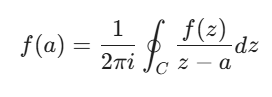
For this equation, f(z) denotes a function holomorphic inside and upon a closed Jordan curve C. The place a resides within C. This relationship demonstrates that the path integral of a complex function along a boundary connects precisely to the function’s value at a point internal to the region. You use this relationship to solve complex integrals by identifying the numerator as an analytic part and the denominator as the source of the singularity.
For higher-order derivatives, the formula extends to allow the calculation of any derivative at point a. As per Contour integration, this extension is vital when dealing with poles of higher order. Prospective RPSC Assistant Professor applicants frequently observe these forms. Recognizing how to distinguish beneath the integration symbol with this technique conserves notable time throughout time-bound competitive evaluations.
Evaluating Integrals Using the Residue Theorem
The Residue Theorem offers a strong extension of Cauchy’s Integral Formula, employed for computing line integrals of analytic functions along closed paths. It streamlines the procedure by concentrating solely on the residues found at isolated singularities encircled by the contour. If you are studying the RPSC Assistant Professor Maths Syllabus, being adept at finding residues is essential for excelling in the complex analysis portion.
The Residue Theorem is expressed mathematically as:
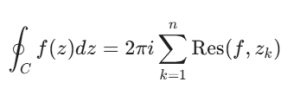
Here, Res(f, zk) denotes the residue of the function f(z) at its k-th singularity. To find the residue at a simple pole z = a, you calculate the limit of (z-a)f(z) as z approaches a. For a pole of order m, the calculation involves derivatives. This theorem reduces the complex task of integration to a manageable sum of algebraic values in Contour integration.
By selecting a closed path in the upper portion of the plane and confirming the integral along the arc approaches zero, the actual integration transforms into 2πi multiplied by the total of residues situated in that upper region. This structured technique is characteristic of high-achievers in assessments such as the RPSC Assistant Professor exam.
Essential Formulas and Practical Examples
The following table summarizes the primary formulas used in contour integration and provides practical examples of their application in exam scenarios.
| Concept | Mathematical Expression | Typical Application |
|---|---|---|
| Cauchy’s Integral Formula | 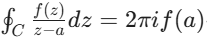 |
Evaluating integrals with simple interior poles. |
| Residue at Simple Pole |  |
Solving rational function integrals. |
| Residue at Pole of Order m |  |
Calculating integrals with repeated roots in denominator. |
| Residue Theorem |  |
Evaluating definite integrals from -∞ to ∞. |
Take the integral of 1/(z2 + 1) over a circle of radius 2, centered at the origin. The singular points are located at z = i and z = -i. As both singularities are within the integration path, you determine the residues at each location. Multiplying the total of these residues by 2πi yields the integral’s final outcome. Problems of this nature often appear in the RPSC Assistant Professor Mathematics curriculum and necessitate precise determination of singularity positions within Contour integration.
Limitations and Common Pitfalls in Contour Methods
Contour integration proves very useful, yet possesses definite constraints you should acknowledge. A frequent mistake is neglecting to confirm whether the singularities are situated inside the selected path. Should a pole rest precisely upon the integration route, the typical Residue Theorem cannot be directly employed. For these situations, employing the Cauchy Principal Value or creating a slight bend in the contour around the singular point is necessary.
Certain learners suppose Jordan’s Lemma governs all integrals possessing an exponential factor. Nevertheless, the theorem mandates rigorous prerequisites concerning the function’s decrease as the radius expands. Should the function fail to diminish quickly enough, the integration across the curved path will not approach zero. Following the principles of Contour integration, one must invariably confirm these magnitude requirements prior to setting aside the arc integral to guarantee the resulting value is mathematically valid.
Practical Application in Real Definite Integrals
The most useful application of contour integration lies in assessing definite real integrals encountered in engineering and physics. For example, determining the Fourier transform of a function frequently requires integrating along the real axis. By treating the real axis as a segment of a complex path, one can resolve these issues employing the Residue Theorem and Cauchy’s Integral Formula.
The RPSC Assistant Professor Maths Syllabus features questions requiring the integration of trigonometric functions across the range of 0 to 2π. These can be reformulated as contour integrals by employing the substitution z = eiθ. This change effectively converts the trigonometric integration into a contour integral involving a rational function evaluated around the unit circle.
A further use concerns assessing integrals that are not proper, structured as ∫P(x)/Q(x) dx. If the denominator’s order surpasses that of the numerator by a margin of two or more, the integral across the vast semicircle tends to zero. This leaves the result as the sum of residues in the upper half-plane. This specific application is a frequent topic in Assistant Professor recruitment exams across various states.
Final Thoughts
Excelling in contour integration demands a methodical way of spotting singular points and choosing the optimal route for integration. By repeatedly applying the Residue Theorem and Cauchy’s Integral Formula, one builds the sharp analytical skill vital for high-level mathematical inquiry and rigorous tests. VedPrep stands out as the leading resource for candidates targeting top scores in the RPSC Assistant Professor hiring process, offering specialized mentorship and thorough learning materials. Establishing a solid grasp of the core concepts now will guarantee your ability to handle the most difficult topics found in the RPSC Assistant Professor Maths Syllabus.
To know more in detail from our expert team, watch our YouTube video:
Frequently Asked Questions (FAQs)
What is the definition of the Residue Theorem?
The Residue Theorem states that the integral of a function around a closed contour equals $2\pi i$ times the sum of residues at its poles. This theorem generalizes Cauchy’s Integral Formula. You use it to simplify complex path integrals into algebraic summations. It is essential for advanced mathematical physics.
What are poles and residues in complex integration?
Poles are isolated singularities where a function behaves like 1/(z-a)n. The residue is the coefficient c-1 in the Laurent series expansion of the function around that pole. You calculate residues to determine the value of closed path integrals. Understanding pole order is critical for accurate calculations.
Why is contour integration useful for real integrals?
Many real definite integrals lack elementary antiderivatives. By converting these into complex line integrals along a closed contour, you can use the Residue Theorem to find exact values. This method often solves improper integrals from negative infinity to infinity. It saves time during competitive examinations.
How do you choose a contour for an improper integral?
You select a contour based on the location of the function's poles. A common choice is a semi-circle in the upper half-plane for integrals along the real axis. The path must enclose the relevant singularities while allowing the integral along the arc to vanish. Proper contour selection simplifies the calculation.
What is the process for calculating a residue at a simple pole?
To find the residue at a simple pole z=a, you multiply the function by (z-a) and take the limit as $z$ approaches $a$. This operation isolates the c-1 term of the Laurent series. This calculation is a frequent requirement in the RPSC Assistant Professor Maths Syllabus.
How do you handle residues at poles of higher order?
For a pole of order $m$, you multiply the function by (z-a)m. You then differentiate the result $m-1$ times and divide by (m-1)! before taking the limit. This systematic approach ensures accuracy when dealing with repeated roots in the denominator. Accuracy here is vital for scoring well.
How do you apply Jordan’s Lemma in contour integration?
Jordan’s Lemma provides conditions under which the integral along a circular arc vanishes as the radius approaches infinity. You use it specifically for integrals containing exponential functions like eiaz. If the function f(z) tends to zero as z grows, the arc contribution becomes negligible. This simplifies the final result.
What happens if a pole lies exactly on the contour?
If a pole lies on the integration path, the standard Residue Theorem does not apply. You must use a small indentation to bypass the singularity. The resulting value usually involves the Cauchy Principal Value. This situation requires careful limit analysis to avoid divergent results.
Why does my contour integral not match the real integral?
Discrepancies often arise from neglecting the contribution of the arc or branch cuts. You must prove that the integral along the supplementary parts of the contour goes to zero. Also, ensure you only sum residues for poles located strictly inside the closed loop. Verification of pole location is a common failure point.
How do you identify branch points in complex functions?
Branch points occur in multi-valued functions like logarithms or square roots. You identify them as points where the function cannot be defined continuously in a full circle. You must introduce a branch cut to make the function single-valued. Integration paths must not cross these cuts without specific adjustments.
When should you use Cauchy’s Integral Formula instead of the Residue Theorem?
Cauchy’s Integral Formula is more efficient for simple poles where the numerator is clearly analytic. The Residue Theorem is more versatile for functions with multiple poles or higher-order singularities. Use the formula for quick evaluations of basic rational structures. Both methods belong to the RPSC Assistant Professor Maths Syllabus.
What is the role of the Residue at Infinity?
The residue at infinity helps evaluate integrals where the exterior of the contour is simpler than the interior. You calculate it by substituting w = 1/z and analyzing the behavior at w=0. The sum of all residues, including the residue at infinity, is zero. This property provides an excellent verification tool.
What is the relationship between contour integration and the Gamma function?
You can represent the Gamma function and other special functions as contour integrals in the complex plane. This representation allows for analytic continuation into regions where the standard integral definition diverges. Mastering these forms is necessary for doctoral-level mathematics research.
How do residues apply to the summation of series?
You can use contour integration to sum infinite series by choosing a function with poles at integer values, such as πcot(πz). The integral around a large square contour relates the sum of the series to the residues of the function. This application demonstrates the versatility of complex analysis.