
Geodesics represent the shortest path joining two points on a curved surface or within a Riemannian manifold. In Euclidean space, these paths are straight lines. On spherical surfaces, geodesics manifest as great circles. They are central to the RPSC Assistant Professor Maths curriculum and differential geometry generally.
The Fundamental Definition of Geodesics
Geodesics represent trajectories where the acceleration vector remains orthogonal to the surface at every point. This suggests the movement neither bends inwards nor outwards across the surface itself. Think of a geodesic as the straightest possible route for a particle proceeding without any intrinsic sideways forces. Within the RPSC Assistant Professor syllabus, learners need to grasp the difference between local and global minima. Although every shortest route is a geodesic, the reverse is not universally true for widely separated points. For example, several great circles can link the North and South poles of a sphere. This mathematical idea draws upon the Calculus of Variations to achieve the minimum arc length functional connecting specified endpoints.
The Role of Calculus of Variations in Finding Geodesics
Calculating variations offers the chief structure for obtaining the geodesic equations. To find the shortest path, you must minimize the integral representing the curve length. This process leads to the Euler-Lagrange equations. If you define a functional representing the energy or length of a curve, the stationary points of this functional identify the Geodesics. For a surface defined by the first fundamental form, the Calculus of Variations transforms the geometric problem into a set of second order differential equations. These equations illustrate the alterations in the route’s spatial coordinates connected to the curve’s varying element. Applicants preparing for the RPSC Assistant Professor exam commonly utilize these techniques for addressing problems involving surfaces generated by spinning or cylindrical forms.
Understanding Geodesic Curvature and Surface Geometry
The degree to which a trajectory deviates from a geodesic on a specific surface is measured by Geodesic Curvature. If a path is a geodesic, its Geodesic Curvature will be zero along its entire extent. You determine this by projecting the principal curvature vector onto the tangent plane of the surface. Unlike normal curvature, which depends on the surface’s shape, Geodesic Curvature is an intrinsic property. Consequently, it can be ascertained without recourse to the surface’s spatial orientation in three dimensions. Grasping the interplay among these curvatures is vital for proficiency in the RPSC Assistant Professor Maths syllabus, covering both Paper I and Paper II. It facilitates the examination of trajectory behavior on intricate manifolds and forecasts object movement restricted to those specific surfaces.
Mathematical Formulas and Equations for Geodesics
The table below compiles the key equations employed for calculating and defining Geodesics across different coordinate frameworks. These are crucial for resolving technical challenges within the Calculus of Variations.
| Concept | Mathematical Representation |
|---|---|
| Geodesic Differential Equation | 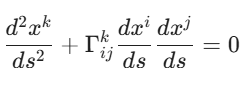 |
| Arc Length Functional | 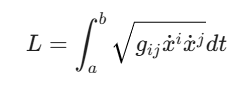 |
| Geodesic Curvature Formula |  |
| Euler-Lagrange Condition | 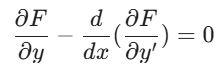 |
Existence and Uniqueness Theorem of Geodesics
An existence theorem posits that for any spot on a continuous surface and a designated direction, one unique geodesic line segment can be found within a short distance. This theorem is vital to the RPSC Assistant Professor Maths coursework as it ensures the navigability of geometric routes. The proof utilizes concepts from standard differential equations. Specifically, it draws upon the fact that geodesic equations are second-order nonlinear differential equations. Given initial conditions, such as a starting point and an initial velocity vector, a solitary solution is guaranteed. However, this uniqueness holds only within a limited domain. Over a broader scope, different Geodesics might bridge the same pair of spots, much as meridians converge at the Earth’s poles.
Practical Applications in Physics and Engineering
The movement of both light and matter in general relativity is dictated by Geodesics . Einstein proposed that gravity isn’t a force but rather a warping of spacetime. Objects in freefall trace Geodesics within this curved four-dimensional manifold. In civil engineering contexts, these routes aid in plotting the most efficient courses for utility lines or cables over irregular landscapes. When you utilize GPS, the device determines distances by employing geodesics modeled on an ellipsoidal representation of Earth. VedPrep assists learners in grasping these intricate uses. Our experts prepare candidates for the RPSC Assistant Professor exam.
Limitations and Critical Perspectives on Shortest Paths
A frequent misunderstanding is that a geodesic perpetually signifies the briefest separation linking two locations. This notion proves untrue on intricate or non-convex manifolds. For instance, upon a torus, a geodesic could circle the interior numerous times. Although it adheres to the local differential formula, it isn’t the absolute least distance globally. An added constraint arises at singular points where the surface lacks smoothness. At a sharp vertex or a cusp, the typical formulas for Geodesics cease to function since the rate of change is undefined. One needs to employ tailored methods from the Calculus of Variations to address these boundary scenarios. Identifying when established geometric principles no longer hold is a vital aptitude for sophisticated mathematical study.
Geodesics in the RPSC Assistant Professor Syllabus
The RPSC Assistant Professor Maths syllabus demands a thorough grasp of how Geodesics relate to the initial and secondary fundamental forms. You need the skill to establish the differential equations for particular surfaces such as catenoids, helicoids, and cones. Questions frequently involve calculating the Geodesic Curvature for an assigned curve or confirming a trajectory as a geodesic. Excelling in this test hinges on connecting the Calculus of Variations with Riemannian measurements. VedPrep offers the focused instruction essential for achieving expertise in these subject areas. Our course content emphasizes key topics that support candidates in achieving high standings in the RPSC Assistant Professor contests throughout Rajasthan.
Final Thoughts
Grasping Geodesics is crucial for hopefuls addressing the RPSC Assistant Professor curriculum, as it connects abstract calculus with tangible geometric forms. When you comprehend how the Calculus of Variations determines these best-fit routes, you receive a notable boost in resolving intricate differential challenges within warped spaces. Regardless of whether you are examining Geodesic Curvature or establishing existence proofs, a precise methodology guarantees mathematical correctness and favorable exam outcomes.
VedPrep offers the specific materials and expert direction needed to perform well on the RPSC Assistant Professor test and attain high scores. Regular work on these sophisticated derivations will convert your theoretical grasp into applicable solution capabilities. Keep your attention fixed on the fundamental tenets of surface study to solidify your scholastic prospects in advanced learning.
To know more in detail from our expert professionals, watch our YouTube video:
Frequently Asked Questions (FAQs)
How do you define a geodesic path mathematically?
A geodesic is a curve where the acceleration vector remains orthogonal to the surface tangent plane at every point. This means the curve does not veer left or right within the surface itself. The principal normal of the curve coincides with the surface normal.
What is the difference between a straight line and a geodesic?
A straight line is the shortest path in flat space. A geodesic generalizes this concept to curved spaces. Every straight line is a geodesic in Euclidean space. However, on a curved manifold, the geodesic must follow the intrinsic curvature of that surface.
Why are Geodesics important for the RPSC Assistant Professor exam?
The RPSC Math Assistant Professor Syllabus emphasizes differential geometry and the Calculus of Variations. You must master Geodesics to solve problems involving surface theory and Riemannian metrics. It is a high weightage topic for academic competitive examinations.
Does a geodesic always represent the shortest distance?
Locally, a geodesic is always the shortest path. Globally, this is not always true. On a sphere, two different great circle segments can connect the same two points. Only the minor arc represents the absolute shortest distance between them.
What role does the metric tensor play in finding Geodesics?
The metric tensor defines the geometry of the space. You use it to calculate the arc length functional. The geodesic equations depend entirely on the components of the metric tensor and their derivatives. This ensures the path respects the local distance properties.
How do you derive the differential equation of a geodesic?
You apply the Calculus of Variations to the arc length integral. This derivation results in a set of second order nonlinear differential equations. These equations involve Christoffel symbols which represent how the coordinate basis changes across the manifold.
What is the Euler Lagrange equation for Geodesics?
The Euler Lagrange equation identifies the stationary points of the arc length functional. You set the functional derivative of the length integral to zero. Solving this equation provides the coordinate functions that describe the geodesic path on a given surface.
Why do geodesic equations sometimes fail at poles?
Standard coordinate systems like spherical coordinates often have singularities at the poles. These are not physical flaws in the surface but limitations of the coordinate choice. You solve this by using multiple coordinate patches or a coordinate independent approach.
What happens if the surface is not smooth?
Geodesic equations require the surface to be differentiable. If a surface has sharp edges or cusps, the acceleration vector becomes undefined at those points. You must use non smooth analysis or treat the edges as boundaries for separate smooth segments.
Why does a geodesic wrap around a torus multiple times?
On a torus, a geodesic can follow a closed loop or spiral infinitely without ever intersecting itself. This happens because the topology allows for multiple homotopy classes of paths. The local geodesic condition is satisfied even if the path is not globally shortest.
What is Geodesic Curvature?
Geodesic Curvature measures the deviation of a curve from being a geodesic within a surface. It is the intrinsic component of the curvature vector. A curve is a geodesic if and only if its Geodesic Curvature is zero at every point.
How does the Gauss Bonnet Theorem relate to Geodesics?
The Gauss Bonnet Theorem links the integral of Geodesic Curvature along a boundary to the total Gaussian curvature of the enclosed region. For a geodesic triangle, the sum of interior angles depends on the integral of the curvature over the surface area.
What are Jacobi fields?
Jacobi fields describe how a family of Geodesics spreads or converges. They are solutions to the Jacobi equation, which involves the Riemann curvature tensor. You use them to study conjugate points and the stability of geodesic paths.
Can two Geodesics intersect more than once?
Yes, Geodesics can intersect multiple times on certain manifolds. On a sphere, all meridians are Geodesics that intersect at both the North and South poles. The distance between these intersections relates to the curvature and topology of the space.