

The variational principle For CSIR NET is a fundamental concept in quantum mechanics that allows for the approximation of energy levels in complex systems, providing a powerful tool for CSIR NET and other competitive exams based on the variational method for CSIR NET.
Syllabus – Quantum Mechanics (Unit 1) and Variational Principle For CSIR NET
If you look at the official CSIR NET syllabus for Unit 1 (Quantum Mechanics), the variational principle sits right there as a high-yield topic. It is one of those cornerstones you simply cannot skip if you want to clear the cutoff. When you are staring down complex multi-electron systems or weird potential wells in the exam hall, exact solutions vanish. That is where this method saves your skin.
To get a solid grip on the underlying math, standard books like Quantum Mechanics by Landau and Lifshitz or R. Shankar’s Principles of Quantum Mechanics are great references. But let’s be honest, those text-heavy pages can feel pretty dry when you are on a tight study schedule. At VedPrep, we love breaking down these heavy theoretical concepts into bite-sized, digestible strategies that actually help you tick the correct option on exam day.
Variational Principle For CSIR NET: An Introduction
Let’s think about this without the scary math for a second. Imagine you are trying to guess the exact weight of a massive backpack full of textbooks. You don’t have a scale, but you know for a fact that you can’t lift more than 50 kg. If you can lift the bag, you instantly know its true weight is less than or equal to 50 kg. You just found an upper limit.
That is exactly how the variational principle works in quantum mechanics.
When a quantum system is too messy to solve exactly—which is almost always the case in real-world physics—this method steps in. Instead of throwing your hands up in frustration, you guess a “trial” state for the system. The beauty of this principle is its safety net: the energy you calculate using your guess will always be higher than or equal to the actual, true ground-state energy. It gives you a rock-solid upper bound, ensuring you never undershoot the floor of the system’s energy.
Variational Principle For CSIR NET: Mathematical Formulation
Let’s look at how this plays out on paper. Everything boils down to minimizing the expectation value of the Hamiltonian operator,  , which represents the total energy.
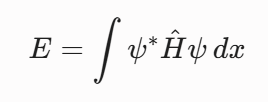
Mathematically, if you have a normalized trial wave function ψ, the expected energy E is given by:
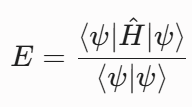
If your trial function isn’t normalized, you just divide by the overlap integral:
The core rule of the variational principle says that this calculated energy E will always satisfy the following:
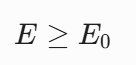
where E0 is the true, absolute ground-state energy. The closer your guessed wave function is to the real deal, the closer your calculated energy gets to E0. When you hit the exact eigenfunction, the energy reaches its absolute minimum. Mastering this minimization trick is a massive advantage for scoring points in the quantum mechanics section of CSIR NET, IIT JAM, and GATE.
Worked Example: Variational Principle For CSIR NET and Its Applications
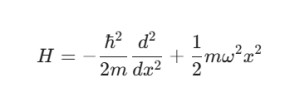
Let’s see how this works with a classic example: a one-dimensional harmonic oscillator. The Hamiltonian is:
Say we don’t know the exact ground state, so we guess a Gaussian trial wave function with an adjustable parameter α:
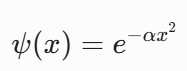
When you plug this into our energy equation and do the math, you get an expression for energy that depends on α. To find the best possible estimate, you take the derivative with respect to α, set it to zero (dE/dα = 0), and solve for α.
Because our guess matches the symmetry of the system perfectly, this optimization gives us the exact ground-state energy:
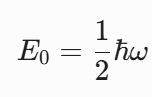
In the real exam, your guess won’t always be this perfect, but the steps stay identical. Just keep an eye on your boundary conditions—if your potential goes to infinity at a certain point, your trial wave function must drop to zero there too.
Misconception: Variational Principle is only for Simple Systems in the variational principle for CSIR NET
A common trap many aspirants fall into is thinking the variational principle only matters for basic textbook problems or simple one-electron setups. That is a total misconception.
In reality, this method is a workhorse for highly complex systems like heavy molecules or solid-state structures where exact solutions are literally impossible to compute. The trick isn’t the system itself; it’s how smart you are with your trial wave function. By mixing and matching linear combinations of atomic orbitals or using adjustable parameters, you can tackle incredibly messy quantum landscapes. It’s all about building a flexible guess that captures the physics of the system.
Application: Variational Principle in Quantum Chemistry
This mathematical tool is a big deal in quantum chemistry. When scientists want to map out molecular structures, calculate bond energies, or see how electrons behave around multiple nuclei, they rely heavily on the variational principle.
Since the Schrödinger equation gets notoriously jammed when more than two particles interact, minimizing the energy expression is the cleanest way to get highly accurate approximations. It allows researchers to predict whether a chemical bond will form and how stable a molecule will be, all without needing an impossible, exact mathematical solution.
Exam Strategy: Tips for Solving Variational Principle Problems
When you are racing against the clock in the CSIR NET exam, you need a game plan for these questions. Here are two quick tips to keep in mind:
-
Look for Symmetry: Before doing any heavy integration, check the potential. If the potential is symmetric (even), your trial wave function should generally be even too. Eliminating options based on boundary conditions and symmetry saves precious minutes.
-
Optimize Efficiently: Once you set up your energy expectation value, find the variable parameter, differentiate, and set it to zero.
We walk through these exact calculus shortcuts and pattern-recognition tricks in our study sessions at VedPrep, combining video walkthroughs with targeted practice questions to make the math second nature.
Variational Principle For CSIR NET: Advanced Topics in Variational Principle For CSIR NET
Beyond basic atomic models, this principle pops up in advanced condensed matter physics to describe how solids and liquids behave at the microscopic level.
For instance, when physicists study crystalline solids, they use variational methods to calculate elastic constants and map out phonon frequencies (the collective vibrations of the crystal lattice). In fluid dynamics and liquid state physics, it helps estimate structure factors that describe how particles pack together and move. It proves that a clean approximation tool can scale up to handle macro-level physical properties.
Conclusion
The variational principle is easily one of the most practical tools in your quantum mechanics toolkit. It transforms impossible differential equations into straightforward minimization problems, giving you a clear path to estimate ground-state energies.
For anyone aiming to clear the CSIR NET, getting comfortable with this method is a non-negotiable step to boosting your score in Unit 1. If you ever feel stuck on the math or need extra practice problems to build your confidence, feel free to check out the community resources and courses we have set up at VedPrep to keep your preparation on track.
To know more in detail from our expert, watch our YouTube video:
Frequently Asked Questions
How is the variational principle used in quantum mechanics?
The variational principle is used to find the best possible wave function for a system, which in turn provides an estimate of the ground state energy. This is achieved by minimizing the energy expectation value with respect to the wave function.
What is the significance of the variational principle in physical chemistry?
The variational principle plays a crucial role in physical chemistry as it provides a powerful tool for approximating molecular structures, energies, and properties. It's widely used in quantum chemistry to study molecular systems.
What are the limitations of the variational principle?
The variational principle provides an upper bound to the ground state energy, but it does not guarantee the exact solution. The accuracy of the result depends on the choice of the trial wave function.
How does the variational principle relate to the Schrödinger equation?
The variational principle is closely related to the Schrödinger equation, as it provides a way to find approximate solutions to the equation. The Schrödinger equation is a fundamental equation in quantum mechanics that describes the time-evolution of a quantum system.
What is the Rayleigh-Ritz method?
The Rayleigh-Ritz method is a mathematical approach used in conjunction with the variational principle to find the best possible wave function for a system. It involves expanding the wave function in a basis set and minimizing the energy expectation value.
What is the significance of the variational principle in quantum chemistry?
The variational principle plays a crucial role in quantum chemistry as it provides a powerful tool for approximating molecular structures, energies, and properties. It's widely used to study molecular systems and predict their behavior.
How can I apply the variational principle to solve problems in CSIR NET?
To apply the variational principle in CSIR NET, focus on understanding the mathematical formulation and its application to simple systems. Practice solving problems using the variational principle to find the ground state energy of a system.
What types of questions can I expect in CSIR NET regarding the variational principle?
In CSIR NET, you can expect questions that test your understanding of the variational principle, its application to quantum systems, and its significance in physical chemistry. Questions may involve mathematical derivations, conceptual understanding, and problem-solving.
How can I use the variational principle to estimate the ground state energy of a system?
To estimate the ground state energy using the variational principle, choose a trial wave function, calculate the energy expectation value, and minimize it with respect to the wave function. This provides an upper bound to the ground state energy.
What are common mistakes students make when applying the variational principle?
Common mistakes include incorrect mathematical derivations, misunderstanding the concept of the trial wave function, and failure to minimize the energy expectation value. It's essential to carefully derive the mathematical expressions and choose an appropriate trial wave function.
How can I avoid errors when using the variational principle?
To avoid errors, ensure that you carefully derive the mathematical expressions, choose an appropriate trial wave function, and minimize the energy expectation value. Practice solving problems to develop a deep understanding of the concept.
What are some advanced applications of the variational principle?
Advanced applications of the variational principle include its use in density functional theory, quantum Monte Carlo methods, and machine learning-based approaches. These methods have been successful in studying complex systems and materials.
How does the variational principle relate to other quantum mechanical methods?
The variational principle is closely related to other quantum mechanical methods, such as perturbation theory and the Rayleigh-Ritz method. Understanding these connections can provide a deeper insight into the underlying mathematical structure of quantum mechanics.
How can I use machine learning-based approaches with the variational principle?
Machine learning-based approaches can be used in conjunction with the variational principle to optimize the wave function and estimate the ground state energy. These methods have shown great promise in studying complex systems and materials.