

If you are gearing up for the IIT JAM Biotechnology exam, you already know that microbiology isn’t just about memorizing shapes of bacteria. A massive chunk of the paper tests how you handle them in a lab context. Control of microorganisms is one of those high-yield topics that can easily net you crucial marks.
Whether you are aiming for IIT JAM, or keeping your options open for GATE, CSIR NET, or CUET PG, mastering Control of microorganisms is non-negotiable. Let’s break down exactly what you need to know, skip the textbook fluff, and look at this like actual scientists preparing for a major exam.
Syllabus: Control of microorganisms (Sterilization) For IIT JAM
While you might be laser-focused on the IIT JAM right now, it helps to see the bigger picture. In the grander scheme of national exams like CSIR NET, this topic plugs right into Unit 2 (Cell Biology and Physiology).
If you open up classic textbooks like Lehninger Principles of Biochemistry or Microbiology: An Evolving Science by Slonczewski and Foster (a favorite reference for James E. Rothman’s lectures), you will find deep chapters on microbial control. For IIT JAM, you don’t need to get lost in every historical detail, but you absolutely must understand the physical and chemical laws governing how microbes die. The weightage varies every year, but you can usually bet on seeing at least a couple of direct multiple-choice questions (MCQs) or numerical answer type (NAT) questions on this topic.
Core Principles of Control of microorganisms (Sterilization) For IIT JAM
Let’s get our definitions straight first, because exam conveners love to trick you with subtle wordplay in Section A.
The Golden Rule: Control of microorganisms is absolute. There is no such thing as “partially sterile.” It means the complete destruction or removal of all living organisms, including highly resilient bacterial endospores and viruses.
To master the control of microorganisms, you need to separate these four terms clearly:
- Sterilization: Destroying every single living cell, spore, and virus on an object or in a fluid.
- Disinfection: Killing or inhibiting disease-causing microbes on inanimate surfaces. It doesn’t usually kill endospores.
- Sanitization: Cleaning surfaces to reduce microbial counts to safe public health levels (think of washing dishes at a restaurant).
- Antimicrobial agents: Chemicals or physical processes that either kill microbes (-cidal agents) or just stop them from multiplying (-static agents).
Key Concepts Explained in Control of microorganisms (Sterilization) For IIT JAM
Microbes are tough, but they have vulnerabilities. We primarily exploit their weaknesses using three strategies: heat, chemicals, and radiation. Here is how they stack up for your syllabus:
1. Moist Heat vs. Dry Heat
As per, Control of microorganisms, autoclaving is the undisputed king of moist heat sterilization. It works like a glorified pressure cooker, using saturated steam under pressure to reach 121°C at 15 psi for about 15–20 minutes. The pressure doesn’t kill the microbes; the high temperature does. The pressure is just there to hike the boiling point of water up past 100°C so steam can rapidly denature microbial proteins.
Dry heat (like a hot air oven) is much less efficient. Because air doesn’t transfer heat as well as steam, you need to crank it up to 160°C–170°C for a solid 2 hours to achieve the same result. You use this for glassware or oils that can’t handle moisture.
2. Gaseous and Radiation Methods
What if you need to sterilize plastic petri dishes, syringes, or heat-sensitive enzymes? An autoclave will melt them into a sad puddle. Instead, we turn to Ethylene Oxide (EtO) gas, which chemically disrupts microbial DNA, or Gamma radiation / UV rays to destroy cells without generating heat.
3. The Math: Microbial Death Kinetics
IIT JAM loves numbers. Microbial death follows first-order kinetics, meaning a constant fraction of the population dies every minute.
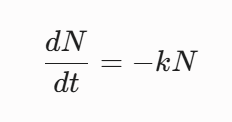
If you integrate this, you get a straight line on a semi-log plot. The metric you will see constantly in exam problems is the Decimal Reduction Time (D-value). This is simply the time (in minutes) required to kill 90% of the microbial population at a specific temperature.
Control of microorganisms (Sterilization) For IIT JAM: A Sample Problem
Let’s try a quick calculation that mirrors the type of NAT questions you might encounter on exam day.
The Problem
A culture of Escherichia coli contains 106 viable cells per mL. If a 1 mL sample of this culture is subjected to a sterilization process that reduces the viable cell count by a factor of 104, what will be the viable cell count per mL after sterilization?
Step-by-Step Solution
Step 1: Note down your initial count.
The problem states your initial cell count (N₀) is:
N₀ = 106 cells/mL
Step 2: Apply the reduction factor.
The process reduces the count by a factor of 104 (which is a 4-log reduction). To find the remaining cells (Nt), we divide our initial population by this factor:
Nt = 106/104 = 106-4 = 102 cells/mL
Step 3: State the final answer.
The final viable cell count is 100 cells/mL (or 102).
When you encounter these in the real exam, just remember that every “1-log reduction” means shifting the decimal point one place to the left.
Common Misconceptions About Sterilization
The single biggest trap students fall into is using “sterilization” and “disinfection” interchangeably.
Imagine you wipe down your study desk with a standard store-bought disinfectant spray. It feels clean, and it probably wiped out most vegetative bacterial cells. But if a hardy bacterium like Bacillus subtilis left behind endospores on that desk, your spray won’t touch them. The surface is disinfected, but it is absolutely not sterile.
We see students stumble on this distinction every year during mock tests at VedPrep. Always look closely at the question context—if it involves hospital surgical tools or cell culture media, disinfection isn’t good enough; it requires absolute Control of microorganisms.
Real-World Applications of Control of microorganisms (Sterilization) For IIT JAM
To make this stick, let’s look at a fictional but realistic lab scenario to understand Control of microorganisms.
An Everyday Lab Scenario: Imagine you are working on your master’s thesis and need to run a Polymerase Chain Reaction (PCR) to amplify a tiny fragment of DNA. If a single stray bacterial cell or a speck of fungal dust lands in your master mix, its DNA will amplify right alongside your target, ruining weeks of work.
To prevent this, you pass your buffers through a 0.22-micrometer membrane filter (which physically traps bacteria because they are too large to pass through the pores), turn on the UV hood to crosslink any stray DNA on your pipettes, and use plastic tubes that have been blasted with gamma radiation at the factory.
This multi-layered approach to keeping things clean is what we call maintaining asepsis. From packaging life-saving vaccines in the pharmaceutical industry to canning food so it doesn’t spoil on grocery shelves, sterilization keeps modern science and society functioning.
Preparing Control of microorganisms (Sterilization) For IIT JAM for Your Exam
When you are mapping out your study schedule for Control of microorganisms, don’t try to memorize every single chemical disinfectant name under the sun. Instead, focus your energy on these high-yield zones:
- The specific parameters: Know the exact temperature, pressure, and time combos for autoclaving, pasteurization, and dry-heat ovens.
- The underlying physics: Understand how UV light causes thymine dimers, and how ionizing radiation shatters DNA strands.
- The math: Get comfortable calculating D-values and log reductions.
At VedPrep, we always advise students to tackle microbiology with a clear structure: understand the physical principle first, then look at the tool that uses it. If you want to see these concepts visualized with clear charts and past exam walk-throughs, feel free to check out our open-access resources or watch a free VedPrep lecture on microbial control methods.
Final Thoughts
Wrapping your head around the Control of microorganisms of microbial control might feel like a minor detail right now, but it’s one of those fundamental topics that bridges the gap between textbook theory and actual lab success. When you are sitting in that exam hall, don’t let the technical jargon or multi-step word problems throw you off. Keep it simple: break down the physical principles, map out the math step-by-step, and watch out for those tricky vocabulary traps. If you can master these core concepts now, you aren’t just saving yourself precious time on test day—you’re setting up a flawless foundation for your future research career.
To know more in detail from our faculty, watch our YouTube video:
Frequently Asked Questions
Why are bacterial endospores used as indicators for sterilization efficacy?
Bacterial endospores (like those from Geobacillus stearothermophilus) are incredibly resistant to heat, radiation, and chemicals due to their thick protein coats and dehydrated cores. If a process successfully kills these endospores, it is safe to assume all other vegetative cells and viruses have been destroyed as well.
Does the pressure inside an autoclave directly kill the microorganisms?
No, the pressure itself does not kill the microbes. The pressure is strictly there to raise the boiling point of water. At standard atmospheric pressure, water boils at 100°C, which isn't hot enough to kill endospores efficiently. Raising the pressure to 15 psi allows the steam to reach 121°C, which rapidly denatures microbial proteins.
Why is moist heat more effective than dry heat sterilization?
Moist heat (like steam) transfers heat energy much more efficiently than dry air because water molecules conduct heat faster. Additionally, water helps readily break the hydrogen bonds that hold microbial proteins together, causing them to denature and coagulate at lower temperatures and in less time.
What are the standard conditions for routine autoclaving?
The typical baseline conditions for autoclaving are 121°C (250°F) at 15 pounds per square inch (psi) of steam pressure for 15 to 20 minutes.
When would a scientist choose dry heat over autoclaving?
You use dry heat (like a hot air oven) for materials that can be damaged by moisture or cannot be penetrated by steam. Excellent examples include glass petri dishes, pipettes, powders, anhydrous fats, and oils.
What is the D-value (Decimal Reduction Time) in microbial death kinetics?
The D-value is the time required, in minutes, at a specific temperature to kill 90% of the microbial population. Visually, it represents the time it takes for the population line to drop by one logarithmic cycle on a semi-log plot.
What is the Z-value and how does it relate to the D-value?
The Z-value is the temperature change required to alter the D-value by a factor of 10 (or 1 log cycle). It essentially tells you how sensitive a specific microorganism is to changes in temperature.
How does UV radiation control microbial growth, and what is its main limitation?
UV radiation (specifically around 260 nm) is absorbed by microbial DNA, causing neighboring thymine bases to bond together into "thymine dimers." This distorts the DNA shape and blocks proper replication. Its massive limitation is poor penetrating power; it can only sterilize clean surfaces and air, not liquids or solids.
Which method is ideal for sterilizing heat-sensitive plastics like disposable syringes?
Since plastics warp and melt in an autoclave, they are typically sterilized using gaseous chemical agents like Ethylene Oxide (EtO) or exposed to ionizing radiation like Gamma rays.
How does filtration differ from heat or radiation methods of microbial control?
Filtration does not kill or deactivate microorganisms; it physically removes them from a fluid based on pore size. Passing a liquid through a membrane with 0.22-micrometer pores traps bacteria and fungi, making it ideal for heat-sensitive enzyme solutions, vitamins, or antibiotics.
Can a standard 0.22-micrometer membrane filter remove viruses?
Generally, no. Most viruses range from 20 to 400 nanometers in size, allowing them to slip through standard 0.22-micrometer (220 nm) pores. To remove viruses physically, you need ultrafiltration membranes with much smaller pore ratings.
What is pasteurization, and does it achieve sterilization?
Pasteurization is a controlled heating process used to reduce the microbial load in beverages like milk and juice to eliminate pathogens and extend shelf life. It does not achieve sterilization because it doesn't kill endospores or heat-tolerant microbes.
What is the difference between Flash Pasteurization and the Holding Method?
Flash pasteurization (HTST) heats milk to 72°C for just 15 seconds, while the holding method (LTLT) uses a lower temperature of 63°C for a much longer 30 minutes. Flash pasteurization is preferred industrially because it preserves flavor and nutritional value better.
What does the term "asepsis" mean in a laboratory setting?
Asepsis refers to a state or technique designed to prevent the introduction of unwanted microorganisms into a sterile environment, such as a cell culture flask or a PCR master mix.