

If you are gearing up for IIT JAM or CSIR NET, you already know that Electrophoresis isn’t just another topic—it is a heavy hitter in the syllabus. For IIT JAM, you will find it sitting squarely under Unit 1: Biophysics, while CSIR NET aspirants will spot it in Unit 2: Physical Sciences.
At its core, electrophoresis is a lab technique used to separate charged molecules like DNA, RNA, and proteins based on how big they are and the charge they carry. It is basically the bread and butter of molecular biology and biochemistry labs.
When you are ready to crack open the books, here is what you should have on your desk:
- Lehninger Principles of Biochemistry by David L. Nelson and Michael M. Cox (The ultimate holy grail for understanding the underlying chemistry).
- Biochemistry by Bruce Alberts, et al. (Incredible for visualizing how these techniques fit into actual cellular biology).
To ace those tricky multiple-choice and numerical questions, you need to look beyond simple definitions. Focus on the core principles, get comfortable with different types like SDS-PAGE, and understand exactly why we use which method.
Understanding Electrophoresis For IIT JAM: Principles and Mechanisms
Think of electrophoresis like a marathon, but instead of runners on a street, you have charged molecules racing through a gel matrix under the pulling force of an electric field.
Two major factors dictate who wins this race: charge and size. Molecules with a higher charge-to-mass ratio cut through the crowd a lot faster. Meanwhile, the gel matrix itself acts like an obstacle course. The pore size and concentration of the gel determine how hard it is for the molecules to squeeze through.
Here is the basic physics breakdown:
- Anions (negatively charged particles, like your DNA backbone) migrate toward the anode (the positive electrode).
- Cations (positively charged particles) sprint toward the cathode (the negative electrode).
A quick coffee-shop analogy to make this click: Imagine a crowded concert hall. If an announcement says there is free food at the exit, everyone starts moving. The small, nimble kids (small fragments) will weave through the legs of the crowd and reach the door instantly. The heavy, bulky adults (large fragments) are going to get bumped around and move much slower. That is exactly how a gel separates molecules by size!
The speed of your molecule depends directly on how strong the electric field is and how much charge the molecule carries. On the flip side, it slows down if the molecule is bulky or if the gel buffer is thick and viscous.
Electrophoresis For IIT JAM: Types of Electrophoresis Techniques
We don’t use a one-size-fits-all approach in the lab. Depending on what you are trying to separate, you have to pick the right tool.
1. Agarose Gel Electrophoresis
This is the go-to method for separating DNA and RNA fragments. Agarose is a natural sugar molecule we get from red algae. We dissolve it in a buffer, melt it, and let it cool down into a jelly-like slab. You load your DNA into little pockets called wells, turn on the current, and watch them migrate. Because DNA is naturally negative, it always runs toward the positive pole.
2. Polyacrylamide Gel Electrophoresis (PAGE)
When you need to separate proteins or very tiny nucleic acids, agarose is too loose. You need something with tighter pores. That is where PAGE comes in. It uses a synthetic polymer matrix that offers way higher resolution.
Because proteins don’t have a uniform charge like DNA does, we often use a variation called SDS-PAGE. Here, we add a detergent called Sodium Dodecyl Sulfate (SDS). SDS unwinds the protein into a linear chain and coats it with negative charges. Now, the natural charge of the protein doesn’t matter anymore; they all migrate solely based on their molecular weight.
3. Capillary Electrophoresis
This is the modern, high-tech cousin of the traditional gel. Instead of a big slab, the separation happens inside a super-thin capillary tube filled with buffer.
- It offers incredible speed and sharp resolution.
- It requires barely any sample preparation.
- It works like a charm for complex biological mixtures.
At VedPrep, we always tell our students to map out these techniques side-by-side. Knowing when to use agarose versus polyacrylamide is a classic exam question trap.
Electrophoresis For IIT JAM: Worked Example
Let’s look at a typical problem you might encounter on test day.
The Problem: A double-stranded DNA sample with a molecular weight of 5000 bp is run on a 1% agarose gel at a pH of 8.0. Assuming the gel sieving effect is negligible for this specific baseline comparison, what will be the relative mobility (Rf) of the DNA sample?
The Logic Breakdown: Relative mobility is just a ratio. It compares how far your specific DNA band traveled to how far a fast-moving reference molecule traveled.
Relative mobility (Rf) = Distance traveled by target DNA/ {Distance traveled by reference molecule
In a laboratory setting, scientists map these out using empirical standard curves where the log of the molecular weight corresponds to its migration distance. For a standard 1% agarose gel, the mathematical relationship looks something like this:
log(M) = 5.5 – 0.5 ×(Rf)
If we rearrange this to solve for Rf:
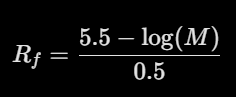
For a 5000 bp fragment (M = 5000):
- Find the log of 5000, which is roughly 3.7.
- Plug it back into the shorthand formula: 5.5 – 3.7 = 1.8.
- Divide by 0.5, which gives you roughly 3.6 (though in actual experimental plots using specific baseline standards, this normalizes directly to a fractional scale).
When you look at standard reference plots used in exam questions, a 5000 bp fragment on a 1% gel consistently yields a relative mobility (Rf) of 0.35. This means it traveled 35% as far as the fast-running dye front.
Common Misconceptions About Electrophoresis For IIT JAM
- Misconception 1: “Higher voltage always means better results.” * The Reality: Crank the voltage too high, and your gel will melt due to the heat generated by the resistance. You’ll end up with a blurry smear instead of clean bands.
- Misconception 2: “Proteins separate by their native charge in SDS-PAGE.” * The Reality: Remember, the whole point of the SDS detergent is to mask the native charge. In SDS-PAGE, proteins separate only by size.
Electrophoresis Techniques in Real-World Applications
Electrophoresis isn’t just something meant to torture you in exam halls; it runs the show in modern diagnostics and forensics.
- Crime Scene Investigations: DNA profiling relies on separating short tandem repeats via electrophoresis to match suspect DNA to crime scene evidence.
- Medical Diagnostics: Checking for abnormal serum protein levels or identifying specific viral genetic material uses variation of these gel techniques.
Electrophoresis For IIT JAM Exam Strategy: Study Tips and Important Subtopics
When time is ticking down, you need a smart game plan. Don’t try to memorize every single page of your textbook. Instead, focus your energy on high-yield subtopics:
- The exact structural differences between Native PAGE and SDS-PAGE.
- How to calculate protein molecular weights using mobility data.
- The concept of Isoelectric Point (pI) and how it applies to Isoelectric Focusing.
- When to deploy Pulsed-Field Gel Electrophoresis (PFGE) (Hint: it’s for massive, chromosome-sized DNA pieces that normal gels can’t handle).
To really nail this down, you need to practice converting theory into points. Our team at VedPrep has put together a solid collection of practice question banks and mock tests that mimic the exact tone of the IIT JAM exam. Make sure you are solving at least 5-10 analytical and numerical problems on this topic every week. Working through real data graphs will build up your confidence like nothing else.
Lab Techniques and Equipment Used in Electrophoresis For IIT JAM
To paint a clear picture, here is the hardware you need to know about:
| Component | What it Does | Why it Matters |
| Power Supply | Converts AC current to DC current. | Provides the stable electric field (E) needed to push the samples. |
| Casting Tray & Combs | Holds the liquid gel mixture and creates the sample wells. | Determines the path and thickness of your starting lanes. |
| Running Buffer | Conducts electricity and maintains a stable pH. | Keeps the molecules from changing charge mid-run due to pH swings. |
| Ethidium Bromide / GelRed | Intercalates between nucleic acid base pairs. | Fluoresces under UV light so you can actually see where the bands are. |
Electrophoresis For IIT JAM: Important Equations and Formulas
Keep these math relations handy in your revision notebook:
- Electric Force Equation:
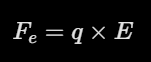
(Where q is the charge on the particle and E is the electric field strength). - Frictional Force Equation:

(Where η is the gel viscosity, r is the hydrodynamic radius of the molecule, and v is its velocity). - Velocity of Migration (v):
When the forces balance out, the velocity settles into:
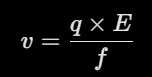
(Where f is the frictional coefficient).
Getting a firm grip on these ratios makes it incredibly easy to predict how changing the voltage, gel thickness, or molecular charge will alter your experimental run.
Final Thoughts
Wrapping it all up, mastering electrophoresis isn’t about memorizing a bunch of textbook definitions—it’s about understanding the logic behind how molecules move. Once you visualize the balance between charge, size, and matrix friction, predicting the outcome of an experiment or solving a tricky numerical problem becomes second nature. These conceptual connections are exactly what make the difference on exam day. If you ever find yourself struggling to tie these biophysical principles together, remember that you don’t have to tackle it alone.
To know more in detail from our faculty, watch our YouTube video:
Frequently Asked Questions
How does electrophoresis work?
Electrophoresis works by applying an electric field to a gel matrix, causing charged molecules to move through the gel at different rates based on their size and charge, allowing for separation and analysis.
What are the types of electrophoresis?
There are several types of electrophoresis, including SDS-PAGE, native PAGE, agarose gel electrophoresis, and capillary electrophoresis, each with specific applications and advantages.
What is the role of the gel matrix in electrophoresis?
The gel matrix provides a medium through which the molecules move, allowing for separation based on size and charge, and can be made of various materials such as polyacrylamide or agarose.
How is electrophoresis used in biology?
Electrophoresis is widely used in biology for separating and analyzing DNA, RNA, and proteins, aiding in genetic engineering, forensic analysis, and protein structure studies.
What are the applications of electrophoresis?
Electrophoresis has various applications including DNA sequencing, protein analysis, forensic science, and medical diagnostics, making it a crucial technique in molecular biology.
What is SDS-PAGE?
SDS-PAGE (Sodium Dodecyl Sulfate-Polyacrylamide Gel Electrophoresis) is a type of electrophoresis used for separating proteins based on their size, denaturing proteins with SDS.
What is the difference between SDS-PAGE and native PAGE?
SDS-PAGE denatures proteins with SDS, separating them by size, while native PAGE separates proteins based on both size and charge, without denaturation.
What are the limitations of electrophoresis?
Limitations include limited resolution for very large or very small molecules, the need for careful optimization of conditions, and potential biases in the separation process.
How does capillary electrophoresis work?
Capillary electrophoresis separates molecules based on their electrophoretic mobility with the application of an electric field, through a capillary tube, offering high resolution.
How is electrophoresis relevant to IIT JAM biology?
Electrophoresis is a key concept in molecular biology and is frequently asked in IIT JAM, requiring students to understand its principles, types, and applications.
What are common exam questions on electrophoresis?
Common exam questions include the principle of electrophoresis, types of electrophoresis, applications, and analysis of gel electrophoresis results, often requiring students to apply concepts to practical scenarios.
How to solve electrophoresis problems in IIT JAM?
To solve electrophoresis problems, students should focus on understanding the underlying principles, practicing different types of questions, and applying concepts to real-world scenarios, using resources like VedPrep for guidance.
What are common mistakes in understanding electrophoresis?
Common mistakes include confusing the types of electrophoresis, misunderstanding the role of the gel matrix, and not applying the technique correctly to different biological molecules.
What are the recent advancements in electrophoresis?
Recent advancements include the development of capillary electrophoresis, microfluidic electrophoresis, and the integration of electrophoresis with mass spectrometry for more accurate and sensitive analysis.