
Ferrocene For IIT JAM is a crucial topic in inorganic chemistry that requires a deep understanding of its structure, properties, and applications. It is essential for CSIR NET, IIT JAM, CUET PG, and GATE aspirants to master this subject to excel in their exams.
Syllabus: Inorganic Chemistry for IIT JAM
If you are gearing up for IIT JAM, you already know that organometallic chemistry is a heavyweight topic. Specifically, Ferrocene and its sandwich-complex cousins form a major chunk of the syllabus. For CSIR NET grads, you will find this under Section 3 (Transition Metal Chemistry), while for our IIT JAM crew, it is tucked neatly into Chapter 2 (Transition Metal Complexes and Organometallic Compounds).
When you are hitting the books, classic texts like O.P. Tandon’s Inorganic Chemistry or the heavy-hitting Advanced Inorganic Chemistry by Atkins and Jones are excellent go-tos. They break down the structural quirks and reaction pathways of these compounds quite well. Here at VedPrep, we always tell our students to skip the mindless memorization and instead focus on why these complexes behave the way they do. Master the fundamentals of metal-ligand bonding here, and you will breeze through a ton of exam questions.
Understanding Ferrocene For IIT JAM: Structure and Properties
Let’s talk about what Ferrocene actually looks like. Imagine a classic street-cart ice cream sandwich—you have two crunchy chocolate wafers holding a scoop of vanilla ice cream right in the middle. In Ferrocene, those two wafers are flat, five-membered aromatic rings called cyclopentadienyl (C5H5–) ligands, and the ice cream is a single iron (Fe2+) atom sandwiched perfectly between them.
Now, let’s clear up a massive piece of misinformation in the original text: Ferrocene is absolutely NOT paramagnetic. In fact, this is a classic trap that catches students off guard in exams! Let’s break down the actual math and chemistry so you never lose marks on this:
-
Oxidation State: The overall complex is neutral. Since each cyclopentadienyl ring carries a -1 charge, the iron center sits in a +2 oxidation state (Fe2+).
-
Electron Counting: An isolated iron atom has 8 valence electrons. Lose two to become Fe2+, and you are left with a d6 configuration.
-
Crystal Field Splitting: Because the cyclopentadienyl rings are incredibly strong-field ligands, they split the d-orbitals in a way that forces all 6 of those d-electrons to pair up completely in the lower-energy bonding orbitals (e2g and a1g).
Because there are exactly zero unpaired electrons, Ferrocene is completely diamagnetic. If you run the spin-only formula:
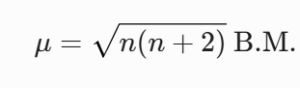
Since n = 0 (where n is the number of unpaired electrons), the magnetic moment μ is exactly 0 B.M.
Keep this locked in your memory bank because examiners love testing this specific property to see who actually understands ligand field theory versus who is just guessing.
Ferrocene For IIT JAM: Preparation and Synthesis Methods
how do we actually cook up this compound in a lab? There are two main recipes you need to know for the exam.
First, you can heat up cyclopentadiene with iron pentacarbonyl (Fe(CO)5). Think of it like a rowdy group of friends moving into an apartment—the incoming cyclopentadienyl rings are way more aggressive, so they boot out the carbonyl groups, leaving you with a highly stable Ferrocene molecule.
The second method—and one we emphasize heavily in our prep sessions at VedPrep—is reacting sodium cyclopentadienide (C5H5Na) with iron(II) chloride (FeCl2). Note that the original text mentioned iron(III) chloride (FeCl3), which is a common mix-up! While you can use FeCl₃, it requires an extra step because the cyclopentadienyl anion has to act as a reducing agent to bring Fe3+ down to Fe2+ first. Using FeCl₂ directly is much cleaner because the Fe2+ ions instantly pair up with the C5H5– anions to yield pure, orange crystals of Ferrocene.
This incredible stability comes down to the perfect covalent sharing of electrons between the iron atom and the π-clouds of the two organic rings, giving the complex a full 18-electron valence shell.
Ferrocene For IIT JAM: Applications and Importance
Ferrocene isn’t just an abstract molecule meant to torture you during exam season; it is actually a massive workhorse in the real world. In industrial chemistry, it acts as a phenomenal catalyst, helping speed up reactions like turning unsaturated oils into stable plastics without needing crazy high temperatures or crushing pressures.
The medical field is also tinkering with it. Scientists are building Ferrocene derivatives to act as smart missiles against cancer cells and nasty microbes, using the molecule’s unique shape to disrupt bad cellular machinery. Over in materials science, it is used to spin out conducting polymers and specialized magnetic resonance imaging (MRI) contrast agents.
Why It Matters:
-
Electronics: It helps build flexible organic light-emitting diodes (OLEDs).
-
Versatility: It serves as a starting block for creating other incredibly complex, redox-active molecules.
Common Mistakes to Avoid: Ferrocene For IIT JAM
Let’s chat about where students usually trip up so you can dodge those landmines on test day.
First off, do not mistake the bonding in Ferrocene as purely ionic. Even though we talk about Fe2+ and C5H5– ions when we break down oxidation states, the actual bonding in the sandwich complex is heavily covalent. The cloud of electrons from the aromatic rings shares space directly with the iron atom’s d-orbitals.
Second, because it looks a bit exotic, students often assume Ferrocene must be hyper-reactive and ready to fall apart at any moment. The reality is quite the opposite. Because it satisfies the 18-electron rule and possesses aromatic stability, it is incredibly robust. It resists attacks by acids and bases and handles high heat like a absolute champ.
Exam Strategy: Tips and Tricks for Ferrocene For IIT JAM
When you are staring down an organometallics question, remember that Ferrocene (Fe(C₅H₅)₂) is essentially an aromatic beast. Because those cyclopentadienyl rings behave a lot like benzene, Ferrocene loves undergoing Electrophilic Aromatic Substitution (EAS). It will readily take part in Friedel-Crafts acylation, but it absolutely hates direct nitration or halogenation because strong oxidizing acids will just ruin the iron center.
Another quick tip: do not confuse its synthesis with the classic Williamson ether synthesis—that is for ethers, not sandwich complexes! Focus your energy on how the cyclopentadienyl anion is generated and how it coordinates with the metal. At VedPrep, we always recommend sketching out these mechanism pathways by hand at least a few times. Seeing how the electrons move makes it a lot easier to recall under exam pressure.
Solved Example
Let’s look at a typical problem you might encounter to make sure everything we just covered clicks.
Question: A student reacts sodium cyclopentadienide with anhydrous FeCl2 to form an orange, crystalline organometallic compound. Identify the compound, state the oxidation state of the central metal, and determine its magnetic behavior.
Solution:
-
Identification: The compound is Ferrocene, Fe(η5-C5H5)2.
-
Oxidation State: Each cyclopentadienyl ligand has a -1 charge. To keep the complex neutral, the iron atom must be in the +2 oxidation state (Fe2+).
-
Magnetic Behavior: As an Fe2+ system (d6) surrounded by strong-field cyclopentadienyl ligands, all 6 electrons completely pair up in the lower e2g and a1g orbitals. With 0 unpaired electrons, the compound is strictly diamagnetic.
| Compound | Core Structure | Magnetic Nature | Valence Electron Count |
| Ferrocene Fe(C5H5)2 | Sandwich complex (Fe2+ between two parallel C5H5- rings) | Diamagnetic (Zero unpaired electrons) | 18 Electrons (Stable) |
Real-World Applications: Ferrocene in Materials Science
To give you a better mental picture of how this works in the real world, let’s look at a fictional scenario. Imagine a tech company trying to build a futuristic smartphone screen that can roll up like a piece of paper but still change colors instantly when you tap a button. Regular plastics can bend, but they don’t conduct electricity or react to magnetic fields very well.
To solve this, materials scientists can link Ferrocene molecules together into long polymer chains. By embedding those iron-filled sandwiches directly into the backbone of the plastic, they create a hybrid material that can carry an electric current and change its optical properties on demand. These types of electrochromic devices, along with advanced magnetic sensors, are exactly why understanding the basic chemistry of Ferrocene is so incredibly valuable today.
Conclusion
Wrapping your head around Ferrocene isn’t just about ticking off a box for your IIT JAM syllabus; it’s about unlocking how transition metals and organic molecules pull off incredible chemistry together. Once you move past the common exam traps—like keeping its diamagnetic nature straight and mastering its electrophilic reactions—you will start seeing this little iron sandwich as the predictable, high-scoring topic it actually is. Take it one concept at a time, keep practicing those electron-counting rules, and remember that our team at VedPrep is always in your corner to help clear up the tricky parts.
To kow more in detail from our expert faculty, watch our YouTube video:
Frequently Asked Questions
What is the oxidation state of iron in Ferrocene?
The iron atom in Ferrocene is in the +2 oxidation state (Fe2+). Since the overall molecule is neutral and each of the two cyclopentadienyl ligands carries a -1 charge, the math leaves iron with a +2 charge.
How many valence electrons does Ferrocene have?
Ferrocene is a textbook example of a stable 18-electron complex. The Fe2+ ion provides 6 valence electrons, and each of the two η5-cyclopentadienyl rings donates 6 π-electrons (6 + 6 + 6 = 18).
Why is Ferrocene called a "sandwich compound"?
It gets this nickname from its geometry. The central iron atom is physically located right in the middle, sandwiched perfectly between two parallel, planar cyclopentadienyl rings.
Does Ferrocene show aromatic behavior?
Yes, it does! The cyclopentadienyl rings obey Hückel's rule (4n+2 π-electrons where n=1), making them aromatic. Because of this, Ferrocene undergoes typical aromatic reactions like Friedel-Crafts acylation even faster than benzene.
What happens when Ferrocene undergoes hapticity changes?
In its ground state, Ferrocene features η5 (pentahapto) bonding, meaning all five carbon atoms of each ring are equidistant from the iron center. While the rings can rotate, dropping to a lower hapticity (like η1 or η3) is highly unfavorable because it breaks the stable 18-electron configuration.
Can Ferrocene undergo direct nitration or halogenation?
No, and this is another major pitfall to watch out for. Because strong oxidizing acids (like HNO3) or halogens will instantly oxidize the iron center from Fe2+ to the unstable Fe3+ ferricenium ion, direct nitration or halogenation fails.
What is the hapticity (η) of the ligands in Ferrocene?
The hapticity is η5 for both rings. This means that all five carbon atoms of each cyclopentadienyl ring are actively bonding and sharing their π-electron cloud with the central iron atom.
Is Ferrocene soluble in water?
No, Ferrocene is highly lipophilic (fat-soluble) and practically insoluble in water. However, it dissolves easily in organic solvents like benzene, ether, and alcohol.
What are the two main conformations of Ferrocene?
Ferrocene can exist in either a staggered (D5d symmetry) or an eclipsed (D5h symmetry) conformation. In the gas phase, the energy barrier between the two is incredibly small, but the eclipsed form is slightly more stable.
What is the Williamson reaction trap mentioned in exam prep?
Students often confuse organometallic synthesis with organic ether synthesis. At VedPrep, we remind our students that the Williamson ether synthesis is entirely unrelated to making Ferrocene; Ferrocene requires the coordination of a carbanion with a transition metal halide.
Why is Ferrocene so thermally stable?
Its stability comes down to satisfying the 18-electron rule and the extensive covalent orbital overlap between the iron's d-orbitals and the aromatiπ-system of the rings. It can withstand temperatures up to nearly 400°C without breaking down!
How does Ferrocene react to Friedel-Crafts Acylation?
It reacts incredibly smoothly. Because the electron density on the rings is high, reacting Ferrocene with an acyl chloride in the presence of a Lewis acid like AlCl3 easily yields acetylferrocene.