
Genetic code refers to the set of rules that translate DNA or RNA sequences into specific amino acids, forming the building blocks of proteins. Students must understand this concept to excel in IIT JAM and other competitive exams.
Understanding the Syllabus and Textbook Framework
If you are gearing up for the IIT JAM Biotechnology paper, you already know that Molecular Biology (Unit 2) holds a massive chunk of marks. At the heart of this unit sits the Genetic Code—the cellular translation manual that you simply cannot skip.
To really get a grip on this topic without losing your mind, you need the right books. Skip the generic online summaries and head straight for standard textbooks like ‘Molecular Biology of the Gene’ by Watson or Benjamin Lewin’s ‘Genes’. Leroy E. Hood’s ‘Genetics’ is another fantastic option. These books dive deep into the experimental proofs of how the code was cracked, which is exactly where IIT JAM loves to twist questions.
Before you start highlighting every line, check out the official exam pattern and marking scheme on the organizing institute’s website. Knowing whether a topic usually shows up as a Multiple Choice Question (MCQ), a Multiple Select Question (MSQ), or a Numerical Answer Type (NAT) completely changes how you study. Here at VedPrep, we always remind students that smart strategy beats blind hard work every single time.
What is Genetic Code For IIT JAM: Definition, Properties, and Importance
What actually is the Genetic Code?
Think of it as a universal bilingual dictionary. Your cell’s nucleus speaks the language of nucleic acids (DNA and RNA), but the ribosome needs to build proteins using the language of amino acids. The genetic code is the set of rules that bridges this gap.
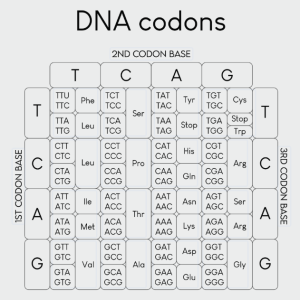
The code reads nucleotides in groups of three, called codons. Since we have 4 different bases ($A$, $U$, $G$, $C$) and they are read in triplets, we get $4^3 = 64$ possible codons. Out of these, 61 code for specific amino acids, while 3 act as stop signals.
To make this crystal clear, let’s look at the four major properties you will definitely see in your exam papers:
-
Universality: From a tiny E. coli bacterium swimming in a petri dish to the blue whale in the ocean, the codon UUU codes for Phenylalanine. It’s the ultimate proof that all life on Earth shares a common ancestor.
-
Degeneracy (or Redundancy): You have 61 codons but only 20 standard amino acids. This means some amino acids are popular and have multiple codons coding for them. For example, Leucine has six different codons!
-
Non-overlapping: The cell reads the mRNA linearly, three bases at a time, without skipping or reusing any letters. If the sequence is AUGCUC, it reads AUG then CUC. It never reads UGC as a middle codon.
-
Commaless: There are no punctuation marks, spaces, or pauses in between the codons. Once translation starts, the ribosome just chugs along until it hits a stop sign.
Genetic Code For IIT JAM: Types of Genetic Code and Its Variations
While we talk about the Genetic Code being universal, nature loves throwing curveballs. This is a favorite hunting ground for IIT JAM paper setters. There are two primary types of genetic codes you need to know:
The Universal (Standard) Genetic Code
This is the default setting used by the vast majority of nuclear DNA across organisms. When your cells synthesize proteins in the cytoplasm, they follow this standard rulebook word for word.
The Mitochondrial Genetic Code
Mitochondria have their own DNA and their own translation machinery, and they like to do things a bit differently. Over time, these organelles altered a few words in the dictionary.
Here is a quick look at how the standard code differs from the mitochondrial variations:
| Codon | Meaning in Standard Code | Meaning in Human Mitochondrial Code |
| UGA | Stop Codon | Tryptophan (Trp) |
| AUA | Isoleucine (Ile) | Methionine (Met) / Start Codon |
| AGA / AGG | Arginine (Arg) | Stop Codon |
Worked Example: Genetic Code For IIT JAM Style Question
Let’s solve a classic problem together. Suppose a question asks you to figure out the peptide sequence from this template DNA strand: 5′- ATG – CTC – GAG – 3′.
Here is the step-by-step breakdown to get it right:
-
Check Directionality: The sequence is given from 5′ to 3′. If this is the coding (sense) strand, the mRNA will look exactly like it, just with Uracil (U) instead of Thymine (T).
-
Transcribe to mRNA: 5′- AUG – CUC – GAG – 3′
-
Decode using the Codon Chart:
-
AUG → Methionine (This is your classic start codon!)
-
CUC → Leucine
-
GAG → Glutamic Acid
-
So, the correct protein sequence is Methionine – Leucine – Glutamic Acid. Because there are no stop codons (UAA, UAG, UGA) in this fragment, the chain doesn’t terminate prematurely.
Common Misconceptions About Genetic Code For IIT JAM
Let’s clear the air on a few things that often trip students up during self-study:
-
“The code is absolute and never changes.” As we just discussed with mitochondria and certain protozoans, the code is nearly universal, but not completely. Keep an eye out for exceptions.
-
“The Genetic Code physically builds the protein.” The code is just an abstract set of rules—an informational blueprint. It’s the tRNAs, ribosomes, and aminoacyl-tRNA synthetases that do the physical heavy lifting of translation.
-
“Genetic Code and Genetic Map are the same thing.” This is a huge mix-up. The genetic code tells you which triplet makes which amino acid. A genetic map shows you the physical coordinates and location of genes along a chromosome.
Real-World Applications of Genetic Code
Understanding this molecular code isn’t just about clearing an exam; it’s the bedrock of modern biotechnology.
In Genetic Engineering, because the code is universal, we can take the gene for human insulin, insert it into a bacterial cell, and the bacterium will read the code perfectly to produce human insulin. We use restriction enzymes to cut the DNA and ligases to paste it, but the shared genetic code makes the expression possible.
In Forensic Science, variations in non-coding regions—like Short Tandem Repeats (STRs)—help us create unique DNA profiles. It’s the ultimate tool for matching a suspect to a crime scene with absolute precision.
In Medicine, knowing the normal code lets us spot when things go wrong. A single base change in the codon for glutamic acid turns it into valine, resulting in Sickle Cell Anemia. Spotting these issues early allows for personalized medicine, where treatments are designed around your exact genetic makeup.
Exam Strategy: Tips and Tricks for Solving Genetic Code For IIT JAM Questions
When you are staring down the clock in the exam hall, you need to be both fast and accurate. Here is how you tackle these questions without breaking a sweat:
-
Don’t memorize all 64 codons: That is a waste of brain space. Instead, memorize the essential ones: the start codon (AUG) and the three stop codons (UAA, UAG, UGA).
-
Watch the Wobble Hypothesis: Remember that the third base of a codon can often change without altering the amino acid. Focus heavily on the first two bases when predicting mutations.
-
Check the reading frame: A single nucleotide deletion or insertion shifts the entire reading frame down the line. Always look for where the AUG starts to establish the correct frame.
We regularly practice these exact framing shortcuts at VedPrep to help students cut down their problem-solving time by half.
Key Concepts and Formulas for Genetic Code
Let’s summarize the core math and facts you need to keep on your fingertips:
-
Total Codons: 43 = 64
-
Sense Codons (Coding): 61
-
Nonsense Codons (Stop Signs): 3 (UAA / Ochre, UAG / Amber, UGA / Opal)
-
The Initiation Codon: AUG (Codes for Methionine in eukaryotes and Formyl-methionine in prokaryotes)
Final Thoughts
Wrapping your head around the Genetic Code is one of those milestones in your IIT JAM preparation where things finally start clicking into place. It’s not just about memorizing a table of letters; it’s about recognizing the elegant, logical rulebook that runs every single living cell on Earth. When you encounter tricky application-based questions or unexpected MSQs on exam day, staying grounded in the core properties—like degeneracy and its minor mitochondrial exceptions—will save you from easy mistakes.
To know more in detail from our faculty, watch our YouTube video:
Frequently Asked Questions
What are the historical names of the three stop codons?
IIT JAM loves classic biochemistry history trivia. The three stop codons have unique names based on how they were discovered:
-
UAA is called Ochre
-
UAG is called Amber
-
UGA is called Opal (or Umber)
What dual role does the AUG codon play?
AUG is the multitasker of the genetic code. First, it acts as the Initiation (Start) codon, telling the ribosome exactly where to start reading the mRNA frame. Second, it codes for the amino acid Methionine.
Does AUG code for the same type of Methionine in prokaryotes and eukaryotes?
In eukaryotes, AUG codes for normal Methionine. However, in prokaryotes (like bacteria), the starting AUG codes for N-formylmethionine (fMet). If AUG appears later in the middle of a bacterial mRNA sequence, it just codes for regular Methionine.
What does it mean when we say the genetic code is "degenerate"?
Degeneracy simply means redundancy. Since we have 61 sense codons but only 20 amino acids, many amino acids are specified by more than one codon. For example, Leucine, Serine, and Arginine are highly popular and have 6 different codons each.
Are there any amino acids that are NOT degenerate?
Yes, there are two exceptions that follow a strict "one codon, one amino acid" rule: Methionine (coded only by AUG) and Tryptophan (coded only by UGG).
How does degeneracy protect our cells from dangerous mutations?
Degeneracy acts as a genetic shock absorber. Because multiple codons map to the same amino acid, a random point mutation in your DNA might change a codon from CUU to CUC. Since both code for Leucine, the final protein remains completely unchanged. This is called a silent mutation.
What is the "Wobble Hypothesis" and who proposed it?
Proposed by Francis Crick, the Wobble Hypothesis explains that while the first two bases of an mRNA codon form strict, standard base pairs with the tRNA anticodon, the third base position has some flexibility ("wobble"). This allows a single tRNA molecule to recognize and bind to multiple different codons, saving the cell from needing 61 distinct tRNA molecules.
Is the genetic code completely universal?
It is nearly universal, but not absolutely. While the standard code applies to the vast majority of nuclear DNA across life forms, major exceptions exist in mitochondrial DNA and certain protozoans (like ciliates).
Can you give an example of a mitochondrial exception to the genetic code?
In the standard universal code, UGA is a stop codon. But if you look inside human mitochondria, UGA is translated as the amino acid Tryptophan. Similarly, AGA and AGG code for Arginine in the standard code, but act as stop codons inside human mitochondria.
What happens if a nucleotide is inserted or deleted in a coding sequence?
Because the genetic code is non-overlapping and lacks punctuation (commaless), adding or removing a single base shifts the entire downstream reading frame. This is known as a frameshift mutation. Every single codon downstream of the mutation gets misread, usually resulting in a completely non-functional or prematurely terminated protein.
What is a "nonsense mutation"?
A nonsense mutation occurs when a single base change accidentally converts a regular sense codon into a stop codon (like changing UGG to UGA). This causes the ribosome to stop translating way too early, creating a shortened, truncated protein that usually gets degraded by the cell.
How does the genetic code differ from a genetic map?
The genetic code is the universal set of chemical rules used to translate any nucleotide triplet into an amino acid. A genetic map, on the other hand, is a physical or linear diagram showing the specific locations and relative distances of different genes along a chromosome.
What is "codon usage bias"?
Even though multiple codons can code for the same amino acid due to degeneracy, different organisms have a clear preference for certain codons over others. For example, a bacterium might prefer to use GAA for Glutamic Acid, while a human cell might favor GAG. This preference is called codon usage bias, and it plays a massive role when engineering recombinant proteins.
Why do we care about codon optimization in genetic engineering?
If you want to produce a human protein inside an E. coli bacterium (like manufacturing insulin), the human gene might contain codons that the bacterium finds rare or hard to translate quickly. By using a strategy called codon optimization, scientists swap out those rare codons for the bacterium's preferred choices without changing the final amino acid sequence, dramatically boosting protein yields.