






The economic importance of bacteria Plays roles in nutrient cycling, industrial fermentation, and health control. These minute life forms boost soil fertility through nitrogen fixation and enable the production of pharmaceuticals, chemical substances, and dairy products. Understanding these functions is vital for expertly handling the RPSC Botany Paper 1 Syllabus PDF and applying microbiological principles in the field of biotechnology.
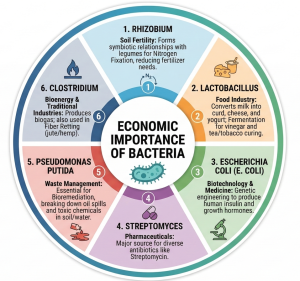
Economic Importance of Bacteria in Soil Fertility and Nitrogen Fixation
Microorganisms are vital for maintaining Earth’s nitrogen cycle, converting atmospheric nitrogen into forms usable by vegetation. As per economic importance of bacteria, Specific groups, like Rhizobium, form helpful associations with leguminous plants to naturally enrich soil nitrogen levels. From a commercial perspective, this action reduces the need for synthetic fertilizers and lowers agricultural costs. Unattached nitrogen-fixing microbes such as Azotobacter and *Clostridium* reside in the soil, contributing to overall nutrient availability. These organisms sustain stable crop yields by decomposing organic matter. Detailed studies of these biological interactions are covered in the RPSC Botany Paper 1 Syllabus PDF.
Industrial Applications and Economic Importance of Bacteria
The economic importance of bacteria is apparent in the production of various trade items. Within the nourishment sector, certain *Lactobacillus* types transform milk into fermented products such as curd, cheese, and yogurt. Bacteria that generate acetic acid yield vinegar, and others aid in treating tea and tobacco leaves to enhance their taste profile. Modern biotechnological techniques utilize organisms like *Escherichia coli* to produce human insulin and developmental hormones in bulk. These applications generate considerable revenue and provide essential medical treatments. The RPSC Botany Paper 1 Syllabus PDF marks these industrial activities as central topics like economic importance of bacteria for public service examinations.
Economic Importance of Mycorrhiza and Lichens in Ecology
The economic importance of mycorrhiza and lichens centers on plant health and environmental monitoring. Mycorrhizal fungi form symbiotic bonds with plant roots to increase phosphorus uptake and drought resistance. This relationship is critical for forestry and land reclamation projects where soil quality is poor. Lichens serve as sensitive bioindicators of air pollution, helping agencies monitor sulfur dioxide levels without expensive machinery. Some lichens also provide dyes, perfumes, and traditional medicines. Understanding these symbioses is a requirement for anyone studying the RPSC Botany Paper 1 Syllabus PDF.
Key Information on the Economic Importance of Bacteria
| Category | Bacterial Species | Economic Impact |
| Agriculture | Rhizobium, Azotobacter | Increases soil nitrogen and crop yield |
| Medicine | Streptomyces, Bacillus | Production of antibiotics like Streptomycin |
| Food Industry | Lactobacillus, Acetobacter | Production of dairy, vinegar, and fermented foods |
| Environment | Pseudomonas putida | Decomposition of pollutants and oil spills |
| Biotechnology | Escherichia coli | Synthesis of insulin and recombinant proteins |
Practical Application of Bacterial Culturing in Small Scale Industry
Leveraging the economic importance of bacteria permits modest enterprises such as making yogurt or managing compost. Effective fermentation demands upholding precise temperatures and germ-free conditions to stop unwanted microorganisms from spoiling the result. In farming, utilizing liquid fertilizers enriched with nitrogen-fixing bacteria lessens the need for manufactured urea. These concrete actions show how minuscule life forms yield real monetary benefits alongside eco-friendly methods. The RPSC Botany Paper 1 Syllabus PDF offers the academic basis for putting these concepts into practice.
Bacterial Contributions to Vitamin and Enzyme Production
Bacteria hold economic significance through the biological creation of vital vitamins and industrial enzymes. In the human digestive system, specific E. coli strains generate Vitamin K and various B vitamins. Commercially, the economic importance of bacteri yield riboflavin and cobalamin for use in nutritional supplements. Enzymes like proteases and lipases, sourced from bacteria, are incorporated into laundry detergents to digest protein and fatty stains under cooler conditions. This practice lowers household energy use while boosting cleaning effectiveness. Consequently, these biochemical outputs position bacteria as unseen contributors to common consumer products and wellness upkeep.
Bacterial Action in Fiber Retting and Tanning Industries
The economic importance of bacteria has resulted in recognized fields such as the textile and hide dressing industries. In the procedure termed retting, specific bacteria, like Clostridium butyricum, break down the pectin substance that binds plant fibers in materials such as jute and hemp. This decomposition enables the clean detachment of the fibers for subsequent crafting into items like cordage and bags. Furthermore, during the tanning stage, the action of microorganisms assists in stripping hair and unwanted grease from animal skins, conditioning them for conversion into leather.
Challenges in Scaling Bacterial Biotechnology
Moving bacterial operations from a lab setting to a large industrial bioreactor involves considerable technical hurdles. Keeping ideal pH, oxygenation, and nutrient availability consistent across vast liquid quantities demands meticulous regulation mechanisms. You must understand for these technical constraints when evaluating the total economic importance of bacteria in a commercial context.
Integration of Microbial Groups for Economic Gain
The economic importance of bacteria often works in tandem with the economic importance of algae and the economic importance of fungi. In a typical ecosystem, bacteria and fungi act as primary decomposers, while algae serve as primary producers. This synergy maintains the nutrient flow that supports all commercial agriculture and fisheries. In integrated multi trophic aquaculture, different microbial groups work together to process waste and provide feed. Mastery of these interconnected systems is a key component of the RPSC Botany Paper 1 Syllabus PDF and modern environmental management.
Future Trends in Bacterial Economics and Synthetic Biology
The economic importance of bacteria is transforming because of synthetic biology and genetic tailoring. Scientists are engineering microorganisms to produce completely biodegradable replacements for plastic. Simultaneously, various teams are creating bio-energy cells that draw power from organic refuse. These breakthroughs target the worldwide problem of plastic contamination and offer energy options for local areas. As these methods advance, the commercial worth linked to bacterial uses is expected to grow. Keeping track of these continuous developments will be relevant for those studying the RPSC Botany Paper 1 Syllabus PDF.
Bacterial Roles in Enhancing Soil Structure
Beyond nutrient addition, the economic importance of bacteria involves improving the physical properties of soil. By protecting the soil base, bacteria safeguard the long term value of agricultural land. These details are frequently highlighted in the RPSC Botany Paper 1 Syllabus PDF for their ecological and fiscal relevance.
Final Thoughts
The economic importance of bacteria establishes a foundation for modern biotech and green agriculture. Mastering the key concepts from the RPSC Botany Paper 1 Syllabus PDF grants you an informed perspective on how minute organisms drive global trade. These entities are beyond mere study points; they act as biological tools offering solutions for energy deficits, food preservation, and pollution reduction. Including the monetary worth of algae and the monetary worth of fungi in your knowledge base builds a complete understanding of tiny ecosystems.
VedPrep supplies the necessary rigorous academic foundation to tackle these complex topics with precision. Recognizing the economic importance of microbes allows bridging the gap between theoretical life science and practical business application. Your ability to analyze these processes will dictate your success in both rigorous evaluations and later research endeavors.
To learn more in detail from our experts, watch our Youtube video:
Frequently Asked Questions (FAQs)
How do bacteria contribute to the food industry?
Bacteria drive fermentation processes to produce yogurt, cheese, and vinegar. Lactobacillus species convert milk sugars into lactic acid to create dairy products. Acetic acid bacteria transform ethanol into vinegar. These microorganisms also assist in curing tea and tobacco to develop specific flavor profiles for commercial sale.
What is the economic importance of algae in modern industry?
Algae provide raw materials for food and pharmaceuticals. Species like Chlorella serve as protein rich food supplements. Marine algae yield hydrocolloids such as agar and algin. These substances function as stabilizers in products ranging from ice cream to cosmetics, supporting a multi billion dollar global industry.
What role do fungi play in the global economy?
Fungi are essential for medicine and food production. Penicillium species produce life saving antibiotics. Yeasts enable large scale baking and brewing through fermentation. Edible mushrooms provide a direct food source high in protein. Fungi also produce industrial enzymes used to process textiles and paper efficiently.
How do mycorrhiza and lichens provide economic value?
Mycorrhizal fungi increase plant phosphorus uptake and drought resistance, which is vital for forestry. Lichens act as natural air quality monitors. They change health based on sulfur dioxide levels, providing a low cost alternative to electronic sensors. Some lichen species also yield dyes and medicinal compounds.
How can farmers use bacteria to reduce costs?
Farmers apply biofertilizers containing nitrogen fixing bacteria to their fields. These bacterial cultures populate the root zone and provide a steady supply of nutrients. This method decreases the financial outlay for synthetic urea. Natural nitrogen fixation often improves long term soil structure compared to chemical alternatives.
What steps are needed to use bacteria for environmental cleanup?
Bioremediation involves introducing specific bacterial strains to contaminated sites. You must ensure the environment has the correct oxygen and moisture levels for bacterial growth. These microorganisms break down complex toxins into simpler, harmless molecules. This approach is significantly cheaper than physical soil removal or chemical neutralization.
How are bacteria used to manufacture human insulin?
Biotechnologists insert human insulin genes into Escherichia coli bacteria. The bacteria then act as biological factories to produce the hormone during growth. Manufacturers harvest and purify this insulin for medical use. This recombinant DNA technology provides a reliable and scalable supply of essential medication for diabetic patients.
In what way do bacteria assist in the textile industry?
Bacteria participate in fiber retting for jute and hemp production. Clostridium species decompose the pectin that holds plant fibers together. This biological breakdown allows workers to extract high quality fibers for ropes and fabrics. Using bacteria for retting is a traditional technique that remains economically relevant in natural fiber markets.
Why might bacterial nitrogen fixation fail in a field?
High levels of residual chemical nitrogen in the soil can inhibit bacterial activity. Extreme soil acidity or drought also kills beneficial bacteria like Rhizobium. You must ensure the soil environment supports microbial life before expecting economic benefits. Incompatible crop rotations sometimes prevent the establishment of necessary symbiotic relationships.
What causes fermentation batches to spoil in food production?
Contamination by wild yeast or competing bacteria leads to spoilage. If the starting culture is weak, it cannot outcompete environmental microbes. Improper sealing allows oxygen to enter anaerobic processes, which changes the chemical output. Maintaining strict hygiene protocols is the only way to safeguard industrial food production.
Why are some bacteria considered an economic liability?
Pathogenic bacteria cause diseases in crops and livestock that lead to significant financial loss. Citrus canker and anthrax require expensive management and lead to market bans on infected products. The cost of antibiotics and crop protection chemicals represents a major drain on agricultural profits globally.
How do environmental factors limit the economic importance of algae?
Algal blooms in commercial water bodies can produce toxins that kill fish stocks. Excessive nutrient runoff triggers these blooms, leading to high management costs. If water temperatures rise too high, sensitive commercial species of algae may die, disrupting the supply of agar and other extracts.
Can bacteria generate renewable energy for commercial use?
Anaerobic digesters use bacteria to break down organic waste into biogas. This gas consists mainly of methane, which you can burn for heat or electricity. This process turns waste disposal costs into energy savings. Many large scale farms and sewage plants use this technology to become energy self sufficient.
How does synthetic biology change the economic value of bacteria?
Scientists now engineer bacteria to produce biodegradable plastics and specialized chemicals. These designer microbes perform tasks that natural strains cannot. This field creates new markets for sustainable materials that replace petroleum based products. These advancements represent the next phase of the bio economy.