






Inner product spaces that possess an extra feature, known as an inner product, are referred to as inner product spaces. This mathematical process takes two vectors as input and yields a scalar output, which facilitates the introduction of geometric ideas such as magnitude, separation, and the angular measure between vectors. Within the field of Linear Algebra, these structures serve as the basis when dealing with perpendicularity and projections.
Fundamental axioms of inner product spaces
Inner product spaces mandate a distinct operation meeting four core criteria for all vectors and multipliers. These stipulations guarantee the space adheres to predictable behavior during geometric alterations. For any vectors u, v, w and scalar k, the inner product must possess linearity in the initial term, conjugate symmetry, and positive definiteness.
The property of linearity dictates that the result of an inner product on a scaled combination of vectors equals the combined inner products of those individual vectors, each scaled accordingly. Symmetry conveys that the result of an inner product between v and u is the complex conjugate when reversing the order to $v$ and $u$. Non-negativity ensures that whenever a vector is taken as both inputs to an inner product, the outcome will be greater than or equal to zero, and the result is only zero if the vector itself is the null vector.
Grasping these foundational principles is crucial for the RPSC Assistant Professor Maths Paper 1. Examinees frequently confront exercises requiring them to confirm whether a specified function constitutes an inner product. Failure to meet even one axiom disqualifies the space from being an inner product space.
| Property | Mathematical Expression |
|---|---|
| Linearity | 〈au + bv, w〉 = a〈u, w〉 + b〈v, w〉 |
| Conjugate Symmetry | 〈u, v〉 = ‾〈v, u〉 |
| Positive Definiteness | 〈u, u〉 ≥ 0; 〈u, u〉 = 0 ⇔ u = 0 |
Geometry and Norms in Linear Algebra
Inner product spaces allow mathematicians to quantify the size of vectors through a norm. The norm of a vector is defined as the square root of the inner product of the vector with itself. This measurement represents the length of the vector in a multidimensional environment.
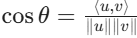
Beyond length, the Inner product spaces define the angle between two non-zero vectors. You calculate this angle using the ratio of the inner product to the product of the vector norms. When the inner product of two vectors equals zero, the vectors are orthogonal. This concept of perpendicularity simplifies the study of complex systems by breaking them into independent components. The formula is:
RPSC Assistant Professor Maths Paper 1 frequently tests the Cauchy-Schwarz Inequality. This theorem states that the absolute value of the inner product of two vectors is less than or equal to the product of their norms.
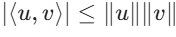
It serves as a check for geometric consistency in higher dimensions. If a calculated value exceeds this limit, the underlying space or calculation is invalid.
Standard examples of inner product spaces
A frequent illustration is the Euclidean space Rn equipped with the scalar product. For vectors u and v in R2, the scalar product equals the total of the results from multiplying their respective parts. This conventional inner product validates our usual concept of two-dimensional geometry.
A further illustration concerns the set of smooth functions across a bounded period. Given functions f(x) and g(x), their inner product is the a. The usage demonstrates that inner product spaces are much broader than just vectors in space, encompassing areas like functional analysis and differential equations.
Within Linear Algebra‘s framework, you could also encounter the Frobenius inner product when dealing with matrices. This is established as the trace resulting from multiplying one matrix by the conjugate transpose of the other. These varied examples demonstrate that the definition of an inner product depends entirely on the specific vector space you choose to analyze.
Core topics in Linear Algebra for competitive exams
Linear Algebra forms a massive portion of the RPSC Assistant Professor Maths Paper 1 syllabus. You must master the relationship between abstract vector spaces and concrete matrix representations. The following table outlines the syllabus topics you need to prepare for academic and competitive success.
| Category | Key Topics |
|---|---|
| Space Structure | Vector Spaces, Linear dependence and independence, Bases, Dimensions |
| Mappings | Linear transformations, Matrix representation of Linear transformations, Change of bases |
| Geometry | Inner product spaces, Orthonormal basis |
| Forms | Quadratic forms, reduction and classification of quadratic forms |
| Matrix Theory | Algebra of Matrices, Eigenvalues and Eigenvectors, Cayley-Hamilton theorem |
| Matrix Forms | Canonical, Diagonal, Triangular and Jordan forms, Rank of Matrix |
Limitations of the standard inner product approach
As per the function of Inner product spaces, A common mistake is assuming every vector space has only one valid inner product. You will define infinitely many inner products on the same space by using weight factors. These weighted inner products change the meaning of distance and orthogonality within that space.
A further restriction arises within realms of endless dimensions. Though any space with a fixed number of dimensions can acquire an inner product structure, those stretching infinitely demand additional topological prerequisites for proper convergence. Lacking completeness, such spaces may fail to house the endpoints of their converging sequences, prompting the investigation of Hilbert spaces.
In RPSC Assistant Professor Maths Paper 1, questions often present weighted versions of the dot product. You must test these against the axioms rather than relying on intuition. A function that looks like an inner product might fail the positive definiteness test if the weights are negative.
Gram-Schmidt Orthonormalization in practice
The Gram-Schmidt technique is a useful method employed to transform any set of basis vectors into an orthonormal set. An orthonormal basis comprises vectors that possess unit magnitude and are all orthogonal to one another. This procedure is fundamental in Linear Algebra as it streamlines computations involving geometric projections and best-fit solutions.
Beginning with a set of vectors, you take the current one and remove the projections of the prior vectors. This isolates the part that is perpendicular to the established collection. Subsequently, you scale each vector by dividing it by its length. The resulting group simplifies manipulations in matrix inversions and transformations considerably.
For students preparing for RPSC Assistant Professor Maths Paper 1, practicing this process is non-negotiable. Orthonormal bases are required to simplify quadratic forms and to find the spectral decomposition of matrices. It bridges the gap between abstract theory and numerical computation.
Application of inner product spaces in data science
Inner product spaces serve as the mathematical foundation for contemporary data algorithms. Within machine learning, gauging the likeness between two data points frequently involves employing the inner product of their corresponding feature vectors. Large inner product results suggest a strong affinity between the two items.
Support Vector Machines (SVMs) employ kernel functions, which are fundamentally inner products within elevated-dimensional spaces. By computing these products, the method determines the best dividing plane to segregate various data categories. This illustrates that the conceptual principles of Linear Algebra yield tangible technological outcomes.
When you study for RPSC Assistant Professor Maths Paper 1, remember that these concepts apply to signal processing and quantum mechanics. The projection of a signal onto a set of basis functions uses the inner product to filter noise. This practical utility makes inner product spaces a priority for both researchers and exam aspirants.
Conclusion
Grasping Inner product spaces is a crucial move for any mathematician seeking to connect abstract vector concepts with tangible geometric uses. Knowing how such spaces establish distance and perpendicularity equips you with the means to tackle difficult questions in the RPSC Assistant Professor Maths Paper 1. VedPrep offers thorough materials and professional mentorship to assist your journey through these sophisticated Linear Algebra subjects smoothly. Regular engagement with inner products guarantees proficiency in managing both abstract demonstrations and calculations.
To know more in detail from our professionals, watch our Youtube video:
Frequently Asked Questions (FAQs)
How does an inner product relate to Linear Algebra?
In Linear Algebra, inner products introduce a geometric structure to vector spaces. Without this structure, you only have addition and scaling. Inner products provide the framework for defining orthogonality, projections, and norms. This is vital for solving systems of equations and performing spectral analysis on matrices.
What is the difference between a vector space and an inner product space?
A vector space only requires rules for vector addition and scalar multiplication. An inner product space is a specific type of vector space that includes a defined inner product. This additional operation enables geometric measurements like distance. All inner product spaces are vector spaces, but not all vector spaces are inner product spaces.
Why is the positive definiteness axiom important?
Positive definiteness ensures that the inner product of any non zero vector with itself results in a positive real number. This property allows for the definition of a norm, or length. If this axiom fails, you cannot reliably measure the magnitude of vectors or ensure that the zero vector is unique.
How do you verify if a function is an inner product?
You must test the function against four axioms. Check for additivity and homogeneity in the first slot. Verify conjugate symmetry for complex spaces or regular symmetry for real spaces. Finally, confirm that the product of a vector with itself is non negative and zero only for the zero vector.
How do you calculate the angle between two vectors?
You use the formula involving the inner product and vector norms. The cosine of the angle equals the inner product of the two vectors divided by the product of their individual norms. This value always falls between -1 and 1 due to the Cauchy Schwarz Inequality.
What is the process of normalization?
Normalization converts a non zero vector into a unit vector, which has a length of one. You achieve this by dividing the vector by its norm. Unit vectors are essential for creating orthonormal bases, as they maintain direction while standardizing the scale of the coordinate system.
How does the Gram Schmidt process work?
The Gram Schmidt process transforms a set of linearly independent vectors into an orthogonal or orthonormal basis. You take one vector at a time and subtract its projections onto the previously processed vectors. This removes overlapping components, leaving only the mutually perpendicular parts of the original set.
What is a projection in an inner product space?
A projection maps a vector onto a subspace or another vector. The result is the "closest" vector within that target area to the original vector. You calculate this using inner products to find the component of the vector that aligns with the direction of the target.
How do you apply inner products to continuous functions?
For spaces of continuous functions, the inner product is usually defined as an integral. You multiply two functions and integrate the product over a specific interval. This allows you to apply geometric concepts like "perpendicular functions" to calculus and differential equations.
Why is my inner product calculation resulting in a negative number for ?
If the inner product of a vector with itself is negative, the function fails the positive definiteness axiom. This often happens if you use negative weights in a weighted inner product or if you have a calculation error. Such a function cannot define a valid inner product space.
What if the Cauchy Schwarz Inequality is violated?
The Cauchy Schwarz Inequality is a fundamental law of all inner product spaces. If your calculated inner product exceeds the product of the norms, you likely have a non valid inner product or a mathematical error. This inequality must hold for the geometry of the space to remain consistent.
Why are my Gram Schmidt vectors not orthogonal?
Non orthogonal results usually stem from rounding errors in numerical calculations or skipping a projection step. Ensure you subtract the projection onto every previously found orthogonal vector. In computer science, "Modified Gram Schmidt" is often used to improve numerical stability and reduce these errors.
What is a Hilbert Space?
A Hilbert space is an inner product space that is also a complete metric space. This means every Cauchy sequence in the space converges to a limit within the same space. Completeness is a vital requirement for advanced analysis, quantum mechanics, and Fourier series.
How do inner products work in complex vector spaces?
In complex spaces, the inner product is conjugate symmetric rather than perfectly symmetric. Switching the order of the vectors results in the complex conjugate of the original value. This ensures that the norm of a vector remains a non negative real number.