
Essential and trace elements in biological systems are crucial for various bodily functions, and understanding their roles is vital for IIT JAM and other competitive exams.
Essential and trace elements in biological systems For IIT JAM
If you are gearing up for the IIT JAM exam, you already know that the Bioinorganic Chemistry unit isn’t something you can just skip. It is a scoring area, and a big chunk of it revolves around understanding essential and trace elements in biological systems. This topic isn’t just about memorizing the periodic table; it is about knowing exactly how these metals keep living organisms alive. If you are aiming for top marks here, or even eyeing exams like CSIR NET and GATE down the line, getting a solid grip on this topic is a must.
Key Textbooks:
Inorganic Chemistry by O.P. Tandon: Great for laying down your fundamental inorganic concepts before you dive into the biological aspects.
Bioinorganic Chemistry by Anthony R. Butler: This one is a gold standard. It gives you that deep, mechanistic insight into how metal ions behave inside biological systems.
At VedPrep, we always tell our students that flipping through these standard references is a great way to cover Essential and trace elements in biological systems . Reading them thoroughly will help you easily visualize how these elements interact with complex biological molecules.
Essential and trace elements in biological systems For IIT JAM
Essential and trace elements in biological systems are those absolute must-haves that your body cannot synthesize on its own. You need to get them from your diet, usually in pretty small amounts—typically less than 100 mg a day. If the factory runs out of even one of these materials, production slows down, and things start breaking down. That breakdown is what we call a deficiency.
Some of the heavy hitters here are Iron (Fe), Zinc (Zn), Copper (Cu), and Iodine (I). As per Essential and trace elements in biological systems, they handle everything from carrying oxygen to keeping your metabolism in check.
Iron: This is the core component of hemoglobin. It acts like a molecular delivery truck, binding to oxygen in your lungs and dropping it off in your tissues.
Zinc: Think of zinc as a multi-tool. It acts as a cofactor for over 300 enzymes, helping with everything from healing a papercut to synthesizing proteins and keeping your immune system sharp.
Copper: This one works behind the scenes to help build collagen. It gives structure and strength to your skin, bones, and blood vessels.
Iodine: Your thyroid gland hoards iodine to manufacture thyroid hormones. These hormones basically dictate your body’s metabolic thermostat.
Trace Elements in Biological Systems: Role and Functions
Now, let’s look at Essential and trace elements in biological systems. Even though they are often lumped together under the “micronutrient” umbrella, trace elements are needed in truly minuscule, microscopic amounts. But don’t let the word “minute” fool you. A tiny amount does not mean they are optional.
Think of macronutrients (like carbs and proteins) as the heavy bricks used to build a house, while trace elements are like the tiny drops of oil that keep the hinges of the doors from squeaking. Without that oil, the whole house becomes dysfunctional.
Key trace elements you need to know for the exam include Chromium, Manganese, Selenium, and Molybdenum. Here is what they do:
Chromium: This element helps insulin do its job, which means it is directly involved in how your body processes carbs and fats.
Manganese: It helps lock enzymes into their proper shapes and plays a big role in bone formation.
Selenium: This is a powerful antioxidant. It tracks down and neutralizes free radicals, stopping cellular damage in its tracks.
Molybdenum: It acts as a critical helper or cofactor for specific enzymes that break down purines.
For anyone prepping for the essential and trace elements in biological systems for IIT JAM section, knowing these specific biochemical roles is key to cracking those tricky multiple-choice questions.
Worked Example: Determination of Iron in Blood
In a chemistry lab, you can’t just guess how much iron is in a biological sample; you need precision. That is where Atomic Absorption Spectroscopy (AAS) comes in. Let’s walk through a typical problem you might encounter in exams.
Imagine a lab technician wants to find the exact concentration of iron in a blood serum sample. First, they make a standard solution of iron at 5 μ g/mL and dilute it to create a clean calibration curve.
Next, they take the actual blood serum and dilute it 1:10 with a solvent. They inject 10 μL of this diluted mix into the AAS instrument. The machine is set to 248.3 nm because that is the exact wavelength where iron absorbs light best. The machine spits out an absorbance reading of 0.25.
As per Essential and trace elements in biological systems, by plotting the standard solutions, they get a straight-line equation:
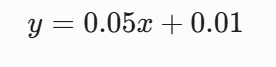
Where:
y = Absorbance reading
x = Concentration in μ g/mL
Let’s plug the absorbance value into our equation to find the concentration of the diluted sample (x):
Original Question: What is the concentration of iron in blood serum if the absorbance reading is 0.25 and the diluted sample was 1:10?
Answer: 48 μ g/mL
Common Misconceptions about Essential and Trace Elements
When we chat with students at VedPrep, we notice a few common traps that people fall into when studying this topic.
The biggest mix-up is thinking that “essential” means you need it in massive amounts. That is incorrect. An element’s importance isn’t measured by the size of the dose. To clear this up, remember that scientists divide these elements into two main buckets based on daily requirements:
| Category | Daily Requirement | Examples |
| Macroelements (Major Elements) | > 100 mg/day | Carbon, Hydrogen, Oxygen, Nitrogen, Phosphorus, Sulfur, Calcium, Potassium |
| Microelements (Trace Elements) | < 100 mg/day | Iron, Zinc, Copper, Iodine, Selenium, Manganese |
Another misconception is assuming that trace elements are somehow secondary or less crucial for human health just because we need less than a pinch of them. If you completely strip selenium or copper from an organism’s system, key metabolic pathways grind to a halt. A tiny deficiency can lead to severe health issues, proving how vital they really are.
Real-World Applications of Essential and Trace Elements
To make this stick, let’s step out of the textbook and look at a fictional scenario. Imagine a small farming community where the corn crops are turning a strange yellow color and stunted in growth, while many of the local villagers are constantly exhausted and tired.
An agricultural scientist and a doctor visit the village. The doctor prescribes iron supplements to the villagers to treat iron-deficiency anemia, helping their red blood cells carry oxygen properly again. Meanwhile, the scientist realizes the soil is stripped of zinc. They introduce a targeted micronutrient fertilizer to the fields. Within a single season, the plants bounce back, and the villagers regain their energy.
This shows how Essential and trace elements in biological systems cross over into medicine and agriculture. In the tech and corporate farming worlds, researchers are using these very elements in biotechnology to create smart microbial fertilizers. These help crops survive harsh weather and soil issues, proving that bioinorganic chemistry has massive real-world value.
Exam Strategy for Essential and trace elements in biological systems For IIT JAM
When you are staring down exams like IIT JAM, CSIR NET, or GATE, you need a smart plan. You can’t just mindlessly read pages of text. The examiners love to test you on the exact biochemical mechanisms and coordination environments—like how iron sits inside a porphyrin ring.
A great strategy is to dig into previous years’ question papers on Essential and trace elements in biological systems . Sort the questions into macroelements and microelements so you can spot the trends.
We at VedPrep understand how overwhelming it can feel to balance chemistry theory with biological applications. That is why we suggest using organized study plans and topic-wise practice quizzes to see where you stand. Pinpointing your weak spots early saves you a lot of stress closer to exam day while covering topics like Essential and trace elements in biological systems .
Lab Applications of Essential and Trace Elements
In actual research labs, these elements show up everywhere. If you are doing biochemistry experiments on Essential and trace elements in biological systems , you have to calibrate your tools—like micropipettes and autoclaves—using precise solutions containing exact amounts of sodium, potassium, or calcium. This precision is what allows scientists to study things like cell signaling or how muscles contract.
If you wander over to a plant biology lab, you will see hydroponic setups where plants are grown entirely in water without soil.
To see how a plant reacts to nutrient stress, scientists will carefully tweak the levels of trace elements like iron, zinc, and boron in the water solution.
Finally, analytical labs use high-tech instruments like ICP-MS (Inductively Coupled Plasma Mass Spectrometry) and AAS to measure these elements down to parts per billion. Whether you are running an experiment in a university lab or working in industry on Essential and trace elements in biological systems, controlling these elemental concentrations under strict safety protocols is what makes modern bio-research possible.
Final Thoughts
Mastering the roles of Essential and trace elements in biological systems in biological systems isn’t just about clearing a hurdle on your IIT JAM syllabus—it’s about learning the molecular logic that keeps life running. When you stop looking at these elements as isolated boxes on the periodic table and start seeing them as the active engines behind oxygen transport, enzyme catalysis, and metabolic balance, the chemistry naturally clicks. At VedPrep, we believe that cracking competitive exams comes down to turning dense, academic data into clear, intuitive concepts.
To know more in detail from our faculty, watch our YouTube video:
Frequently Asked Questions
What is the main difference between an essential element and a trace element?
It all comes down to the daily dosage your body needs. Essential macroelements are required in larger amounts (greater than 100 mg/day). Trace elements (microelements) are just as crucial for survival, but your body only needs a tiny pinch of them (less than 100 mg/day).
If trace elements are needed in such small amounts, why does a deficiency cause huge problems?
Think of trace elements as the spark plugs in a car. The spark plug is tiny compared to the engine, but without it, the car won't start. Trace elements usually sit at the absolute center of enzymes (as cofactors). If they are missing, the enzyme can't catalyze biochemical reactions, causing a metabolic traffic jam.
Why does the human body use Iron for oxygen transport instead of another metal?
Iron has an incredible knack for changing its coordination geometry and electronic state when binding to oxygen. Its abundance in nature and its easily accessible Fe2+/ Fe3+ redox couple make it the perfect evolutionary choice for binding, carrying, and releasing oxygen without destroying the surrounding protein tissue.
What role does Zinc (Zn) play in enzymes?
Zinc is a Lewis acid powerhouse. Because it has a filled d-orbital (d10 configuration), it doesn't participate in redox reactions, making it structurally stable. It coordinates easily with histidines and cysteines to activate water molecules or stabilize negative charges during enzymatic reactions, like in carbonic anhydrase.
Why is Zinc called a "redox-inert" metal in biological systems?
Since Zinc exists almost exclusively as Zn2+, it has a completely full d10 electron shell. It doesn't lose or gain electrons easily under physiological conditions. This makes it safe for cells to use as a structural anchor or a Lewis acid without accidentally generating dangerous free radicals.
How does Copper (Cu) assist in biological functions?
Copper is the go-to element for electron transfer and oxidation-reduction reactions. You will find it in "blue copper proteins" like plastocyanin and enzymes like cytochrome c oxidase. It toggles smoothly between Cu+ and Cu2+ to move electrons down the metabolic line.
Why is Iodine specifically concentrated in the thyroid gland?
The thyroid gland uses iodine as a primary raw material to build two major hormones: thyroxine (T4) and triiodothyronine (T3). Without iodine, the thyroid cannot produce these metabolic regulators, which causes the gland to swell—a condition known as goiter.
What is the role of Selenium (Se) in the human body?
Selenium replaces sulfur in specific amino acids to form selenocysteine. This unique amino acid sits at the active site of antioxidant enzymes like glutathione peroxidase, which neutralizes harmful hydrogen peroxide and free radicals before they can damage cell membranes.
How does Chromium (Cr) help regulate blood sugar?
Chromium (specifically the Cr3+ ion) is believed to be a core part of the Chromodulin protein complex. This complex acts like an amplifier for insulin receptors, making it much easier for insulin to dock and signal cells to pull glucose out of the bloodstream.
What makes Molybdenum (Mo) unique compared to other trace elements?
Molybdenum is one of the very few heavy transition metals (from the second transition series) that is highly essential for life. It is the active engine in oxotransfer enzymes like xanthine oxidase (involved in purine breakdown) and nitrogenase (used by bacteria for nitrogen fixation).
What is the exact wavelength used for determining Iron concentration via AAS?
In Atomic Absorption Spectroscopy, the standard analytical wavelength for iron is 248.3 nm. This precise wavelength corresponds to the energy gap needed to excite ground-state iron atoms, providing a clean, interference-free reading.
Why do we need a calibration curve in spectroscopy problems?
A calibration curve connects an abstract machine reading (absorbance) to a real-world value (concentration). By measuring known standards, you establish a mathematically dependable line (y = mx + c) that lets you decode the concentration of any unknown sample.