
Catalysis (Hydrogenation, Hydroformylation) For IIT JAM focuses on the mechanisms and applications of organometallic reactions, specifically hydrogenation and hydroformylation, for competitive exams like IIT JAM.
Syllabus: IIT JAM Organic Chemistry
Preparing for IIT JAM Organic Chemistry can feel like a marathon, especially when you hit Unit 14.3. This is where organometallic reactions and catalysis take center stage. If you are eyeing CSIR NET, GATE, or CUET PG down the road, mastering this topic right now will save you a ton of stress later.
If you want to dive deep into the textbook theory, classics like Organic Chemistry by Paula Yurkanis and Organic Chemistry by Jerry March are your go-to resources. They give you a solid foundation, but today we are going to break these concepts down into plain, simple English.
Organometallic catalysis sounds intimidating, but it is just about using metal complexes to speed up chemical reactions. Two major players you need to know inside out for your exams are hydrogenation and hydroformylation. Let’s make sense of them together.
Catalysis (Hydrogenation, Hydroformylation) For IIT JAM: An Overview
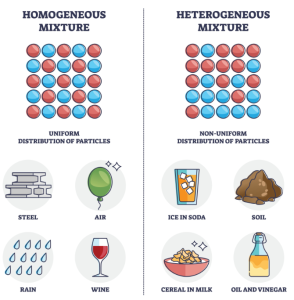
Think of catalysis as a shortcut on a map. A catalyst lowers the activation energy barrier, helping a reaction happen way faster without getting used up in the process. You can hang out with two types: homogeneous catalysts (which sit in the same phase as your reactants, like a liquid dissolved in a liquid) and heterogeneous catalysts (which are in a different phase, like a solid metal sheet sitting in a liquid solution).
Mechanism of Hydrogenation and Hydroformylation Reactions
Let’s look under the hood. Heterogeneous hydrogenation happens right on the surface of the metal.
First, the unsaturated alkene grabs onto the catalyst surface (adsorption).
Hydrogen (H₂) binds to the metal center.
The metal breaks the H–H bond and clips both hydrogens to itself (oxidative addition).
The alkene shifts over and hooks onto one of those hydrogens (migratory insertion).
The final product lets go of the metal completely (reductive elimination), leaving you with a clean, saturated alkane.
Hydroformylation—often called the Oxo process—relies heavily on rhodium or cobalt complexes. Here, the catalyst coordinates with CO and H2 to insert a formyl group (-CHO) right onto the alkene chain.
We cannot talk about these transition metals without talking about ligands. Ligands are the molecular sidekicks that bind to the metal center. By changing how bulky or electron-rich a ligand is, you can completely change how a catalyst behaves. At VedPrep, we often tell students to think of ligands as tuning knobs on a radio; tweak them correctly, and you get the exact reaction speed and selectivity you want.
Worked Example: Hydrogenation Reaction of Alkenes
Let’s look at a classic question type that pops up in competitive exams.
Question: What is the product of the hydrogenation reaction of 2-butene in the presence of a palladium catalyst? Walk through the mechanism.
Answer: The reaction turns 2-butene into butane. Because it uses a solid palladium catalyst, this happens via a surface-mediated pathway.
Step 1: Both 2-butene and H2 stick to the Pd surface.
Step 2: Hydrogen steps over to the 2-butene molecule, creating a temporary alkyl intermediate bound to the metal.
Step 3: The remaining hydrogen snaps into place, and the brand-new butane molecule breaks free from the surface.
Misconception: Hydrogenation vs Hydroformylation Reactions
A common trap for IIT JAM aspirants is mixing up what these two reactions actually add to a molecule.
The Trap: Assuming both reactions just break double bonds and add simple groups.
The Reality: Hydrogenation only adds hydrogen atoms (H), turning an alkene into an alkane. Hydroformylation adds a carbon atom because it injects a whole formyl group (-CHO). If you start with a 3-carbon alkene in hydrogenation, you get a 3-carbon alkane. If you start with a 3-carbon alkene in hydroformylation, you end up with a 4-carbon aldehyde.
Real-World Application: Hydroformylation of Alkenes in Industrial Production
To visualize how this works on a massive scale, imagine a fictional chemical plant called “AlchemCo.” Let’s say AlchemCo needs to make thousands of liters of butanal every day to sell to companies that manufacture flexible plastics and medicines.
They can’t just wait around for regular chemical pathways to slowly build these chains. Instead, they pump propene, carbon monoxide, and hydrogen into a massive reactor under high pressures (10 to 50 bar) and blazing heat (80 to 150°C).
Inside that reactor, a soluble rhodium organometallic catalyst goes to work, snapping the components together instantly. Without organometallic catalysis, running a plant like our fictional AlchemCo would be way too expensive and wasteful to survive.
Catalysis (Hydrogenation, Hydroformylation) For IIT JAM
When you are mapping out your study schedule for the IIT JAM, make sure you dedicate quality time to both homogeneous and heterogeneous catalysis.
Step 1: Review reaction kinetics so you understand how catalysts change activation energy.
Step 2: Map out the catalytic cycles for both alkene hydrogenation and the Oxo process.
Step 3: Tackle past-year question papers to see exactly how examiners phrase these problems.
We understand how overwhelming it can feel to memorize dozens of cyclic mechanisms while managing your college semester exams. That is exactly why our team at VedPrep builds structured video lectures and targeted practice question banks—to help break down complex organometallic steps into logical, manageable pieces so you can walk into the exam hall feeling confident.
Lab Application: Synthesis of Aldehydes through Hydroformylation Reaction
Away from giant industrial plants, hydroformylation is also a brilliant tool in small-scale research labs. When synthetic chemists are trying to build complex, multi-step molecules—like a new medicinal compound—they often use rhodium-based catalysts to add an aldehyde functional group with pinpoint precision.
Because rhodium catalysts are highly active, researchers can run these reactions under relatively mild lab conditions. This high selectivity means fewer messy side-products to clean up during column chromatography at the end of the day. Mastering the logic behind these laboratory choices is a huge step toward acing your organic chemistry papers.
Final Thoughts
At the end of the day, mastering catalysis isn’t about memorizing every single transition metal on the periodic table; it’s about understanding how these molecular machines move electrons to make difficult reactions happen with ease. When you’re revising hydrogenation and hydroformylation for the IIT JAM, focus on the structural changes—track where the carbons go, notice how the oxidation state of the metal flips, and pay attention to what the ligands are doing. It is a dense topic, but once you start seeing the underlying patterns in these catalytic cycles, the questions become highly scoring opportunities rather than exam-day hurdles.
To know more in detail from our faculty, watch our YouTube video:
Frequently Asked Questions
Why does hydroformylation increase the carbon chain length while hydrogenation doesn't?
Hydrogenation simply adds H2 across the double bond, leaving the carbon skeleton alone. Hydroformylation (the Oxo process) introduces carbon monoxide (CO) along with H2. That CO gets inserted into the chain, adding a brand-new formyl carbon (-CHO) to your molecule.
What are the typical transition metals used in industrial hydroformylation?
Cobalt (Co) and Rhodium (Rh) are the absolute superstars here. While cobalt was the historical favorite, modern industrial setups prefer rhodium because it operates under much milder pressures and temperatures and offers better selectivity.
What role do ligands play in homogeneous catalysts?
Think of ligands as the control switches of the metal center. By changing their steric bulk (how much space they take up) or electronic properties (how much electron density they donate), you can tune the catalyst to make the reaction faster, safer, or more selective for a specific product.
What is 'oxidative addition' in a catalytic cycle?
This is the step where the metal center breaks a bond in a reactant molecule (like the H-H bond in H₂) and attaches both pieces to itself. In the process, the metal's formal oxidation state increases by +2. It's essentially the metal "gearing up" for the reaction.
What happens during 'migratory insertion'?
In this step, a ligand that is already bound to the metal (like an alkene) shifts and inserts itself into an adjacent metal-ligand bond (like a metal-hydride bond). This is the crucial moment where the new carbon-hydrogen or carbon-carbon bond actually forms.
How does 'reductive elimination' close the catalytic loop?
It’s the exact opposite of oxidative addition. Two ligands bound to the metal center couple together and break free as the final product. This drops the metal's oxidation state back down by -2, regenerating the original catalyst so it can start the cycle all over again.
Why is Raney nickel pyrophoric, and how does it relate to hydrogenation?
Raney nickel is a fine-grained solid alloy that is absolutely packed with adsorbed hydrogen. Because of its massive surface area and high hydrogen content, it can spontaneously ignite when exposed to air. It’s used as a highly active heterogeneous catalyst to speed up the hydrogenation of double bonds, aromatic rings, and functional groups.
Can hydroformylation yield both linear and branched aldehydes?
Yes, and this is a classic exam talking point! When the formyl group adds to an unsymmetrical alkene, it can land on the terminal carbon (giving a linear product) or the internal carbon (giving a branched product). Industries generally prefer the linear aldehyde, which is why ligand tuning is so important to favor that specific outcome.
What is the oxidation state of rhodium in active hydroformylation catalytic species?
In active catalytic cycles for hydroformylation, such as when using HCo(CO)4 or HRh(CO)(PPh₃)₃, the transition metal typically rests in a +1 oxidation state before going through the cyclic addition steps.
How do you distinguish between a reactant and a catalyst in a written question?
Look at where it ends up. If a metal complex or substance is written over the reaction arrow and emerges completely unchanged at the end of the chemical equation, it's a catalyst. If its atoms are permanently incorporated into the final molecular structure, it's a reactant.
Does hydrogenation change the stereochemistry of an alkene?
Absolutely. Heterogeneous hydrogenation on a metal surface typically delivers both hydrogen atoms from the same side of the flat double bond. This results in syn-addition, which completely dictates whether you get a cis or trans derivative if chiral centers are created.
Why can't we use simple transition metals instead of complex organometallic coordination compounds?
Pure transition metals work great for heterogeneous surfaces (like a sheet of Platinum), but they aren't soluble in organic reaction flasks. By wrapping the metal in organic ligands, we make it highly soluble in solvents, allowing us to perform precise, homogeneous chemistry right in the solution.
How can I avoid counting errors in hydroformylation exam problems?
We always emphasize this at VedPrep: draw your starting alkene and literally map out a new single bond connecting to a -CHO group. Count your total carbons before and after. If your reactant has $n$ carbons, your product must have $n+1$ carbons.