
If you are gearing up for the IIT JAM, you already know that Physical Chemistry isn’t something you can just wing. Among the heavy hitters like thermodynamics and quantum mechanics, spectroscopy stands out as a high-scoring zone. Specifically, Spectrophotometry (UV-Vis) is a topic that regularly pops up in the exam, making it a must-know for anyone aiming for a top rank.
Understanding Spectrophotometry (UV-Vis) For IIT JAM
This unit aligns directly with the official syllabus under “Spectroscopy and Structure.” While standard textbooks like Atkins’ Physical Chemistry give you the full, rigorous mathematical breakdown, wrapping your head around the practical intuition is what helps you clear those tricky multiple-choice questions (MCQs) and numerical answer type (NAT) problems.
At VedPrep, we look at this topic not just as a bunch of equations to memorize, but as a practical tool that makes total sense once you break down how light and molecules interact. Let’s dive into how it actually works.
Worked Example: Spectrophotometry (UV-Vis) For IIT JAM
Let’s look at the example problem provided in the original text, but let’s break down how to approach Spectrophotometry systematically so you don’t trip up during the actual exam.
Problem: A solution of 1 M FeSO₄ is diluted to 0.1 M. The absorbance at 430 nm is measured to be 0.5. The molar absorptivity (ε) of FeSO₄ at 430 nm is given as 1000 M⁻¹ cm⁻¹. The path length of the cuvette used is 1 cm. What is the concentration of FeSO₄?
The Setup:
The Beer-Lambert law is written as:
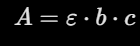
Where:
- A = Absorbance (no units) = 0.5
- ε = Molar absorptivity = 1000 M⁻¹ cm⁻¹
- b = Path length = 1 cm
- c = Concentration of the sample inside the cuvette (this is what we need to find)
The Calculation:
Don’t let the initial 1 M or 0.1 M numbers in the story distract you. The question asks for the concentration based on the measured absorbance values. Plug the numbers directly into the formula:
0.5 = 1000 M⁻¹ cm⁻¹ × 1 cm c
Now, isolate c:
c = 0.5/1000 × 1
c = 0.0005 M = 5 × 10⁻⁴ M
So, the concentration of the FeSO₄ solution sitting in that cuvette is 5 × 10⁻⁴ M.
Factors Governing Absorption in the UV/Visible Region
Here are the structural features that change this gap:
- Conjugation: This is the big one for IIT JAM questions. When a molecule has alternating double bonds, its π orbitals overlap and spread out. This electron delocalization shrinks the energy gap between the Highest Occupied Molecular Orbital (HOMO) and the Lowest Unoccupied Molecular Orbital (LUMO). More conjugation means absorption shifts to longer, visible wavelengths.
- Lone Pairs (n electrons): Non-bonding electrons sit at a higher energy level than bonding electrons. This makes it easier to kick them up to an excited state (π*), reducing the required energy and pushing absorption to longer wavelengths.
- π Bonds: Double and triple bonds provide the π electrons needed for π → π* transitions, which easily interact with UV-Vis light compared to the stubborn, tightly bound σ bonds.
Instrumentation: UV-Vis Spectrophotometers
How does a machine actually measure this? A standard spectrophotometer splits light into its component wavelengths using a prism or diffraction grating. It sends a specific wavelength through a sample held in a tiny, rectangular tube called a cuvette. A detector on the other side catches the remaining light and calculates the difference.
When preparing for exams, keep in mind that the material of the cuvette matters. Glass absorbs UV light, so if you are running an analysis below 350 nm, you have to use quartz cuvettes.
Misconception: Beer-Lambert Law and Concentration
A classic trap that many IIT JAM students fall into is treating the Beer-Lambert law like concentration is the only thing that matters.
Yes, if you keep the path length (b) and the specific wavelength constant, absorbance and concentration share a perfect linear relationship. But don’t forget that ε (molar absorptivity) changes depending on the chemical species and the wavelength you choose.
Also, the law starts to break down at high concentrations (usually above 0.01 M). When a solution gets too crowded, solute particles start interacting with each other, changing their charge distribution and altering how they absorb light. This causes the calibration curve to bend, meaning you lose that clean linearity.
Exam Strategy: Spectrophotometry (UV-Vis) For IIT JAM
When you see a spectrophotometry question on the test, check your units first. Ensure your path length is in centimeters and your concentration matches the units of your molar absorptivity.
Watch out for questions linking organic structures to UV-Vis trends. If an exam question asks you to compare three different molecules and predict which one absorbs at the longest wavelength, look for the one with the most extended conjugated system.
Real-World Applications: Spectrophotometry (UV-Vis) For IIT JAM
To see how this works outside of exam papers, let’s look at a fictional, illustrative example. Imagine an environmental chemist named Rohan who needs to check a local river sample for toxic chromium levels. He can’t just look at the clear water to find the metal. Instead, he adds a chemical reagent that reacts with chromium to turn the solution a bright reddish-violet. By running this colored water through a UV-Vis spectrophotometer, Rohan can match the absorbance against a standard curve to find the exact parts-per-million contamination level in minutes.
Beyond fictional river testing, this technique runs the show in several major areas:
- Pharmaceuticals: Labs use it to check the purity of medications and make sure a pill has the exact milligram dosage listed on the box.
- Biological Research: It is the standard way to quantify DNA, RNA, and proteins in a sample by measuring their natural absorption peaks (like DNA at 260 nm).
- Chemical Kinetics: By watching absorbance change in real-time, chemists can map out exactly how fast a reaction is happening.
Final Thoughts
Mastering spectrophotometry isn’t just about plugging numbers into the Beer-Lambert law; it is about recognizing how tiny structural shifts in a molecule change its interaction with light. When you are sitting in the exam hall, keeping a sharp eye on your units, remembering the limits of linearity, and tracking conjugation patterns will save you from common traps. At VedPrep, we have watched thousands of students turn this tricky physical chemistry unit into a major score-booster simply by focusing on the underlying logic rather than pure memorization.
To learn more in detail from our faculty, watch our YouTube video:
Frequently Asked Questions
What is UV-Vis spectrophotometry?
UV-Vis spectrophotometry is a type of spectrophotometry that uses ultraviolet (UV) and visible (Vis) light to analyze samples. It is commonly used to study the optical properties of molecules and their interactions.
What is the Beer-Lambert law?
The Beer-Lambert law is a fundamental principle in spectrophotometry that relates the absorption of light by a sample to its concentration and path length. It is expressed as A = εlc, where A is absorbance, ε is molar absorptivity, l is path length, and c is concentration.
What are the applications of spectrophotometry?
Spectrophotometry has various applications in biology, chemistry, and physics, including quantitative analysis, qualitative analysis, and kinetic studies. It is widely used in molecular biology, biochemistry, and pharmaceutical research.
What is the importance of spectrophotometry in biology?
Spectrophotometry is crucial in biology as it allows researchers to study the optical properties of biomolecules, such as DNA, proteins, and pigments. It is used to analyze enzyme kinetics, study protein-ligand interactions, and quantify biomolecules.
What are the different types of spectrophotometry?
There are several types of spectrophotometry, including UV-Vis, IR, and fluorescence spectroscopy. Each type uses a specific range of electromagnetic radiation to analyze samples.
What is the role of spectrophotometry in IIT JAM?
Spectrophotometry is a key concept in IIT JAM, particularly in the biology and chemistry sections. It is essential to understand the principles and applications of spectrophotometry to excel in the exam.
How is spectrophotometry used in IIT JAM questions?
Spectrophotometry is frequently used in IIT JAM questions to test understanding of biological and chemical concepts. Questions may involve applying the Beer-Lambert law, analyzing spectroscopic data, or interpreting results from spectrophotometric experiments.
What are some common IIT JAM questions on spectrophotometry?
Common IIT JAM questions on spectrophotometry include calculating concentration using the Beer-Lambert law, determining the molar absorptivity of a molecule, and interpreting spectroscopic data to identify biomolecules.
What are common mistakes in spectrophotometry?
Common mistakes in spectrophotometry include incorrect application of the Beer-Lambert law, failure to account for instrumental errors, and misunderstanding the relationship between absorbance and concentration.
How can I avoid mistakes in spectrophotometry?
Avoid mistakes in spectrophotometry by carefully reading questions, understanding the principles and applications of spectrophotometry, and practicing with sample questions. Pay attention to units, significant figures, and instrumental limitations.
What are some common errors in spectrophotometric data analysis?
Common errors in spectrophotometric data analysis include incorrect baseline correction, failure to account for instrumental drift, and misinterpretation of spectroscopic data. Researchers must carefully evaluate and validate their results to avoid these errors.
What are some advanced applications of spectrophotometry?
Advanced applications of spectrophotometry include kinetic studies, stopped-flow spectroscopy, and circular dichroism spectroscopy. These techniques provide insights into molecular interactions, reaction mechanisms, and biomolecular structure.
How does spectrophotometry relate to other analytical techniques?
Spectrophotometry is often used in conjunction with other analytical techniques, such as chromatography, mass spectrometry, and NMR spectroscopy. This allows researchers to gain a more comprehensive understanding of sample composition and properties.
What are some recent developments in spectrophotometry?
Recent developments in spectrophotometry include the development of new spectroscopic techniques, such as ultrafast spectroscopy and single-molecule spectroscopy. These advances have expanded the capabilities of spectrophotometry in biology, chemistry, and physics.