






Nomenclature of Organic Compounds provides a standardized system to name chemical structures based on their molecular arrangement. This systematic approach, governed by IUPAC Nomenclature Rules, ensures each molecule has a unique, universally accepted name. Mastering these rules is essential for the RPSC Chemistry Syllabus 2026, covering aliphatic, aromatic, and cyclic structures.
Fundamental Principles of the IUPAC System
The IUPAC system relies on a prefix, word root, and suffix to identify organic molecules in Nomenclature of Organic Compounds. The word root indicates the number of carbon atoms in the longest continuous chain. Primary suffixes denote the degree of saturation, such as ane for single bonds or ene for double bonds. Secondary suffixes identify the principal functional group present in the molecule.
When naming a compound, you must first locate the longest carbon chain containing the maximum number of functional groups or multiple bonds. Number this chain from the end that gives the lowest locant to the principal functional group in Nomenclature of Organic Compounds . Substituents receive names as prefixes arranged in alphabetical order. This structured method for the Nomenclature of Organic Compounds eliminates ambiguity in chemical communication across global scientific communities.
Essential IUPAC Nomenclature Rules for Aliphatic Compounds
Aliphatic compounds consist of open chains of carbon atoms that are either straight or branched. IUPAC Nomenclature Rules require you to identify the parent alkane by counting the longest carbon sequence. If two chains have the same length, choose the one with more side chains as the parent.
Numbering begins from the end nearer to a substituent in Nomenclature of Organic Compounds . If substituents are at equal distances from both ends, use alphabetical priority to determine the lower number. For example, in 3-ethyl-2-methylpentane, the substituents are listed alphabetically regardless of their numerical position. You use Greek prefixes like di, tri, or tetra when identical substituents appear multiple times. These prefixes do not affect the alphabetical ordering of the substituent names.
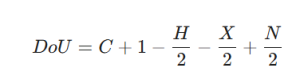
Beyond simple chains in Nomenclature of Organic Compounds , IUPAC Nomenclature Rules utilize the Degree of Unsaturation (DoU) formula to identify the presence of rings or pi bonds in a structure:
Structural Formulas and Mathematical Rules in Nomenclature
Mathematical precision governs the way chemists assign names to complex structures. Specific formulas help determine the degrees of unsaturation or the relationship between atoms in a homologous series. The following table summarizes key numerical expressions and theorems used in the Nomenclature of Organic Compounds.
| Feature | Formula or Theorem | Application |
|---|---|---|
| Alkanes | CnH2n+2 | Determines the number of hydrogen atoms in saturated chains. |
| Alkenes | CnH2n | Calculates hydrogens for a single double bond. |
| Alkynes | CnH2n-2 | Calculates hydrogens for a single triple bond. |
| Degree of Unsaturation | DoU = C + 1 – H/2 – X/2 + N/2 | Identifies rings or pi bonds in a structure. |
| Lowest Locant Rule | Σ L = minimum | Ensures the lowest possible numbers for substituents. |
Nomenclature of Aromatic and Heteroaromatic Compounds
Aromatic compounds contain benzene rings or systems with similar electronic stability. Nomenclature of Organic Compounds involving benzene derivatives uses specific prefixes like ortho (1,2), meta (1,3), and para (1,4) for disubstituted rings. For multisubstituted rings, you must number the carbons to give the lowest possible set of locants to the substituents.
Heteroaromatic compounds incorporate atoms like nitrogen, oxygen, or sulfur into the cyclic structure. Common names like pyridine, furan, and thiophene are IUPAC-accepted. You number these rings starting from the heteroatom. If multiple heteroatoms exist, priority follows the order of O, S, then N. This specific branch of Bicyclic and Spiro compounds nomenclature logic extends to fused aromatic systems where shared carbons are identified by letters or specific numbering sequences.
Bicyclic and Spiro Compounds Nomenclature and Structural Logic
Bicyclic and Spiro compounds nomenclature follows a distinct set of rules compared to simple alkanes. Bicyclic compounds contain two rings sharing two or more atoms. You name these as bicyclo[x.y.z]alkane, where x, y, and z represent the number of carbons in each bridge, excluding the bridgehead atoms. You must list these numbers in descending order within the brackets.
heptane and spiro[2.4]heptane structures]
As per Nomenclature of Organic Compounds, Spiro compounds share only one atom between two rings. The name format is spiro[a.b]alkane, where a and b are the number of carbons in the smaller and larger rings respectively. Unlike bicyclic systems, you number spiro compounds starting from the smaller ring, passing through the spiro atom into the larger ring. These rules are vital for students following the RPSC Chemistry Syllabus 2026 to distinguish between bridged and fused systems.
Practical Application in RPSC Chemistry Syllabus 2026
The RPSC Chemistry Syllabus 2026 emphasizes the transition from common names to systematic IUPAC titles. Candidates must accurately name molecules containing multiple functional groups. The principal functional group determines the suffix, while all other groups become prefixes. Priority follows a set hierarchy, usually starting with carboxylic acids, followed by esters, amides, nitriles, aldehydes, ketones, and alcohols.
Consider the molecule 4-oxopentanoic acid in Nomenclature of Organic Compounds . The carboxylic acid takes priority over the ketone (oxo) group, forcing the numbering to start at the carboxyl carbon. Accurate application of these rules prevents errors in identifying isomers during competitive examinations. Practicing with diverse structures like those found in the RPSC Chemistry Syllabus 2026 builds the necessary speed for high-stakes testing environments.
Limitations and Critical Perspectives on Systematic Naming
While IUPAC Nomenclature Rules provide a logical framework, they often struggle with exceptionally large or complex natural products. In these cases, systematic names become long and nearly impossible to use in verbal communication. Many chemists continue to use semi-systematic or trivial names for proteins, alkaloids, and complex terpenes because the IUPAC name might exceed fifty characters.
Another limitation appears in stereochemistry in Nomenclature of Organic Compounds . While R and S descriptors handle most cases, molecules with axial chirality or complex knots require advanced topological descriptors. Relying solely on basic IUPAC rules without understanding these exceptions can lead to incomplete molecular identification. You must recognize that systematic nomenclature is a tool for clarity, but common names still dominate pharmaceutical and industrial sectors for efficiency.
Real-World Case Study: Naming Synthetic Intermediates
In industrial drug synthesis, the Nomenclature of Organic Compounds helps track structural changes through various reaction stages. A chemist might start with a simple benzene derivative and add substituents to create a substituted bicyclic core. Using Bicyclic and Spiro compounds nomenclature allows the laboratory team to communicate the exact position of a halogen or nitro group without needing to see the 2D diagram.
For instance, during the production of certain analgesics, the transition from a substituted phenol to a complex bicyclic ether must be documented. If the nomenclature is inconsistent, the chemical inventory and regulatory filings will contain errors. This precision ensures that a researcher in India and a manufacturer in Germany are discussing the exact same molecular entity. Following the RPSC Chemistry Syllabus 2026 standards prepares students for this level of professional accuracy in Nomenclature of Organic Compounds .
Conclusion
Mastering the Nomenclature of Organic Compounds is a journey from basic rules to complex structural identification. This systematic framework ensures that every molecule has a definitive name, supporting clear communication across the global scientific community. VedPrep provides students with the specialized tools and resources required to excel in these chemistry topics. By consistently applying IUPAC Nomenclature Rules to aliphatic, aromatic, and bicyclic systems, you build the foundation necessary to navigate the RPSC Chemistry Syllabus 2026 and future professional challenges.
Frequently Asked Questions (FAQs)
What are the basic IUPAC Nomenclature Rules?
IUPAC Nomenclature Rules require identifying the longest continuous carbon chain as the parent structure. You must number this chain to give functional groups the lowest possible locants. The name consists of a prefix for substituents, a word root for the chain length, and a suffix for the functional group.
How do you name aliphatic compounds in the RPSC Chemistry Syllabus 2026?
Aliphatic compounds are named by identifying the longest carbon chain. You assign numbers to the carbons starting from the end closest to a substituent or multiple bond. The name reflects the number of carbons using roots like meth, eth, prop, and but, followed by the saturation suffix.
Why is chemical nomenclature standardized?
Standardization prevents ambiguity in chemical identification. Without a system like IUPAC, one molecule could have multiple names based on regional or historical preferences. A single standardized name ensures safety in manufacturing, research, and medical applications by identifying the exact molecular arrangement.
What is the role of the word root in organic nomenclature?
The word root indicates the total number of carbon atoms in the principal carbon chain. It serves as the foundation of the chemical name. Common roots include pent for five carbons or hex for six carbons. You add suffixes and prefixes to this root to complete the name.
How do you apply IUPAC Nomenclature Rules for branched alkanes?
First, locate the longest carbon chain to determine the parent name. Number the chain from the end that gives substituents the lowest numbers. List substituents in alphabetical order as prefixes. Use prefixes like di or tri if the same substituent appears multiple times on the chain.
What is the numbering priority for functional groups?
Functional groups follow a strict hierarchy. Carboxylic acids hold the highest priority, followed by esters, amides, nitriles, aldehydes, ketones, alcohols, and amines. The highest priority group determines the suffix of the name. Other groups are treated as substituents and named as prefixes.
How do you name Bicyclic and Spiro compounds nomenclature?
Bicyclic compounds use the prefix bicyclo followed by brackets containing the number of carbons in each bridge in descending order. Spiro compounds share one carbon and use the prefix spiro with brackets showing ring sizes. Numbering starts at a bridgehead for bicyclic and a neighbor carbon for spiro.
What happens if two chains have the same length?
When you find two chains of equal length, choose the one with the greater number of side chains as the parent. This rule simplifies the naming of substituents. It also ensures that the name accurately reflects the complexity of the branching in the organic molecule.
How do you handle alphabetical order for substituents?
List substituents alphabetically by their base name. Ignore prefixes like di, tri, or tetra when determining alphabetical order. However, include prefixes like iso and neo as part of the name for alphabetization. This consistency helps in quickly identifying substituents in long chemical names.
What if a molecule has both a double and a triple bond?
The chain is numbered to give the lowest numbers to the multiple bonds regardless of type. If a double and triple bond are at identical positions from either end, the double bond receives the lower number. The suffix reflects both groups as enyne.
How do you name aromatic rings with multiple substituents?
Number the benzene ring to give the lowest possible locants to all substituents. List the substituents in alphabetical order in the prefix. For disubstituted rings, you can use ortho, meta, or para. Multisubstituted rings require the use of numbers for clarity and precision.
How do you name heteroaromatic compounds?
Heteroaromatic compounds contain atoms like nitrogen or oxygen in the ring. Numbering starts at the heteroatom and proceeds toward any substituents. Common names like pyridine or furan are often IUPAC-preferred. You must follow specific priority rules if the ring contains multiple heteroatoms.
What is the IUPAC rule for cyclic compounds with side chains?
If the ring has more carbons than the side chain, the ring is the parent. If the side chain is longer or contains the principal functional group, the ring becomes a substituent. Use cyclo as a prefix for the ring name in either case.
How does the RPSC Chemistry Syllabus 2026 treat trivial names?
The syllabus requires knowledge of both systematic IUPAC names and common trivial names. Some trivial names like acetic acid or toluene are officially accepted by IUPAC. You must be able to convert between these formats to solve exam problems efficiently.