






Quantum numbers and their significance represent the foundational language of modern chemistry and physics. For any aspirant preparing for the IIT JAM 2027 exam, mastering these four numerical values—n, l, ml, and ms—is not just a requirement; it is a strategic necessity. They act as the “GPS coordinates” for an electron, providing the exact energy level, shape, and spatial orientation of atomic orbitals.
With increasing reliance on these principles, performance often hinges on grasping their role in electron dynamics. Where electrons reside and behave traces back to the patterns set by Quantum numbers and their significance. Because such details shape outcomes in electronic arrangements, materials respond differently under varying conditions. Even innovations in semiconductor frameworks rely subtly on this foundation.
Here begins an explanation shaped by clarity. Through step-by-step reasoning, the structure of quantum behavior becomes visible. Instead of assumptions, focus rests on foundational ideas – Aufbau among them. One principle at a time, each rule reveals its role. Following exclusion patterns described by Pauli adds precision. Rather than memorization, understanding guides progress. Quantum numbers and their significance appear within context, not isolation. Their meaning unfolds through placement and limit. With consistent logic, connections form naturally. For those preparing ahead of 2027, insight replaces guesswork. Clarity emerges where confusion once stood.
IIT JAM 2027 Syllabus Context: Atomic Structure
The official syllabus for IIT JAM 2027 emphasizes the Quantum Mechanical Model of the Atom. This topic bridges the gap between classical physics and modern chemistry.
- Unit: Atomic Structure and Chemical Bonding.
- Core Focus: Wave-particle duality, Heisenberg’s Uncertainty Principle, Schrödinger wave equation (qualitative), and the significance of n, l, ml, and ms.
- Weightage: Historically, this unit accounts for 8-10% of the Chemistry paper, with quantum numbers being a frequent source of Multiple Select Questions (MSQs) and Numerical Answer Type (NAT) problems.
Understanding the Four Quantum numbers and their significance
To predict the behavior of an electron in a multi-electron atom, we utilize four specific constants derived from the solution of the Schrödinger equation.
1. Principal Quantum Number (n)
The Principal Quantum Number defines the main energy level or shell.
- Values: n = 1, 2, 3, … (positive integers).
- Significance: It determines the size and energy of the orbital. As n increases, the electron spends more time further from the nucleus.
2. Azimuthal Quantum Number (l)
This number defines the three-dimensional shape of the orbital and the subshell.
| l value | Orbital Type | Shape |
|---|---|---|
| 0 | s | Spherical |
| 1 | p | Dumbbell |
| 2 | d | Double Dumbbell |
| 3 | f | Complex |
3. Magnetic Quantum Number (ml)
This quantum number describes the spatial orientation of the orbital relative to an external magnetic field. For any given ‘l’, ml ranges from -l to +l, including zero.
4. Spin Quantum Number (ms)
Describes the intrinsic angular momentum of the electron, with values of +1/2 or -1/2.
Known as l, the Azimuthal Quantum Number defines which subshell holds an electron – be it s, p, d, or f. When tackling IIT JAM 2027 problems, one finds clarity through its role in angular momentum calculations. A fixed expression governs that motion; reliance on this value becomes inevitable. Identification of orbital type emerges directly from its magnitude. Thus, precision begins here, long before equations appear. Though small in form, its influence spans critical derivations ahead. Without misstep, each step forward ties back to this measure. Its presence shapes how electrons are mapped across energy levels. Even subtle shifts in interpretation hinge upon correct assignment. So, attention settles first on what this integer reveals.
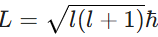 , a frequent source of NAT (Numerical Answer Type) questions. Furthermore, l dictates the number of angular nodes (planar or conical) present in an orbital, which directly influences the spatial distribution of electron density and the resulting geometry of chemical bonds in complex molecules.
This quantum number also plays a critical role in the (n+l) energy rule. Based on Quantum numbers and their significance, in multi-electron systems, subshell penetration and shielding effects mean that orbitals with the same n but different l values are not degenerate. For instance, the 4s orbital is filled before the 3d orbital because its lower l value allows the electron to penetrate closer to the nucleus, effectively lowering its energy state. This distinction is fundamental for correctly predicting the ground-state electronic configurations of transition elements.
Fundamental Principles for IIT JAM 2027
Success in the 2027 exam requires understanding the three core rules of electronic distribution:
- Aufbau Principle: Electrons fill lower-energy orbitals first (n+l rule).
- Pauli’s Exclusion Principle: No two electrons can have identical sets of all four quantum numbers.
- Hund’s Rule: Maximize total spin by filling degenerate orbitals singly before pairing.
Real-World Applications
Quantum numbers are the foundation of modern technology, influencing:
- Semiconductor Design: Band gaps in transistors are determined by quantum energy levels.
- MRI Technology: Based on nuclear spin properties.
- Nanotechnology: Controlling electron confinement in “quantum dots.”
Strategic Preparation & Resources
For the 2027 cycle, focus on integrated problems that link Inorganic Chemistry with Quantum mechanics. Students must cover Quantum numbers and their significance to get a high score in the exam.
Recommended Textbooks:
- Physical Chemistry by P.W. Atkins
- Quantum Chemistry by Ira N. Levine
- Concise Inorganic Chemistry by J.D. Lee
Frequently Asked Questions (FAQs)
Why are quantum numbers significant for IIT JAM 2027?
They are essential for determining the electronic configuration of atoms, predicting magnetic properties, and understanding the spatial orientation of orbitals, which are frequently tested in MSQ and NAT formats.
How do you calculate the total number of orbitals in a shell?
The total number of orbitals in a main energy level or shell is given by the formula n2, where n is the principal quantum number.
What is the formula for the maximum number of electrons in a shell?
A shell can hold a maximum of 2n2 electrons, following Pauli’s Exclusion Principle.
What represents the number of angular nodes in an orbital?
The number of angular nodes is equal to the azimuthal quantum number (l).
How do you calculate the total number of nodes?
The total number of nodes in any orbital is the sum of radial and angular nodes, simplified as (n - 1).
What does the Principal Quantum Number (n) represent?
It represents the main energy level or shell of the electron and determines the size and energy of the orbital.
What is the range of values for the Azimuthal Quantum Number (l)?
For a given value of n, l can range from 0 to (n - 1).
What is Pauli’s Exclusion Principle?
It states that no two electrons in the same atom can have an identical set of all four quantum numbers.
How does Hund’s Rule affect orbital filling?
It mandates that degenerate orbitals must be singly occupied with parallel spins before any pairing occurs to minimize inter-electronic repulsion.
20. What are degenerate orbitals?
Degenerate orbitals are orbitals that belong to the same subshell and possess the same energy (e.g., the three $p$-orbitals: px, py, pz).
What quantum numbers are required to define an orbital?
Only three quantum numbers (n, l, ml) are needed to define an orbital. The fourth (ms) is needed to define a specific electron within that orbital.
How do quantum numbers explain the Zeeman Effect?
The Magnetic Quantum Number (ml) explains the splitting of spectral lines in the presence of an external magnetic field.