





Defining Conformal Mapping and Its Mathematical Foundation
Conformal mapping takes place when a function alters a region in the complex plane so that the angle separating any pair of smooth curves is preserved. Considering a function defined as w = f(z), with where z = x + iy and w = u + iv, the transformation exhibits conformality at a point z0 provided f(z) is analytic there and its derivative, f'(z0), does not equal zero. This guarantees that the scaling ratio stays the same across all orientations at that particular location.
In the context of the RPSC Assistant Professor Mathematics Syllabus, understanding these mappings requires a firm grasp of analytic functions. Covering Paper I and Paper II is essential to get core knowledge on topics of complex analysis. An analytic function satisfies the Cauchy-Riemann equations and possesses a continuous derivative. While every analytic function with a non-vanishing derivative provides a conformal mapping, not every mapping that preserves angles is analytic. For example, isogonal mappings preserve the magnitude of angles but reverse their sense.
Role of Analytic Functions in Mapping Theory
The foundation of conformal mapping relies on Analytic functions. For a mapping to possess true conformality, the function needs to be differentiable near a specific point. When an analytic function is utilized on a region, the produced image preserves the harmonic characteristics of the initial area. This connection is crucial in complex analysis as it empowers researchers to apply Laplace’s equation across various coordinate frameworks.
The syllabus for the RPSC Assistant Professor Mathematics Syllabus highlights the tie between analyticity and transformations in geometry. Should f(z) be analytic, its local action resembles a rotation combined with a constant stretching or shrinking. This localized linearity accounts for the preservation of angles between intersecting curves. Should the derivative be null at a specific location, that location is termed a critical point, and the mapping loses its conforming nature precisely there.
Essential Formulas and Theorems in Conformal Mapping
This table outlines the key mathematical formulas and established principles employed when assessing and utilizing conformal mapping in the field of complex analysis and similar high-stakes tests.
| Name | Mathematical Expression / Definition | Key Property |
|---|---|---|
| Analyticity Condition | f'(z) ≠ 0 | Ensuring local conformality and angle preservation. |
| Mobius Transformation | 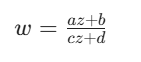 |
Maps circles and lines to circles and lines. |
| Scale Factor | h = |f'(z)| | f'(z) |
| Riemann Mapping Theorem | Exists f: D → U | Any simply connected domain can map to a unit disk. |
| Schwarz-Christoffel | 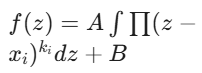 |
Maps the upper half-plane onto a polygon. |
Common Examples of Conformal Mapping Transformations
Standard transformations illustrate how conformal mapping reshapes the complex plane. A translation w = z + c shifts every point by a constant vector without changing the shape. A rotation w = eiθz turns the entire plane around the origin by a fixed angle. These are the simplest examples of how analytic functions move points while keeping geometry intact.
Inversion is another critical example, expressed as w = 1/z. This transformation maps the inside of a unit circle to its outside and converts straight lines that miss the origin into circles. Within the RPSC Assistant Professor Mathematics curriculum, pupils frequently investigate the bilinear transformation, also termed the Mobius transformation. This particular mapping unifies translation, rotation, and inversion into one fractional linear function.
Critical Perspective on the Limitations of Conformal Mapping
Conformal mapping is highly effective but has specific constraints. It only preserves angles locally. Large scale shapes often undergo significant distortion, which can lead to errors if you assume global uniformity. Furthermore, the mapping fails at any point where the derivative of the analytic function is zero. These crucial junctures can cause angles to fall apart or generate points where the conformal characteristic is lost.
A further constraint arises in spaces with three dimensions. Liouville’s theorem asserts that the sole Conformal mappings in Euclidean space of three or more dimensions are Mobius transformations. This narrow scope prevents utilizing the extensive collection of complex analytic functions for 3D issues as simply as for 2D ones. Within complex analysis, experts must reckon with these constraints to prevent imposing 2D reasoning onto 3D physical setups where it proves inapplicable.
Practical Applications in Physics and Engineering
Conformal mapping eases intricate physical borders in both fluid dynamics and electrostatics. Through this process, a convoluted form, such as an aircraft wing, is transformed into a straightforward circle. Engineers can then determine airflow characteristics utilizing fundamental equations. Following the solution derivation for the circle, the findings are then transposed back onto the initial wing geometry. The property of angle preservation guarantees that the governing physical principles stay correct through the entire conversion.
In heat conduction studies, conformal mapping allows you to find temperature distributions in irregular plates. If the boundary temperatures are known, transforming the plate into a half-plane or a disk makes the heat equation solvable. This practical utility is a major reason why the RPSC Assistant Professor Mathematics Syllabus includes these topics. It bridges the gap between abstract analytic functions and real-world engineering challenges.
Conclusion
Grasping Conformal Mapping necessitates a profound appreciation for where geometrical insight meets algebraic exactitude. As demonstrated, this shift isn’t just an interesting mathematical concept but a crucial instrument for tackling boundary value challenges in Complex Analysis. Because it maintains angles, Conformal Mapping enables the simplification of intricate physical areas into workable forms, rendering it essential for uses in engineering and physics. Those studying for advanced assessments will discover that skill with these mappings offers a notable edge in comprehending sophisticated subjects covered by the RPSC Assistant Professor Mathematics Syllabus.
For individuals desiring organized direction and knowledgeable perspectives on these intricate subjects, VedPrep provides tailored materials aimed at simplifying your path to understanding. Ongoing engagement with Analytic Functions and Mobius transformations will guarantee your capacity to utilize these concepts successfully in both abstract challenges and practical situations.
To learn in detail from our faculty, watch our YouTube video:
Frequently Asked Questions (FAQs)
Why are Analytic Functions necessary for Conformal Mapping?
Analytic Functions provide the mathematical foundation for these mappings. A function must be differentiable at a point to ensure the mapping remains conformal. If the derivative of the function is non zero, the transformation preserves the infinitesimal structure of the region. This link is central to solving problems in Complex Analysis.
How does Conformal Mapping relate to the RPSC Assistant Professor Mathematics Syllabus?
The RPSC Assistant Professor Mathematics Syllabus includes Conformal Mapping as a critical component of Complex Analysis. Candidates must understand transformations such as Mobius, inversion, and translation. Mastery of these topics is essential for scoring well in the advanced calculus and complex variable sections of the examination.
What is the difference between isogonal and conformal mappings?
Conformal mappings preserve both the size and the sense of angles. Isogonal mappings only preserve the magnitude of the angle but reverse its orientation. Most applications in physics require the full preservation offered by conformal transformations to maintain the integrity of physical vector fields.
How do you prove a mapping is conformal?
You prove a mapping is conformal by verifying two conditions. First, show the function is analytic using Cauchy Riemann equations. Second, calculate the derivative and ensure it does not equal zero in the target domain. These steps confirm that the transformation preserves local angles and scale.
Which transformation maps a circle to a straight line?
The Mobius transformation, specifically inversion, can map a circle to a straight line. If the circle passes through the origin in the z plane, the transformation w = 1/z results in a line in the w plane. This technique simplifies boundary conditions in fluid dynamics and electrostatics.
What is the role of the Schwarz Christoffel transformation?
The Schwarz Christoffel transformation maps the upper half plane onto the interior of a simple polygon. This formula uses an integral of a product of linear factors. It is a vital tool for engineers working with irregular polygonal boundaries in heat transfer or fluid flow problems.
How do you find the scale factor of a conformal map?
The scale factor at a point is the absolute value of the derivative of the analytic function at that point. If w = f(z), the scale factor is |f'(z)|. This value represents how much a small line segment at $z$ expands or contracts when moved to w.
Why does my mapping fail at the origin for w = 1/z?
The function w = 1/z has a singularity at z = 0. Since the function is not defined or differentiable at this point, the mapping is not conformal there. You must exclude the origin from your domain or treat it as a point at infinity.
What happens if the Cauchy Riemann equations are not satisfied?
If a function fails the Cauchy Riemann equations, it is not analytic. Without analyticity, the transformation will likely distort angles and fail to be conformal. You cannot rely on the preservation of local geometry in these instances.
Why do lines sometimes curve after a transformation?
Conformal Mapping preserves angles, not the straightness of lines. While the intersection angle remains the same, the lines themselves often transform into circular arcs or complex curves. This geometric warping is a standard feature of non linear analytic functions.
Is Conformal Mapping possible in three dimensions?
Conformal Mapping in three dimensions is extremely restricted compared to two dimensions. Liouville's theorem proves that the only conformal mappings in 3D are Mobius transformations. You cannot use the same variety of analytic functions available in 2D Complex Analysis.
What is the significance of the Joukowski transformation?
The Joukowski transformation maps a circle to an airfoil shape. This specific conformal map allowed early aerodynamicists to calculate lift using circular cylinder theory. It remains a classic example of how Complex Analysis solves real world mechanical problems.
How does Conformal Mapping apply to the Laplace equation?
The Laplace equation is invariant under conformal transformations. If a function satisfies the Laplace equation in the original domain, its composition with an analytic function also satisfies it in the new domain. This makes mapping a preferred method for solving steady state heat and flow problems.
Can Conformal Mapping handle boundary conditions at infinity?
Yes, by using the Riemann sphere and the point at infinity, you can map infinite regions to finite ones. This allows for the analysis of external flows or fields that extend far beyond a central object by transforming them into a compact interior domain.