
Fourier Transforms represent mathematical techniques that decompose an intricate signal or function into its fundamental frequencies. By transitioning data from the temporal or spatial sphere into the frequency realm, researchers are able to inspect the spectral makeup of waves, thermal diffusion, and quantum states, making it an essential topic for the RPSC Assistant Professor Physics Syllabus.
Understanding the Fundamental Concept of Fourier Transforms
A Fourier Transform functions much like an optical prism, dissecting a signal into a range of constituent sine and cosine waves. Within physics and engineering, this technique proves essential for tackling differential equations and examining phenomena that repeat over time. For those aiming for the RPSC Assistant Professor Physics Syllabus, proficiency in moving between the time-based f(t) and the frequency-based F(ω) is a crucial skill demanded by this advanced competitive examination, spanning both Paper I and Paper II.
A continuous Fourier Transform is typically expressed by the subsequent integral formula:
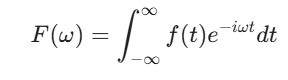
Alternatively, to get back to the initial time-domain signal, the Inverse Fourier Transform is utilized:
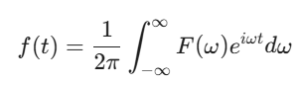
These formulas let scientists adjust signals in whichever realm offers the cleanest answer. As an illustration, time-domain convolution, frequently requiring extensive computation, becomes elementary multiplication in the frequency domain. This operational gain is precisely why Fourier Transforms continue to be fundamental to current digital signal handling and quantum theory.
Essential Properties of Fourier Transforms
The characteristics of Fourier Transforms describe the response of the transform to different algebraic operations on the input function. These attributes, including additivity, scaling, and displacement, enable learners to tackle intricate integrals without needing to execute the entire integration procedure repeatedly. Grasping these dynamics is essential for achieving high marks in the RPSC Assistant Professor Physics Syllabus, since numerous test questions depend on utilizing these quick methods to derive an answer swiftly.
The characteristic of linearity is arguably the most readily understood, asserting that applying the transform to a combination of functions yields the sum of their separate transforms. Shifting characteristics are similarly crucial; moving the function within its time representation results in a phase modification in its frequency representation. This connection proves essential when analyzing signals that have been postponed, such as in radar systems or telecommunications. Moreover, the symmetry attribute assists in pinpointing the frequency elements within functions that are either even or odd, thereby greatly easing the effort required for hand computations.
Summary Table of Key Theorems and Properties
| Property Name | Time Domain f(t) | Frequency Domain F(ω) |
|---|---|---|
| Linearity | af(t) + bg(t) | aF(ω) + bG(ω) |
| Time Shifting | f(t – t0) | e-iωt0 F(ω) |
| Frequency Shifting | eiω0t f(t) | F(ω – ω0) |
| Time Scaling | f(at) | 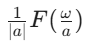 |
| Differentiation | (dn/dtn)f(t) | (iω)n F(ω) |
| Convolution | f(t) * g(t) | F(ω) ⋅ G(ω) |
Significance in the RPSC Assistant Professor Physics Syllabus
The RPSC Assistant Professor Physics Syllabus syllabus strongly focuses on physics’ mathematical techniques, notably Fourier analysis. This subject connects classical wave mechanics and contemporary quantum theory. Candidates need facility in deriving the Fourier series for repeating functions and applying those ideas to non-repeating signals through Fourier Transforms to address the entire scope of the test mandates.
For the RPSC examination, queries frequently center on employing Fourier Transforms to tackle the heat or wave equations spanning infinite regions. Aspirants should have a solid grasp of Parseval’s Theorem, which connects a signal’s energy in the time sphere with its energy in the frequency sphere. Proficiency in these areas is essential for those aspiring to positions as respected instructors within Rajasthan’s advanced educational framework.
VedPrep provides specialized coaching for the RPSC Assistant Professor Physics syllabus, ensuring students understand the fundamental physical principles behind the mathematics instead of just memorizing equations. Our successful method highlights the unique analytical frameworks common in Assistant Professor recruitment exams across India.
The Convolution Theorem and Its Physical Implications
A key feature of Fourier Transforms is the Convolution Theorem, which states that transforming the convolution of two functions results in multiplying their individual transforms. This concept simplifies analyzing linear, time-invariant systems, where output signals are formed by convolving the input signal with the system’s impulse response. In the frequency domain, this complex operation becomes simple multiplication of the system’s frequency response.
In experimental physics, this is used to “deconvolve” data. For example, if a measured spectrum is blurred by the limitations of a spectrometer (the instrument’s response), the Fourier Transforms allows researchers to remove the instrument’s effect and recover the true physical signal. This level of data processing is a standard requirement for researchers and those preparing for high-level technical exams.
However, users must be cautious with the “Gibbs Phenomenon,” where sharp discontinuities in a signal cause oscillations in its Fourier reconstruction. As per Fourier Transforms, understanding these limitations is just as important as knowing the math itself. This nuanced approach to learning is what differentiates a top-ranking candidate from the rest of the field in competitive subject-based examinations.
Real-World Applications and Learning Constraints
Fourier Transforms are far more than just abstract concepts; they drive the contemporary world via JPEG compression, MRI scans, and seismic information processing. For a concrete example, think about noise-canceling headphones. They employ a Fourier Transform to discern the frequency of surrounding sounds and produce an “opposite noise” signal to negate it. This instant frequency breakdown would be unachievable without the swift calculation methods stemming from Fourier principles.
Though useful, a frequent misstep is believing the Fourier Transforms applies to every signal type. It struggles with signals that aren’t steady, where the mix of frequencies changes over time, such as a melody or a bird’s song. For these situations, the Short-Time Fourier Transform (STFT) or Wavelet Transforms are better options. Recognizing when a method isn’t the optimal match sets an expert in physics apart.
Final Thoughts
Understanding Fourier Transforms goes beyond a mere mathematical requirement; it provides insight into the oscillatory nature of the physical realm. For candidates getting ready for the RPSC Assistant Professor Physics syllabus, these transformations supply the crucial analytical framework for simplifying complex differential equations and interpreting experimental data. By thoroughly internalizing the core characteristics of Fourier Transforms, such as symmetry and convolution, students gain the speed and precision needed for high-stakes competitive exams.
Due to the continuous advancement of spectral analysis in modern research, a deep conceptual grasp of these frequency-domain tools remains indispensable for any aspiring academic. VedPrep concentrates keenly on guiding students toward achieving proficiency in these advanced topics, offering the targeted support necessary to secure top ranks in prestigious teaching evaluations.
Frequently Asked Questions (FAQs)
How does a Fourier Transform function in physics?
In physics, this tool identifies the constituent frequencies of waves and oscillations. It simplifies the analysis of linear systems by converting differential equations into algebraic ones. You use it to study optics, quantum mechanics, and heat conduction where periodic behavior or wave propagation determines the physical state of a system.
What is the difference between a Fourier Series and a Fourier Transform?
A Fourier Series represents periodic functions as a discrete sum of sinusoids. A Fourier Transform extends this concept to non periodic functions by using an integral. It results in a continuous spectrum of frequencies. You apply the series to repeating signals and the transform to transient or single event signals.
Why is the frequency domain important for RPSC Assistant Professor Physics candidates?
The frequency domain provides a perspective where certain physical properties become obvious. Filtering noise, analyzing resonance, and understanding quantum uncertainty depend on frequency analysis. Candidates must master these transitions to solve advanced problems in electrodynamics and solid state physics as defined in the official curriculum.
What is an Inverse Fourier Transform?
An Inverse Fourier Transform performs the opposite operation by converting frequency domain data back into the time or spatial domain. It synthesizes the original signal from its spectral components. This step is necessary when you need to observe the physical manifestation of a processed frequency signal.
What role does Euler's formula play in Fourier Transforms?
Euler's formula relates complex exponentials to trigonometric functions. It provides the mathematical foundation for the transform kernel. By using complex exponentials, the transform handles both magnitude and phase information simultaneously. This notation simplifies the integration process during manual calculations.
How do you calculate a Fourier Transform manually?
You multiply the target function by a complex exponential kernel and integrate over all time. This definite integral calculates the correlation between the signal and specific frequencies. For the RPSC exam, you often solve these for standard pulses, Gaussian distributions, or delta functions using standard integration techniques.
When should you use the Discrete Fourier Transform?
The Discrete Fourier Transform applies to sampled data rather than continuous functions. You use it when processing digital signals or experimental data points collected at fixed intervals. It is the standard method for computer based spectral analysis and digital image processing.
What is the Fast Fourier Transform?
The Fast Fourier Transform is an efficient algorithm used to compute the Discrete Fourier Transform. It reduces the computational complexity from squared operations to logarithmic growth. This speed allows for real time signal processing in modern electronics and scientific instrumentation.
Why does aliasing occur in Fourier analysis?
Aliasing happens when the sampling rate is too low to capture high frequency components. These frequencies appear as lower frequencies in the resulting spectrum. You prevent this by ensuring the sampling frequency is at least twice the highest frequency present in the signal.
What causes leakage in a frequency spectrum?
Spectral leakage occurs when a signal is not periodic within the observation window. The energy from one frequency spills into adjacent bins. You mitigate this effect by using windowing functions like the Hamming or Hanning window to smooth the signal edges.
How do you fix a noisy Fourier Transform output?
High frequency noise often obscures relevant peaks in the power spectrum. You apply low pass filters or averaging techniques to improve the signal to noise ratio. Identifying the specific frequency bands of the noise allows for targeted removal without losing the primary data.
What is the Gibbs Phenomenon?
The Gibbs Phenomenon refers to the overshoot or ringing that occurs near sharp discontinuities in a signal. Even with infinite terms, the oscillation persists at approximately nine percent of the jump height. You must account for this when analyzing square waves or step functions.
How does the Uncertainty Principle relate to Fourier Transforms?
The width of a function and the width of its Fourier Transform are inversely proportional. A narrow pulse in time results in a broad spectrum in frequency. This mathematical relationship forms the basis of the Heisenberg Uncertainty Principle in quantum mechanics.
How do you transform a Dirac Delta function?
The Fourier Transform of a Dirac Delta function at the origin is a constant value across all frequencies. This means a perfect impulse contains every frequency component in equal measure. This theoretical result is essential for characterizing system responses.