
Hydrogen Bonding For IIT JAM is a crucial concept in physical chemistry that deals with the attractive forces between molecules. It understanding various physical and chemical properties of substances, making it a key topic for IIT JAM and CSIR NET aspirants.
Hydrogen Bonding For IIT JAM: Syllabus and Key Textbooks
Let’s talk about one of those sneaky topics in Physical Chemistry that seems simple on the surface but shows up everywhere: Hydrogen Bonding. If you are gearing up for the IIT JAM or CSIR NET, you already know that molecular interactions are a big deal. In the CSIR NET syllabus, this fits right into Unit 3 (Physical Chemistry), and for IIT JAM, it is a core part of understanding why molecules behave the way they do.
When you are prepping, you can’t just memorize a quick definition. You need to know the types, the trends, and how this bonding changes physical properties.
If you want to ace this section, here are a few books you should keep on your desk:
-
Atkins’ Physical Chemistry by Peter Atkins and Julio de Paula: The absolute holy grail for getting your fundamentals straight.
-
VedPrep Physical Chemistry Notes: We designed these specifically to skip the fluff and target exactly what competitive exams test you on.
Getting a solid grip on these concepts early will save you a lot of headaches later.
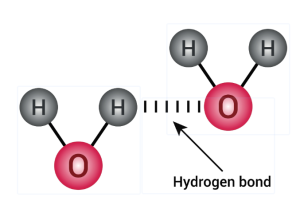
To visualize this, imagine a crowded metro train. If you are standing next to a pole, you hold onto it to stay steady. That is like a normal covalent bond. But if the train jerks and you grab a strap with one hand while leaning slightly toward another rail for balance—that extra, secondary stabilizing force is exactly like a hydrogen bond.
Water (H2O) is the classic textbook example. Because of its bent shape, every single water molecule can network with its neighbors. This endless microscopic web is why water has a surprisingly high boiling point, a thick viscosity, and a high surface tension that lets little insects walk right across it.
Here is a quick cheat sheet of its traits:
-
It is a weak electrostatic attraction, not a covalent or ionic bond.
-
It requires a hydrogen bonded to an N, O, or F, interacting with another N, O, or F.
-
It directly dictates macroscopic properties like melting and boiling points.
Types of Hydrogen Bonding For IIT JAM: O-H, N-H, and F-H Bonds
When we talk about Hydrogen Bonding, electronegativity is the main driver. It is all about how strongly an atom hogs the shared electrons in a bond.
Let’s clear up a common mix-up regarding bond strengths. You might occasionally see conflicting info online, but the absolute chemical reality comes down to the electronegativity of the donor atom and the polarizability of the system.
The standard strength trend for these interactions goes:

-
F-H Bonds: Fluorine is the most electronegative element on the periodic table. It drags electron density toward itself so aggressively that the F-H bond becomes incredibly polar, leading to the strongest individual hydrogen bonds (like in HF).
-
O-H Bonds: Oxygen is right behind fluorine. This makes O-H hydrogen bonds exceptionally strong and highly effective at forming massive networks, which you see in water and alcohols.
-
N-H Bonds: Nitrogen is less electronegative, so the charge separation is smaller, making these bonds the weakest of the three.
Understanding this ranking is vital because IIT JAM loves to throw trick questions at you where you have to predict properties based on these exact differences.
Worked Example: Determining the Strength of Hydrogen Bonding
Let’s walk through a classic question that pops up in exams like IIT JAM, CSIR NET, and GATE.
Question
The boiling points of water (H₂O), ammonia (NH₃), and methane (CH₄) are 100°C, -33°C, and -161°C. Explain this trend.
Solution
To solve this, look at the intermolecular forces holding these liquids together. Breaking these forces is what allows a liquid to boil.
-
Water (H₂O): Oxygen is highly electronegative (χ = 3.44). Each water molecule can ideally form a total of four hydrogen bonds with its neighbors, creating a massive, tight network. It takes a ton of thermal energy to break this grid, which is why the boiling point is a high 100° C.
-
Ammonia (NH₃): Nitrogen is less electronegative (χ = 3.04), so its hydrogen bonds are weaker. Plus, due to its lone pair geometry, it can’t build a network as extensive as water can. Less energy is needed to boil it, landing it at -33°C.
-
Methane (CH₄): Carbon has an electronegativity of just 2.55. The C-H bond is barely polar, meaning methane cannot form hydrogen bonds at all. It relies purely on weak London dispersion forces, so it boils at a freezing -161°C.
The takeaway? Stronger Hydrogen Bonding equals a much higher boiling point.
Common Misconceptions About Hydrogen Bonding For IIT JAM
A major trap students fall into is treating a hydrogen bond like an actual chemical bond—like a covalent or ionic bond. It isn’t. It is an intermolecular force, meaning it happens between separate molecules, not inside them. You aren’t sharing or trading electrons permanently here; you are just dealing with a sophisticated dipole-dipole attraction.
Another trap is thinking that Hydrogen Bonding is the only thing that matters for physical properties. While it plays a massive role in things like water’s high boiling point, it works alongside other forces like Van der Waals interactions. If you assume it explains everything, a tricky exam question will catch you off guard.
-
It is just one part of a substance’s total intermolecular profile.
-
Its effects are only dominant when hydrogen is tied to highly electronegative atoms.
Real-World Applications of Hydrogen Bonding For IIT JAM
Away from the exam papers, Hydrogen Bonding is the reason life works. In biological systems, it acts like structural Velcro. The double helix of your DNA stays zipped up because of hydrogen bonds between base pairs. Proteins rely on these exact same weak forces to fold into their complex 3D shapes. If these bonds break, proteins unravel, and biological machinery grinds to a halt.
It is also a big deal in industrial chemistry, especially in solvent extraction and crystal engineering. When scientists design new pharmaceuticals or crop protection chemicals, they deliberately map out where hydrogen bonds will form to ensure the drug fits perfectly into a target enzyme.
Even in material science, engineers use these interactions to develop smart polymers and advanced composites that can heal themselves when torn.
Mastering Hydrogen Bonding For IIT JAM
At VedPrep, we see a lot of students get overwhelmed by the sheer volume of properties they have to memorize for the exam. The trick to mastering Hydrogen Bonding is to stop memorizing the endpoints and start focusing on the core principles:
-
Intramolecular vs. Intermolecular: Can the molecule form a bond within itself (like ortho-nitrophenol), or does it have to reach out to a neighbor (like para-nitrophenol)?
-
The Structural Payoff: How do these choices alter the boiling points, solubility, and viscosity?
A great way to study this is to read the theory, immediately test yourself with numerical and conceptual problems, and see how it applies to real molecules. Taking a structured path makes handling these chemistry questions a breeze.
Final Thoughts
At the end of the day, Hydrogen Bonding is a cornerstone topic in physical chemistry. It bridges the gap between individual atomic properties and how a substance actually behaves in the real world—whether that is why water is sticky, how DNA stays stable, or why certain liquids boil faster than others.
Getting this concept down is non-negotiable if you want to score well on the IIT JAM and CSIR NET. Focus on the core mechanics and avoid the classic traps, and you will do great.
To learn more in detail from our faculty, watch our YouTube video:
Frequently Asked Questions
What are the prerequisites for hydrogen bonding?
For hydrogen bonding to occur, a molecule must have a hydrogen atom bonded to a highly electronegative atom. The electronegative atom pulls electrons away from the hydrogen, creating a partial positive charge on the hydrogen and a partial negative charge on the electronegative atom.
How does hydrogen bonding affect physical properties?
Hydrogen bonding significantly affects the physical properties of substances, such as melting and boiling points, viscosity, and surface tension. It can also influence the solubility of compounds in water and other polar solvents.
What are examples of hydrogen bonding in nature?
Hydrogen bonding plays a crucial role in the structure and function of biological molecules, such as DNA, proteins, and water. It helps maintain the double helix structure of DNA and the native conformation of proteins.
How does hydrogen bonding differ from covalent bonding?
Hydrogen bonding is a type of intermolecular force, whereas covalent bonding is a type of chemical bond that involves the sharing of electron pairs between atoms. Covalent bonds are typically stronger and more stable than hydrogen bonds.
Can hydrogen bonds form between different molecules?
Yes, hydrogen bonds can form between different molecules, such as between a hydrogen bond donor in one molecule and a hydrogen bond acceptor in another molecule. This is known as intermolecular hydrogen bonding.
What is the role of hydrogen bonding in water?
Hydrogen bonding plays a crucial role in the structure and properties of water, including its high boiling point, surface tension, and solvent properties. Hydrogen bonds between water molecules help to maintain its liquid state at room temperature.
Is hydrogen bonding a directional force?
Yes, hydrogen bonding is a directional force, meaning that it has a specific orientation in space. This directionality is important for understanding the structure and properties of molecules.
How is hydrogen bonding tested in IIT JAM?
In IIT JAM, questions on hydrogen bonding may test understanding of its definition, prerequisites, and effects on physical properties. Students may be asked to identify examples of hydrogen bonding or explain its role in specific biological or chemical contexts.
What types of questions can I expect on hydrogen bonding in IIT JAM?
Expect a mix of theoretical and application-based questions, including multiple-choice questions, short-answer questions, and problem-solving questions. Questions may cover topics such as hydrogen bonding in water, biological molecules, and chemical reactions.
What are common misconceptions about hydrogen bonding?
Common misconceptions include confusing hydrogen bonding with covalent bonding, underestimating the strength of hydrogen bonds, and failing to recognize the importance of electronegative atoms in facilitating hydrogen bonding.
How can I avoid mistakes when answering hydrogen bonding questions?
To avoid mistakes, carefully read and understand the question, and make sure to provide clear and concise answers. Double-check your work to ensure that you have applied the correct concepts and formulas.
What are some advanced applications of hydrogen bonding?
Hydrogen bonding has advanced applications in fields such as materials science, where it is used to design new materials with specific properties. It also plays a role in biological processes, such as protein folding and DNA replication.
How does hydrogen bonding relate to other types of intermolecular forces?
Hydrogen bonding is a type of intermolecular force that is stronger than other types of forces, such as dipole-dipole and London dispersion forces. Understanding the relationships between different types of intermolecular forces is essential for predicting the behavior of molecules.
What is the relationship between hydrogen bonding and chemical reactivity?
Hydrogen bonding can influence chemical reactivity by stabilizing reactants, products, or transition states. It can also affect the acidity and basicity of molecules.