
A harmonic oscillator is a fundamental concept in physics where a system oscillates at a specific frequency due to a restoring force, commonly encountered in competitive exams like CSIR NET, IIT JAM, and CUET PG.
Harmonic Oscillator For CSIR NET: Syllabus and Textbooks
If you look at the official CSIR NET syllabus, the harmonic oscillator sits comfortably in Chapter 2 of Topic 1 (Physics in Chemistry). Because physics doesn’t change its rules based on the exam name, this is the exact same groundwork you need for IIT JAM and CUET PG (where you’ll find it under Mathematical Physics and Classical Mechanics).
When we at VedPrep talk to students, they often ask which books to trust. You can’t go wrong with the classics:
-
Atkins’ Physical Chemistry: Brilliant for building a conceptual bridge to vibrational spectroscopy.
-
Griffiths’ Introduction to Quantum Mechanics: The gold standard for watching this topic transform from a simple bouncing spring into quantum probability waves.
Definition and Mathematical Formulation
At its heart, a harmonic oscillator is just a system that wiggles or swings around a comfortable, stable equilibrium point. Why does it keep moving? Because of a restoring force. Think of it as a cosmic rubber band: the further you pull it away from its happy place, the harder it pulls back to get home.
Mathematically, we talk about Hooke’s Law:
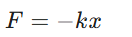
Here, F is that stubborn restoring force, k is the spring constant (how stiff or tight the system is), and x is how far you’ve dragged it from equilibrium.
Harmonic Oscillator For CSIR NET: Worked Example
Let’s look at a classic setup: a particle of mass m attached to a spring with a stiffness of k. You pull it back by a distance x and let go.
To find out how fast it completes a cycle, you use the frequency formula:
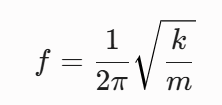
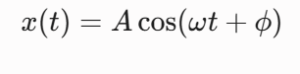
If you want to track exactly where that particle is at any exact millisecond, you use the time-dependent displacement equation:
-
A is your amplitude (the maximum distance it travels).
-
ω is the angular frequency (ω = √k/m).
-
Φ is the phase angle (where the particle was the exact moment you started your stopwatch).
Common Misconceptions
A lot of students get tripped up thinking a harmonic oscillator can just vibrate at any random frequency. In the classical world, sure, you can push a swing at different speeds. But when we transition to the quantum mechanics side of the CSIR NET syllabus, that’s wrong. The system can only vibrate at specific, discrete frequencies called eigenfrequencies. It’s like a guitar string—it only wants to play specific notes based on its physical properties.
Real-World Applications of Harmonic Oscillator For CSIR NET
To make this tangible, imagine a fictional scenario. Let’s say an engineer named Alex is designing a high-end mechanical watch. If the tiny internal balance wheel (which acts as a harmonic oscillator) undergoes too much friction, the watch loses time. Alex has to calculate the “damping factor” to keep the watch accurate.
In the real world, things like friction and air resistance always try to ruin the party. This is called damping, and it causes the amplitude of the oscillation to gradually die down over time. Understanding how these constraints work is exactly how engineers build smooth car suspensions and how chemists understand why molecular bonds eventually break when they absorb too much infrared light.
Study Tips for Harmonic Oscillator For CSIR NET
Because this topic bridges a second-order differential equation to actual physical reality, you can’t just memorize the formulas. Here is how we recommend tackling it at VedPrep:
-
Master the differential equation: Get comfortable solving d2x/dt2} + ω2 = 0.
-
Watch the signs: A simple algebraic slip-up with a minus sign can ruin an entire multi-step quantum problem.
-
Focus on boundary values: Remember that exact boundary conditions might look slightly different depending on whether your textbook sets the initial time t=0 at maximum displacement or at the equilibrium point. Always read the question’s fine print!
Case Studies and Examples
The absolute best mental model for this is the classic mass-spring system.
Imagine a fictional block on a frictionless table attached to a wall by a spring. If it sits perfectly still, it’s at equilibrium. If you pull it to the right, the spring stores potential energy. When you let go, that potential energy converts entirely into kinetic energy as it rushes back past the center point. It keeps overshooting and rushing back, converting energy back and forth forever (or at least until friction slows it down).
Practice Problems and Solutions
Let’s look at a straightforward problem you might see on a diagnostic test:
Problem: A particle of mass m is attached to a spring with a spring constant k. The particle is displaced by a distance x0 from its equilibrium position and released from rest. Find its angular frequency.
Solution: Don’t let the extra text distract you. The angular frequency depends strictly on the intrinsic properties of the system (the mass and the stiffness), not how far you pull it. The solution is simply:
ω = √(k/m)
Harmonic Oscillator For CSIR NET: Key Concepts and Formulas
Here is a quick cheat sheet to keep in your study journal:
| Concept | Formula | What it tells you |
| Hooke’s Law | F = -kx | The force pulling the system back to center. |
| Angular Frequency | ω = √(k/m) | How fast the system oscillates in radians per second. |
| Displacement Equation | x(t) = A cos(ωt + Φ) | The exact position of the oscillator at any time t. |
Additional Resources
If you are a visual learner, text can only take you so far. We always recommend checking out YouTube channels like 3Blue1Brown for beautiful calculus animations that make differential equations click. Coupling those visual tools with structured guidance can make your study sessions a lot more productive.
Important Questions
As you wrap up your review of the harmonic oscillator, make sure you can confidently answer these two questions:
-
Can you derive the equation of motion for a simple harmonic oscillator using both classical forces and quantum wave functions?
-
How does the concept of a harmonic oscillator apply to a diatomic molecule vibrating like a tiny barbell?
Conclusion
Mastering the harmonic oscillator is less about memorizing a few equations and more about understanding the bridge between classical mechanics and quantum chemistry. For anyone diving into the CSIR NET prep, this topic is your gateway to complex areas like vibrational spectroscopy and statistical thermodynamics.
At VedPrep, we love breaking down these core concepts to help take the stress out of your preparation. Keep practicing those boundary value problems, stay consistent with your revisions, and you will find that even the trickiest quantum models start making total sense.
To know more from our specialized faculty, watch our YouTube video:
Frequently Asked Questions
Why is the Harmonic Oscillator fundamental in Physics?
It is the simplest model for any system undergoing small oscillations around a stable equilibrium point, making it applicable from pendulums to molecular vibrations.
What is the difference between Periodic Motion and SHM?
All Simple Harmonic Motion is periodic, but not all periodic motion is SHM. SHM specifically requires the restoring force to be linear (F ∝ -x).
What is "Damping" in an oscillator?
Damping refers to the loss of energy over time due to friction or air resistance, which causes the amplitude of the oscillation to decrease.
How does a Quantum Harmonic Oscillator (QHO) differ from a classical one?
Unlike classical oscillators which can have any energy, a QHO has quantized energy levels. Also, a QHO can never have zero energy (Zero-Point Energy).
Are the energy levels of a Harmonic Oscillator equally spaced?
Yes. The gap between any two consecutive energy levels is always ΔE = hbarω (or hν).
What is the Selection Rule for harmonic oscillator transitions?
For vibrational transitions in spectroscopy, the selection rule is Δn = ± 1.
Which textbooks are best for Harmonic Oscillator For CSIR NET?
Standard references include Introduction to Quantum Mechanics by David J. Griffiths and Physical Chemistry by Peter Atkins.
How is this topic related to Infrared (IR) Spectroscopy?
In Chemistry, the harmonic oscillator model is used to approximate the stretching vibrations of diatomic molecules, which is the basis for IR spectroscopy.
What is a "Normal Mode" of vibration?
In polyatomic molecules, a normal mode is a pattern of motion where all atoms oscillate with the same frequency and phase.
Why do we use the Anharmonic Oscillator model?
Real molecules don't follow Hooke’s Law at high energy levels (they eventually break apart). The Anharmonic model (like the Morse Potential) provides a more accurate description.
Can the Harmonic Oscillator be used in Quantum Computing?
Yes, it serves as a model for trapped ion qubits and superconducting circuits, which are emerging fields often touched upon in advanced exam sections.
How can VedPrep help me master this topic for CSIR NET 2026?
VedPrep provides structured video lectures, solved previous year questions (PYQs), and specialized test series that focus on the mathematical nuances of both classical and quantum oscillators.