

Mannich reaction For CSIR NET is a key organic reaction in CSIR NET, involving the condensation of amines, aldehydes, and active methylene compounds to form beta-amino carbonyl compounds, essential for exam preparation and focused on Condensation Reaction For CSIR NET.
Syllabus – Organic Chemistry
The Mannich reaction is a heavyweight topic in Unit 1 (Basic Concepts in Organic Chemistry) for the CSIR NET syllabus. If you are eyeing IIT JAM or CUET PG, this reaction is just as crucial. This unit lays down the foundation for organic mechanisms and synthesis.
To really nail this section, you need a solid grasp of reaction types, stereochemistry, and synthetic strategies. The Mannich reaction is a classic multicomponent condensation that tests your understanding of all three.
If you want to dive deep into the textbook details, here is what you should check out:
-
Organic Chemistry by J. Clayden: The holy grail for understanding how electrons move in condensation mechanisms.
-
Organic Chemistry by Morris Hein: Great for a clear, fundamental breakdown of basic reaction types.
At VedPrep, we always tell students that mastering these core reference books will make your preparation a whole lot smoother.
Mannich Reaction For CSIR NET: A Key Concept in Organic Chemistry
Let’s break down the Mannich reaction without the overwhelming academic jargon. At its core, this is a three-component condensation reaction. You throw an amine, a non-enolizable aldehyde (usually formaldehyde), and an active methylene compound into a flask, and you get a $\beta$-amino carbonyl compound—also known as a Mannich base.
Think of it like a matchmaking event. The amine and the aldehyde get together first to form a highly reactive intermediate. The text in the original draft mentioned an “enamine intermediate” formed by the amine and the active methylene compound, but let’s clear up that misconception right now. The reaction actually kicks off with the amine and the aldehyde condensing to form an iminium ion intermediate under acidic conditions.
Once that electrophilic iminium ion is ready, the active methylene compound (acting as the nucleophile) steps in to attack it. This elegant three-component setup runs under pretty mild conditions, can be catalyzed by acids or bases, and is a massive deal in synthesizing pharmaceuticals and natural products.
Worked Example – Mannich Reaction For CSIR NET: A Detailed Analysis
Let’s look at a classic problem that could easily pop up on your next exam paper. Imagine you are reacting benzaldehyde, aniline, and acetylacetone.
Here is exactly how the mechanism unfolds step-by-step:
Step 1: Making the Electrophile
Aniline (your amine) attacks benzaldehyde (your aldehyde). Under mildly acidic conditions, this eliminates water and forms an imine (or iminium) intermediate.
Step 2: Getting the Nucleophile Ready
Acetylacetone is an active methylene compound. It undergoes keto-enol tautomerism to form its enol shape, which is highly nucleophilic at the $\alpha$-carbon.
Step 3: The Big Finale
The enol nucleophile attacks the imine carbon.
The final product is 4-(phenylamino)-4-(phenyl)butane-2,4-dione.
When you sit down for the exam, examiners love to tweak the reagents or change the pH to see if you can still predict the product. Practicing these mechanism pathways is exactly how we help students stay ahead at VedPrep.
Common Misconceptions About Mannich Reaction For CSIR NET
A huge trap that many aspirants fall into is forgetting the third wheel in this reaction: the active methylene compound. It is easy to look at the amine and the aldehyde and think you are just doing a simple imine formation.
But without that active methylene partner acting as the nucleophile, you won’t get your Mannich base. Remember the magic trio:
-
Amine (primary or secondary)
-
Aldehyde (usually formaldehyde because it lacks $\alpha$-hydrogens and won’t self-condense)
-
Active methylene compound (like ketones, esters, or nitroalkanes)
Another slip-up is confusing the intermediates. The critical intermediate that drives the classic acid-catalyzed pathway is the iminium ion, not an enamine. Keep that straight, and you will save yourself from losing easy marks.
Real-World Applications of Mannich Reaction For CSIR NET
Why do organic chemists care so much about this reaction? Because $\beta$-amino carbonyl compounds are incredibly useful building blocks.
Let’s look at a fictional, everyday scenario to see how this works. Imagine a pharmaceutical lab trying to develop a new, fast-acting pain reliever. Instead of building a complex structure atom by atom, the chemists can use the Mannich reaction to snap three simple components together in a single step. This gives them a core scaffold that can be easily converted into local anesthetics or anti-inflammatory drugs.
Beyond medicine, this reaction is a staple in the industrial manufacturing of dyes and pigments. By altering the starting amines and carbonyls, manufacturers can create complex molecules that lock vibrant colors into textiles and paints. It is also used heavily in total synthesis to mimic how plants naturally build complex alkaloid structures.
Exam Strategy for Mannich Reaction For CSIR NET: Tips and Tricks
When you are staring at a multi-step synthesis question in Part C of the CSIR NET exam, look for the telltale signs of a Mannich reaction.
Here is a quick cheat sheet for your exam strategy:
-
Spot the Reagents: If you see formaldehyde, a secondary amine, and a ketone together, your mind should immediately jump to Mannich.
-
Look for the ‘Mannich Base’ Structure: If the target molecule has a nitrogen atom separated from a carbonyl group by exactly two carbon atoms (β-amino carbonyl), you know a Mannich reaction was used to build it.
-
Watch the Regioselectivity: If you have an unsymmetrical ketone, remember that under acidic conditions, the reaction typically happens at the more substituted α-carbon (via the more stable enol).
At VedPrep, we suggest drawing out the mechanism every time you practice until you can see the final product in your head without even using scratch paper.
Mannich reaction For CSIR NET: A Comprehensive Guide to Organic Synthesis
Let’s map out the comprehensive, step-by-step synthetic pathway so you can visualize the electron flow.
Step 1: Iminium Ion Formation
The amine attacks the formaldehyde. After a proton transfer and the loss of a water molecule, you get a highly electrophilic iminium ion.
Step 2: Nucleophilic Attack
The active methylene compound turns into its enol or enolate form. This nucleophile attacks the carbon of the iminium ion, creating a brand-new carbon-carbon bond.
Step 3: Product Isolation
Because the reaction runs under mild conditions, the resulting $\beta$-amino carbonyl compound is stable and can be isolated in high yields.
Importance of Mannich Reaction in Organic Synthesis For CSIR NET
The reason this reaction dominates competitive exams is its sheer efficiency. It is a multicomponent reaction, meaning you get high molecular complexity in just one step without isolating messy intermediates.
Here is why synthetic chemists love it:
-
High yields and selectivity: It minimizes side reactions.
-
Mild reaction conditions: You don’t need harsh acids or extreme heat, which keeps sensitive functional groups safe.
-
Wide substrate scope: You can swap in different amines and active methylene compounds to create a massive library of different molecules.
Practice Questions on Mannicαh Reaction For CSIR NET: Test Your Knowledge
Let’s test your understanding with a classic problem.
Question: What is the product of the reaction between dimethylamine, formaldehyde, and acetoacetic ester?
Solution:
-
Form the intermediate: Dimethylamine and formaldehyde condense to give you the iminium ion intermediate:
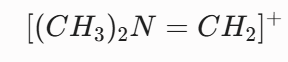
- Attack: The acetoacetic ester (our active methylene compound) attacks this iminium ion at its acidic -position.
Final Thoughts
The Mannich reaction remains one of the most versatile tools in an organic chemist’s toolkit, making it a guaranteed point-getter on the CSIR NET syllabus. Cracking its mechanism—from that initial iminium ion to the final nucleophilic attack—sets you up perfectly for tougher questions on alkaloid synthesis and drug design. As you map out your study plan, remember that VedPrep is always here with standard resources, mock tests, and simple breakdowns to help you clear your exams with confidence.
To know more in detail from our expert faculty, watch our YouTube video:
Frequently Asked Questions
What are the typical reactants in a Mannich reaction?
The typical reactants in a Mannich reaction are a primary or secondary amine, a carbonyl compound (usually an aldehyde), and an enolizable compound (often a ketone).
What is the general mechanism of the Mannich reaction?
The Mannich reaction mechanism involves the formation of an iminium ion from the amine and carbonyl compound, which then reacts with the enolizable compound to form the β-amino carbonyl product.
What are the applications of the Mannich reaction?
The Mannich reaction has applications in the synthesis of pharmaceuticals, agrochemicals, and other organic compounds. It is particularly useful for forming complex molecules with multiple functional groups.
How does the Mannich reaction relate to other organic reactions?
The Mannich reaction is related to other organic reactions such as the aldol reaction and the Schiff base reaction. It is a key example of a multi-component reaction in organic synthesis.
What is the significance of the Mannich reaction in organic synthesis?
The Mannich reaction is significant in organic synthesis because it provides a versatile method for forming complex molecules with multiple functional groups.
Who discovered the Mannich reaction?
The Mannich reaction was discovered by Carl Mannich in the early 20th century. He reported the reaction of amines, carbonyl compounds, and enolizable compounds to form β-amino carbonyl compounds.
How is the Mannich reaction tested in the CSIR NET exam?
In the CSIR NET exam, the Mannich reaction may be tested through questions on its mechanism, applications, and synthetic utility. Candidates may be asked to identify reactants, products, or conditions for the reaction.
What type of questions can I expect on the Mannich reaction in CSIR NET?
In CSIR NET, you can expect questions on the Mannich reaction such as identifying the product of a given reaction, understanding the reaction conditions, or explaining the mechanism of the reaction.
How can I prepare for Mannich reaction questions in CSIR NET?
To prepare for Mannich reaction questions in CSIR NET, focus on understanding the reaction mechanism, practicing problems, and reviewing key concepts in organic chemistry.
What are common mistakes in the Mannich reaction?
Common mistakes in the Mannich reaction include incorrect identification of reactants and products, misunderstanding the reaction mechanism, and failing to consider reaction conditions.
How can I avoid errors in solving Mannich reaction problems?
To avoid errors in solving Mannich reaction problems, carefully analyze the reactants and conditions, and ensure a clear understanding of the reaction mechanism and synthetic utility.
What are some variations of the Mannich reaction?
Variations of the Mannich reaction include the use of different types of amines, carbonyl compounds, and enolizable compounds. There are also asymmetric Mannich reactions and those using catalysts.
How has the Mannich reaction been modified or expanded?
The Mannich reaction has been modified and expanded through the development of new catalysts, asymmetric variants, and applications to complex molecule synthesis.
How does the Mannich reaction relate to green chemistry?
The Mannich reaction can be made more sustainable through the use of green chemistry principles, such as minimizing waste and using catalysts.