
Prochirality For CSIR NET refers to the ability to identify a compound as prochiral, which is a necessary concept in organic chemistry, helping students to understand the stereoselective reactions and synthesize complex molecules.
Syllabus: Organic Chemistry for CSIR NET
Stereochemistry is the heart of organic chemistry. If you are preparing for CSIR NET you already know that skipping this unit is not an option. Within this realm lies prostereoisomerism—a fancy word for a concept that is actually pretty intuitive once you break it down.
At this level, examiners love testing your ability to see molecules in three dimensions. You aren’t just looking for static structures; you need to understand how the 3D arrangement of atoms dictates how a molecule behaves during a reaction. This is where mastering concepts like stereocenters, enantiomerism, diastereomerism, and especially prochirality becomes your ticket to scoring those crucial marks.
For a deep dive into the subject, standard textbooks are your best friends. Clayden, Warren, and Wothers’ Organic Chemistry is the gold standard here. It offers brilliant, crystal-clear coverage of stereochemistry and prochirality. While books like Atkins are great for physical chemistry, stick to Clayden or Nasipuri when you want to master the organic side of things. Here at VedPrep, we always tell our students that building a strong foundation from these core texts makes tackling complex exam problems much easier.
Prochirality For CSIR NET: Definition and Key Terms
In simple terms, a prochiral molecule is a achiral molecule that is just one single step away from becoming chiral.
Imagine a tetrahedral carbon atom. If it is bonded to two identical groups (like two hydrogens) and two different groups, it isn’t chiral yet. But if you replace just one of those identical hydrogens with something else—say, a deuterium or a chlorine atom—boom, you’ve just created a chiral center.
To differentiate between those two identical-looking groups, we use the terms pro-R and pro-S. We assign these descriptors by temporarily giving one of the identical groups higher priority using the standard Cahn-Ingold-Prelog (CIP) rules. If the imaginary priority boost results in an R configuration, that gr. If it gives an S configuration, it’s pro-S. It is a clever trick that helps us predict exactly how a reaction will play out.
But prochirality isn’t just about tetrahedral carbons. It also applies to planar, sp2-hybridized systems like carbonyls or alkenes. These molecules have two flat faces, which we call the Re and Si faces.
To determine which is which, look at the three groups attached to the double-bonded carbon and rank them by CIP rules. If the priority goes clockwise (1 → 2 → 3) from the face you are looking at, you are staring at the Re face. If it goes counterclockwise, that is the Si face.
Prochirality For CSIR NET: Identifying Prochiral Carbons
Spotting a prochiral carbon is a great skill to develop for your exam preparation. Look for a tetrahedral carbon bonded to two identical groups and two unique groups.
Think about the CH2 group in ethanol (CH3CH2OH). The central carbon is attached to a methyl group, a hydroxyl group, and two hydrogen atoms. Because those two hydrogens sit in slightly different spatial environments relative to the rest of the molecule, that carbon is prochiral.
Another classic example is the carbonyl carbon in acetone or acetaldehyde. In acetaldehyde (CH3CHO), the sp2 carbon is bonded to a methyl, a hydrogen, and double-bonded to an oxygen. Attack from the top face gives you one enantiomer, while attack from the bottom gives you the other.
To make this crystal clear, let’s look at a fictional scenario. Imagine you have a tiny, microscopic factory worker trying to deliver a package to a building. If the building is completely symmetrical, the worker can walk through the front door or the back door and experience the exact same layout. But if the building has a beautiful garden on the left side and a parking lot on the right, entering from the front door feels completely different than entering from the back.
That is exactly how a chemical reagent feels when it approaches a prochiral molecule! The environment matters, and that is why reactions end up favoring one pathway over another.
Worked Example: Prochirality For CSIR NET
Let’s look at a practical problem to see how this works in a real exam context.
Question: Identify the prochiral environments in 2-butanol.
The chemical formula for 2-butanol is CH3CH(OH)CH2CH3.
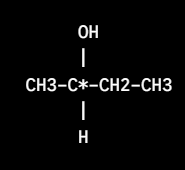
Solution: First, let’s look at Carbon-2 (C2). It is already a chiral center because it is bonded to four completely different groups: -H, -OH, -CH3, and -CH2CH3.
Now, let’s look at Carbon-3 (C3), which is the CH2 group of the ethyl chain. This carbon is bonded to a -CH3 group, the chiral C2 group, and two hydrogen atoms. Because the two hydrogens are attached to a carbon next to a pre-existing chiral center, they are actually diastereotopic. Replacing one hydrogen or the other creates a new chiral center, resulting in a pair of diastereomers. Therefore, C3 is a prochiral center.
Key Takeaway: A center is prochiral if making a single change breaks the symmetry and introduces handedness to the molecule.
Common Misconceptions About Prochirality For CSIR NET
A common trap that many aspirants fall into is thinking that any carbon with two identical groups is prochiral. This misunderstanding can cost you easy marks.
Take a molecule like 2-dichloropropane, CH3C(Cl)2CH3. The central carbon is bonded to two identical methyl groups and two identical chlorine atoms. If you replace one of the chlorine atoms with a bromine atom, the carbon is now bonded to -CH3, -CH3,-Cl, and -Br. It still has two identical methyl groups! It hasn’t become a chiral center yet.
A carbon is only truly prochiral if substituting one group immediately turns it into a stereocenter with four completely unique groups. Our team at VedPrep notices that students who take the time to sketch out these substitutions on paper rarely fall for these subtle exam traps.
Applications of Prochirality For CSIR NET in Synthesis
Why do organic chemists care so much about this? Because nature is inherently chiral. The enzymes in our bodies are made of chiral amino acids, meaning they act like a right-handed glove. If you try to feed them a left-handed drug molecule, it either won’t work or could cause serious side effects.
This makes prochirality incredibly important in industrial chemistry, especially in the pharmaceutical sector where synthesizing pure enantiomers is a must.
A famous real-world example is the synthesis of L-DOPA, a crucial drug used to manage Parkinson’s disease. The synthesis starts with a flat, prochiral alkene. By using a specialized chiral catalyst, chemists can force a hydrogenation reaction to happen exclusively on one face of the molecule. This converts the prochiral starting material into the exact enantiomer needed for the medicine, avoiding the waste and danger of creating the wrong mirror image.
Exam Strategy for Prochirality For CSIR NET
When you are sitting in the exam hall, time is everything. You cannot afford to spend ten minutes visualizing a molecule from scratch. Here is a quick strategy to handle these questions efficiently:
-
Master the Definitions: Ensure you can confidently tell the difference between enantiotopic and diastereotopic groups at a glance.
-
Focus on the Faces: Practice assigning Re and Si faces to carbonyls and alkenes until it becomes second nature.
-
Use the Substitution Test: If you are unsure whether a group is pro-R or pro-S, mentally replace it with a deuterium atom (D) and determine the priority.
At VedPrep, we suggest integrating these mental checks into your daily practice sessions. Work through previous years’ question papers and specifically look for questions where stereoselectivity depends on identifying the less hindered face of a prochiral molecule.
Understanding Stereochemistry at Tetrahedral Centers; Additional Insights
Stereochemistry is much more than a set of rules; it’s the study of molecular geometry in 3D space. While carbon gets most of the spotlight in organic chemistry, it isn’t the only atom that can form stereocenters.
Phosphorus and sulfur atoms can also form tetrahedral arrangements with four different groups, creating chiral centers in things like phosphine oxides or sulfoxides. Even a lone pair of electrons can count as a group if the atom can’t easily flip inside out!
One of the fascinating challenges in modern chemistry is predicting exactly how a prochiral molecule will react when surrounded by complex reagents. While standard rules give us a fantastic framework, real-world factors like solvent effects, temperature, and transient hydrogen bonding can alter the outcome. The study of these systems is constantly evolving, pushing the boundaries of how we design smart molecules today.
Final Thoughts
Mastering prochirality is a great way to unlock a deeper understanding of how complex molecules are built from simple components. For anyone aiming to crack the upcoming CSIR NET exam, being able to confidently distinguish between subtle stereochemical environments can make all the difference on high-weight questions.
As you keep practicing your pro-R and pro-S assignments or mapping out Re and Si faces, remember that these principles are the building blocks of advanced asymmetric synthesis. If you ever want to streamline your study routine or need some extra guidance to clear up tricky topics, feel free to check out the practice resources and expert support we offer over at VedPrep.
To know more in detail from our faculty, watch our YouTube video:
Frequently Asked Questions
How does prochirality differ from chirality?
Chirality refers to the property of a molecule that cannot be superimposed on its mirror image. Prochirality, on the other hand, refers to a molecule that can be converted into a chiral molecule through a chemical reaction, but is not inherently chiral itself.
What are the key factors that determine prochirality in a molecule?
The key factors that determine prochirality in a molecule include the presence of a prochiral center, which can be converted into a chiral center through a chemical reaction. This often involves the presence of a molecule with a plane of symmetry.
Can you provide an example of a prochiral molecule?
A classic example of a prochiral molecule is a molecule with a plane of symmetry, such as a substituted methane molecule (e.g., CH2F2). This molecule can be converted into a chiral molecule through a chemical reaction that breaks the plane of symmetry.
What is the significance of prochirality in organic synthesis?
Prochirality plays a crucial role in organic synthesis as it allows chemists to create chiral molecules through controlled chemical reactions. This is particularly important in the synthesis of pharmaceuticals and other biologically active molecules.
How does prochirality relate to stereochemistry?
Prochirality is a fundamental concept in stereochemistry, as it deals with the study of molecules that can exist in different spatial arrangements. Understanding prochirality is essential for predicting and controlling the stereochemical outcomes of chemical reactions.
How can I apply the concept of prochirality to CSIR NET questions?
To answer CSIR NET questions related to prochirality, focus on understanding the definition, key factors, and implications of prochirality in organic chemistry. Practice solving problems and analyzing reaction mechanisms to reinforce your understanding.
What types of questions can I expect on prochirality in CSIR NET?
CSIR NET questions on prochirality may involve identifying prochiral centers, predicting the stereochemical outcome of reactions, or analyzing the implications of prochirality on reaction mechanisms. Be prepared to apply your knowledge to a range of scenarios.
What are common mistakes students make when dealing with prochirality?
Common mistakes students make when dealing with prochirality include confusing prochirality with chirality, failing to recognize prochiral centers, or misapplying the concept to reaction mechanisms. Be aware of these pitfalls to ensure a strong understanding.
How can I avoid mistakes when identifying prochiral centers?
To avoid mistakes when identifying prochiral centers, carefully examine the molecule for a plane of symmetry and look for centers that can be converted into chiral centers through a chemical reaction. Practice identifying prochiral centers in different molecules to build your skills.
How does prochirality relate to asymmetric synthesis?
Prochirality plays a crucial role in asymmetric synthesis, as it allows chemists to create chiral molecules with high stereoselectivity. Understanding prochirality is essential for designing and optimizing asymmetric synthetic routes.
What are some recent developments in the field of prochirality and asymmetric synthesis?
Recent developments in the field of prochirality and asymmetric synthesis include the discovery of new catalysts and reaction mechanisms that enable highly selective and efficient synthesis of chiral molecules. Stay up-to-date with the latest research to appreciate the current state of the field.
How can I apply prochirality to real-world problems in organic chemistry?
Prochirality has significant implications for real-world problems in organic chemistry, such as the synthesis of pharmaceuticals, agrochemicals, and materials. By understanding prochirality, you can design more efficient and selective synthetic routes to solve these problems.
What are some challenges and opportunities in the field of prochirality?
Challenges in the field of prochirality include developing more efficient and selective asymmetric synthetic methods, while opportunities include the discovery of new reaction mechanisms and catalysts that can enable highly selective synthesis of complex molecules.
How does prochirality relate to biocatalysis and enzyme chemistry?
Prochirality plays a significant role in biocatalysis and enzyme chemistry, as enzymes often rely on prochiral centers to achieve high stereoselectivity in their reactions. Understanding prochirality is essential for designing and optimizing biocatalytic routes.