
In this article, we will delve into the fundamental Amino Acids Structure and Properties, which are crucial for IIT JAM aspirants to understand, as they form the basis of protein synthesis. Amino acids are organic compounds that combine to form proteins, and their properties and structure are essential for various biological functions.
Syllabus: Biochemistry for IIT JAM, CSIR NET, and GATE
If you are gearing up for IIT JAM, you already know that biochemistry is a major chunk of the syllabus. Specifically, this topic lands right in Unit 2 (Molecular and Human Biology) for CSIR NET, the core Biochemistry section for IIT JAM, and Biotechnology for GATE.
When you dive into standard textbooks like Lehninger Principles of Biochemistry by Nelson and Cox, or Biochemistry by Bruce Alberts, Amino Acids Structure and Properties are literally the first page of the protein chapters. They are the absolute foundation. If you don’t get how these little molecules behave, understanding complex protein folding or enzyme kinetics later on is going to feel like reading a foreign language. Here at VedPrep, we always tell our students: master the basics first, and the advanced stuff will naturally fall into place.
The Amino Acids Structure and Properties For IIT JAM: An Overview
Let’s break down what an amino acid actually looks like. Think of it as a central hub—the alpha (α) carbon—with four different groups branching off it.
Every single standard amino acid has:
-
An amino group (-NH2)
-
A carboxyl group (-COOH)
-
A lonely hydrogen atom (-H)
-
A side chain, famously known as the R group
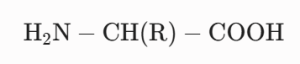
The R group is where things get interesting. It’s the unique ID card for each amino acid, deciding exactly how that molecule is going to behave to understand Amino Acids Structure and Properties.
Some amino acids have nonpolar side chains, making them hydrophobic (they hate water and prefer to hide away). Others have polar, charged side chains, making them hydrophilic (they love water).
Why does Amino Acids Structure and Properties matter for your IIT JAM preparation? Because when a cell builds a protein, the order of these amino acids dictates how the protein folds. The water-hating ones bundle up on the inside, while the water-loving ones hang out on the outside. This shape dictates what the protein actually does in a living system.
Worked Example: Determining the Structure of an Amino Acid
Let’s look at a classic problem you might encounter in your mock tests at VedPrep. Say you are asked to identify an amino acid that can form disulfide bonds to stabilize a protein’s tertiary structure.
To solve this, look at the R groups. As per Amino Acids Structure and Properties, The only amino acid capable of doing this is Cysteine, because its side chain ends in a thiol group (-SH). When two Cysteines get close, their side chains oxidize to form a covalent disulfide bond (-S-S-).

Spotting these specific R-group features is exactly what helps you breeze through the structure-based multiple-choice questions in the exam.
Common Misconceptions about Amino Acid Properties
A regular trap that many self-studying students fall into is thinking that Amino Acids Structure and Properties are just passive bricks used to build proteins, and nothing else. That is a massive understatement!
To make this clear, imagine a fictional scenario where a factory only makes bricks. You would assume those bricks only build walls, right? But what if the factory workers also used those same bricks to generate electricity, signal delivery trucks, and clean up the factory waste? That’s what amino acids do in your body.
-
Neurotransmitters: Glutamate and aspartate don’t just sit in proteins; they act as critical chemical messengers in your brain.
-
Heme Production: Amino acids are starting materials for porphyrins, which you need to make hemoglobin so your blood can carry oxygen.
-
Energy Generation: When your body runs low on carbs, it swaps the amino group off an amino acid via transamination, turning it into a keto acid that can be burned for fuel.
-
The Urea Cycle: Molecules like arginine and citrulline work around the clock to clear toxic ammonia out of your system.
Scientists have found Amino Acids Structure and Properties inside meteorites! They can form through purely non-living, chemical processes. So, they aren’t even exclusive to living things, showing just how stable and fundamental these structures are across the universe.
The Structure and properties of Amino acids For IIT JAM: Importance in Biological Processes
When it comes to biological systems, Amino Acids Structure and Properties are the ultimate team players. They link up via peptide bonds—where the carboxyl group of one hitches to the amino group of the next—forming long polypeptide chains.
But their jobs go way beyond structural support. Think about enzymes. Enzymes are biological catalysts that speed up chemical reactions, and they are made of proteins. The specific amino acids at the enzyme’s “active site” are the ones doing the heavy lifting—grabbing substrates, changing their charges, and breaking bonds.
As per Amino Acids Structure and Properties, their basic traits—charge, polarity, and size—dictate how they interact with everything around them. Whether it’s a channel protein pumping ions across a cell membrane or a hormone signaling your body to grow, it all boils down to the chemistry of those individual R groups.
Application of Amino Acid Structure and Properties in IIT JAM
When you open your IIT JAM paper, the examiners love to test you on two specific physical properties of Amino Acids Structure and Properties: the zwitterionic nature and optical activity.
At physiological pH (around 7.4), amino acids don’t actually exist as uncharged molecules. The carboxyl group loses a proton and becomes negatively charged (-COO-), while the amino group grabs a proton and becomes positively charged -NH3+). This dual-charged state is called a zwitterion.
Because they can both give and take protons, amino acids act as excellent buffers, resisting drastic changes in pH.
Then there is optical activity. Because the alpha carbon is bonded to four completely different groups, it is a chiral center. This means almost all amino acids can exist as non-superimposable mirror images (D and L isomers).
Exam Strategy: Focus on Amino Acid Structure and Properties for IIT JAM
If you want to maximize your score in Amino Acids Structure and Properties, don’t try to blindly memorize everything at once. Grouping the information logically makes it way easier to recall under exam pressure.
Here is how we break down the classification at VedPrep to keep it simple:
| Category | Key Amino Acids | Notable Features |
| Nonpolar, Aliphatic | Glycine, Alanine, Valine, Leucine, Isoleucine, Proline | Hydrophobic; tend to pack inside proteins. Proline kinks the chain. |
| Aromatic | Phenylalanine, Tyrosine, Tryptophan | Absorb UV light at 280 nm (great for quantifying proteins). |
| Polar, Uncharged | Serine, Threonine, Cysteine, Asparagine, Glutamine | Can form hydrogen bonds; Cysteine forms disulfide bridges. |
| Positively Charged (Basic) | Lysine, Arginine, Histidine | Hydrophilic; Histidine can buffer near physiological pH (pKa ≈ 6.0). |
| Negatively Charged (Acidic) | Aspartate, Glutamate | Have a net negative charge at pH 7.0 due to a second carboxyl group. |
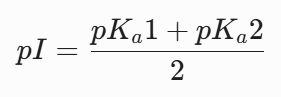
Make sure you are comfortable calculating pKa values and finding the isoelectric point (pI)—the exact pH where the net charge of the amino acid hits zero.
Final Thoughts
Wrapping your head around the Amino Acids Structure and Properties isn’t just about passing your upcoming IIT JAM or CSIR NET exam—it’s about building the core intuition you will need for your entire career in life sciences. Once you can visualize how an R group’s charge or polarity dictates its behavior, complex topics like protein purification, folding pathways, and enzyme mechanisms start to make perfect sense. If you ever feel stuck or overwhelmed while analyzing these biochemical pathways, just remember that every expert was once standing right where you are now.
To know more in detail from our faculty, watch our YouTube video:
Frequently Asked Questions
Why is the R group considered the most important part of an amino acid?
The R group determines the specific chemical personality of the amino acid. It dictates whether the molecule is polar, nonpolar, acidic, basic, or aromatic, which ultimately drives how a protein folds and functions.
Which amino acid does not possess a chiral center and why?
Glycine is the only standard amino acid that is achiral. Its R group is a simple hydrogen atom, meaning the alpha carbon is bonded to two hydrogens, making it symmetrical.
What are aromatic amino acids, and why are they important in lab techniques?
Phenylalanine, Tyrosine, and Tryptophan contain aromatic ring structures. They are crucial because they absorb ultraviolet (UV) light strongly at 280 nm, which is the standard property biophysicists use to measure protein concentration in a lab.
Why is Proline often called an "imino acid" or a helix breaker?
Proline has a unique cyclic structure where its aliphatic side chain loops back and bonds covalently with its own amino group. This rigid ring structure restricts rotation, introducing kinks that disrupt regular alpha-helical structures in proteins.
What does the term "zwitterion" mean in relation to amino acids?
A zwitterion is a dipolar ion that carries both a positive and a negative charge simultaneously while remaining electrically neutral overall. At physiological pH, the amino group is protonated (-NH3+) and the carboxyl group is deprotonated (-COO-).
How do amino acids act as buffers?
Because they contain both acidic (carboxyl) and basic (amino) groups, amino acids can either donate or accept protons (H+) depending on the surrounding pH, thereby resisting sharp changes in environmental acidity or alkalinity.
What is the difference between D- and L-amino acids?
D and L designations refer to the spatial configuration of the asymmetric alpha carbon, mimicking glyceraldehyde enantiomers. Almost all naturally occurring proteins in living organisms are synthesized exclusively using L-amino acids.
What is the Isoelectric Point (pI)?
The isoelectric point is the specific pH at which an amino acid carries a net electrical charge of exactly zero. At this pH, the molecule will not migrate when placed in an electric field.
Which amino acids contain sulfur atoms?
Cysteine and Methionine are the two sulfur-containing standard amino acids. However, only Cysteine has a reactive thiol (-SH) group capable of forming disulfide bonds.
What is a disulfide bond, and why is it vital for proteins?
A covalent bond formed by the oxidation of two Cysteine thiol groups (-SH → -S-S-). These bonds act like structural anchors that stabilize the tertiary and quaternary structures of secreted proteins, like antibodies or insulin.
Which amino acids can be phosphorylated during cell signaling?
Amino acids with hydroxyl (-OH) groups in their side chains can undergo phosphorylation. The primary targets in eukaryotes are Serine, Threonine, and Tyrosine.
Can amino acids exist outside of living organisms?
Yes. Amino acids have been discovered in carbonaceous meteorites (like the Murchison meteorite) and can be synthesized abiogenically, showing they can form through purely prebiotic chemical evolution.
Which amino acids double as neurotransmitters?
Glutamate and Aspartate act directly as major excitatory neurotransmitters in the central nervous system. Additionally, Tyrosine is the chemical precursor for dopamine and epinephrine.
What role do amino acids play in metabolic waste management?
Arginine, Citrulline, and Ornithine are primary components of the Urea Cycle, a metabolic pathway in the liver that converts toxic ammonia waste into non-toxic urea for excretion.