
Carbohydrates (Monosaccharides) For IIT JAM refer to the monosaccharides, a fundamental class of carbohydrates, crucial for IIT JAM and other competitive exams, as they form the basis of more complex carbohydrates and play key roles in biological systems.
Syllabus: Carbohydrates (Monosaccharides) For IIT JAM
If you are gearing up for the IIT JAM, you already know that you cannot skip Unit 1 on Biomolecules. At the very heart of this unit sits a topic that is both a scoring goldmine and a conceptual powerhouse: Carbohydrates (Monosaccharides).
Think of monosaccharides as the building blocks. Just like you can’t build a stable house without understanding the properties of a single brick, you can’t master complex polysaccharides or metabolic pathways without nailing down these simple sugars. Here at VedPrep, we see students get tangled up in structures every year, but once you break them down, it is easily one of the most rewarding parts of the syllabus.
Understanding the Structure and Classification of Monosaccharides
Let’s keep it simple: monosaccharides are the most basic form of sugar you can get. They follow a general formula of (CH2O)n, where n tells you how many carbons you are dealing with.
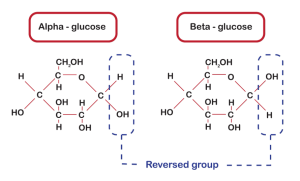
To help visualize how these molecules are put together, let’s look at their structural forms:
When classifying them, we look at their functional groups. This divides them into two main camps:
Aldoses: These have an aldehyde group (-CHO) sitting right at the end of the carbon chain.
Ketoses: These carry a ketone group (C=O) tucked somewhere inside the carbon chain.
To make things more interesting in Carbohydrates (Monosaccharides) , these sugars don’t just sit around in straight lines. While they can exist in an open-chain (acyclic) form, they love to attack themselves in an aqueous solution to form highly stable rings (cyclic forms).
Here is a quick sheet to keep the classification of Carbohydrates (Monosaccharides):
| Type | Functional Group | Examples |
| Aldoses | Aldehyde group | Glucose, Galactose, Glyceraldehyde |
| Ketoses | Ketone group | Fructose, Ribulose, Dihydroxyacetone |
Carbohydrates (Monosaccharides) For IIT JAM: Key Properties and Reactions of Monosaccharides
When you are tackling Carbohydrates (Monosaccharides) for competitive exams, examiners love to test how these molecules behave. Here are three major chemical properties you need to know inside out:
Isomerization: This is where the magic happens. Monosaccharides can shift their structures to turn into their isomers. For example, glucose can isomerize into fructose through an enediol intermediate.
Oxidation and Reduction: Depending on the reagents you throw at them (like Tollen’s, Fehling’s, or specific enzymes), the aldehyde or alcohol groups change. We will look at a classic oxidation example in just a second.
Glycosidic Bond Formation: This is how monosaccharides link up. The hydroxyl group on the anomeric carbon of one sugar reacts with a group on another molecule. This reaction kicks out a water molecule and locks the sugars together, creating disaccharides like sucrose or massive polysaccharides like starch and cellulose.
Worked Example: Oxidation of Glucose
Let’s see how this works in a typical problem. Imagine you are working in a lab, and you want to specifically look at how glucose reacts with oxygen. When you use the enzyme glucose oxidase, it targets the aldehyde group on the first carbon of glucose (C6H12O6) and oxidizes it into a carboxylic acid group, giving you gluconic acid (C6H12O7).
The balanced equation looks like this:

Example Question
What is the product of the glucose oxidase-catalyzed reaction of glucose with oxygen?
A) Glucuronic acid
B) Gluconic acid C) Glycolic acid
D) Saccharic acid
Solution: The correct answer is B) Gluconic acid.
Common Misconceptions About Monosaccharides
Let’s clear up a few traps that students often fall into during the exam:
The “Ketoses can’t be reducing sugars” myth: A lot of students think that because fructose is a ketose, it won’t give a positive test with Tollen’s or Fehling’s solution. That is a trap! In basic solutions, fructose isomerizes into glucose and mannose, meaning it absolutely acts as a reducing sugar.
Confusing D/L configuration with optical rotation: Just because a monosaccharide is labeled “D” (based on the orientation of the OH group on the highest-numbered chiral carbon) does not mean it is dextrorotatory (+). D/L tells you the structure relative to glyceraldehyde; it does not tell you which way it rotates plane-polarized light.
Applications of Monosaccharides in Biological Systems
Why do we care so much about these sugars? Well, life can’t run without them.
First, they are the ultimate cellular fuel. As per Carbohydrates (Monosaccharides), When your body breaks down complex starches, it converts them into simple monosaccharides like glucose. This glucose enters cellular respiration to create ATP, the energy currency that powers everything from your brain cells to muscle contractions.
Second, they are the literal backbone of your genetic code. Take a look at DNA and RNA. The “D” in DNA stands for deoxyribose, and the “R” in RNA stands for ribose. Both of these are monosaccharides that form the structural scaffolding for your nucleic acids.
Finally, they work as cellular ID cards. Through a process called N-glycosylation, specific monosaccharides attach themselves to proteins on the cell surface. Imagine a fictional cell line trying to fight off an infection; it uses these surface sugars as tiny flags to communicate and coordinate with immune cells. Without these specific carbohydrate tags, your cells wouldn’t know who is a friend and who is a foe.
VedPrep Tips: Mastering Monosaccharides for IIT JAM
When you sit down to study Carbohydrates (Monosaccharides), don’t just try to memorize the textbook pages. Here is a game plan our team at VedPrep recommends to maximize your score:
Master the Fischer to Haworth conversions: You will definitely see questions where you need to convert a straight-chain sugar into its ring structure. Remember the golden rule: groups on the right side of the Fischer projection point down in the Haworth projection.
Know your epimers: Glucose, galactose, and mannose are classic examples. Memorize exactly which carbon changes its stereochemistry (e.g., galactose is the C-4 epimer of glucose).
Practice mechanism-based questions: Focus on reactions with phenylhydrazine (osazone formation), periodic acid (HIO4) cleavage, and bromine water. These are highly specific and show up constantly in the organic chemistry section of the IIT JAM.
Final Thoughts
Cracking Carbohydrates (Monosaccharides) isn’t about rote memorization; it’s about recognizing the patterns in how these sugars fold, react, and lock together. When you stop looking at them as isolated structures and start seeing them as the foundational logic behind complex biochemistry, the questions on the IIT JAM will naturally start making sense. If you ever find yourself staring at an epimer or a reaction mechanism and feeling stuck, just take a deep breath and break it down step-by-step.
To know more in detail from our expert faculty, watch our YouTube video:
Frequently Asked Questions
How are monosaccharides classified?
Monosaccharides are classified based on the number of carbon atoms they contain, such as trioses (3 carbon atoms), tetroses (4 carbon atoms), pentoses (5 carbon atoms), and hexoses (6 carbon atoms). This classification helps in understanding their structure and function in biomolecules.
What is the structural feature of monosaccharides?
Monosaccharides have a carbonyl group (aldehyde or ketone) and multiple hydroxyl groups. The presence of these groups makes them polar and capable of forming various derivatives, which are essential for their biological functions.
How do monosaccharides exist in solution?
In aqueous solutions, monosaccharides exist primarily in their cyclic forms, which are more stable. These cyclic forms can be either five-membered (furanose) or six-membered (pyranose) rings, influencing their reactivity and interactions with other molecules.
What are the biological roles of monosaccharides?
Monosaccharides serve as primary energy sources for cells, building blocks for polysaccharides, and components of nucleic acids. Glucose, for instance, is a critical energy source for brain and red blood cells, highlighting their importance in biochemistry.
How are monosaccharides synthesized?
Monosaccharides can be synthesized through various biochemical pathways, including photosynthesis in plants and gluconeogenesis in animals. These pathways involve multiple enzyme-catalyzed reactions that convert simpler molecules into monosaccharides.
What are the functional groups present in monosaccharides?
Monosaccharides contain several functional groups, including hydroxyl (-OH), carbonyl (C=O), and carboxyl (-COOH) groups. These functional groups contribute to their chemical reactivity and biological functions, making them essential components of biomolecules.
How do monosaccharides interact with other biomolecules?
Monosaccharides interact with other biomolecules through specific binding sites, influencing various biological processes. For example, glucose interacts with insulin and glucagon to regulate blood sugar levels, demonstrating their significance in biochemistry and organic chemistry.
How are monosaccharides tested in IIT JAM?
In IIT JAM, questions on monosaccharides often focus on their structures, classifications, and biological roles. Understanding the properties and reactions of specific monosaccharides, such as glucose and fructose, is crucial for answering exam questions accurately.
What type of questions can be expected on monosaccharides in IIT JAM?
Expect questions on identifying monosaccharides, their structural features, and their metabolic pathways. Additionally, questions may cover the application of monosaccharide properties in biochemistry and their significance in biomolecules, which are key concepts in organic chemistry.
Can you explain a key reaction of monosaccharides?
A key reaction is the Maillard reaction, a non-enzymatic browning reaction between amino acids and reducing monosaccharides. This reaction is significant in food chemistry and has implications for nutritional and sensory qualities of food, which can be relevant in biochemistry and organic chemistry contexts.
How do I approach questions on carbohydrate chemistry in IIT JAM?
Approach questions on carbohydrate chemistry by reviewing the structures, properties, and biological roles of monosaccharides and polysaccharides. Practice applying this knowledge to solve problems and answer questions accurately, focusing on organic chemistry and biomolecules concepts.
What are some advanced topics related to monosaccharides?
Advanced topics include the study of glycosidic bonds, oligosaccharides, and polysaccharides. Understanding these topics requires a deep knowledge of carbohydrate chemistry and its relevance to biomolecules and biological processes.
How do monosaccharides relate to polysaccharides?
Monosaccharides are the building blocks of polysaccharides. Through glycosidic linkages, multiple monosaccharide units form polysaccharides, which serve as energy storage molecules (like starch and glycogen) or structural components (like cellulose and chitin) in living organisms.
What role do monosaccharides play in glycomics?
Monosaccharides play a critical role in glycomics, the study of glycans or carbohydrate structures. They are involved in cell signaling, immune response, and disease processes, highlighting their importance beyond energy storage and structural roles in biomolecules.