
General characteristics of d-block elements involve understanding their electronic configuration, position in the periodic table, and properties such as catalytic ability and magnetic behavior, crucial for IIT JAM preparation.
Syllabus – IIT JAM Inorganic Chemistry Syllabus and Textbooks
If you are gearing up for the IIT JAM, you already know that Inorganic Chemistry can be a total game-changer for your score. A massive chunk of that success relies on nailing the “Transition Metals” unit such as General characteristics of d-block elements.
When we talk about the general characteristics of d-block elements, we are diving into the world of elements that have partially filled d subshells in their atoms or common ions.
To get a solid grip on this, you can’t just rely on random internet snippets. You need the holy grail of textbooks. Here at VedPrep, we always recommend two absolute classics:
-
Inorganic Chemistry by J.D. Lee: This is your go-to for a fantastic, comprehensive overview of transition metals without getting bogged down in unnecessary jargon.
-
Advanced Inorganic Chemistry by Atkins and Jones: This one goes deep. It is perfect for when you want to truly understand the core mechanics behind how these elements behave.
These books are staples for anyone clearing IIT JAM, CSIR NET, or GATE. They break down everything from basic electronic setups to complex coordination compounds in a way that actually makes sense.
Overview: General characteristics of d-block elements For IIT JAM
What makes these d-block elements—often called transition metals—so special? It all comes down to their partially filled d orbitals. Think of these orbitals as open, flexible slots ready for bonding and moving electrons around. This unique setup dictates almost all of their physical and chemical quirks.
As per General characteristics of d-block elements, these elements are famous for showing variable valency. Because the energy gap between their s and d orbitals is pretty small, they can use electrons from both shells to form bonds. This means they don’t just stick to one boring oxidation state; they can form ions with completely different charges.
This flexibility also explains their incredible catalytic ability. Since they can easily hop between different oxidation states, they make perfect middlemen in chemical reactions, speeding things up without getting consumed.
Then there is their magnetic behavior. Depending on how many unpaired electrons are hanging out in those d orbitals, a d-block element can either completely ignore a magnetic field or be pulled right into it. We figure this out using the spin-only formula:
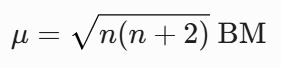
Where n is the number of unpaired electrons and BM stands for Bohr Magnetons. Here is a quick look at how that plays out:
| Number of Unpaired Electrons | Magnetic Behavior |
| 0 | Diamagnetic (Repelled by magnetic fields) |
| 1 to 5 | Paramagnetic (Attracted to magnetic fields) |
Getting these basics down is non-negotiable for IIT JAM. At VedPrep, we believe that once you visualize how these electrons sit in their orbitals, the rest of inorganic chemistry starts feeling less like memorization and more like a puzzle falling into place.
Worked Example: CSIR NET Style Question on D-Block Elements
When you are staring down an exam paper, whether it is IIT JAM or a higher-level CSIR NET paper, questions on electronic configurations are free marks if you know the rules.
Let’s look at a classic problem: What is the electronic configuration of Scandium (Sc)?
Scandium sits at the very start of the transition series with an atomic number of 21. To map out its 21 electrons, we just need to use the Aufbau principle and Hund’s rule.
We can write Scandium’s configuration like this:
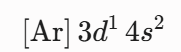
Here, [Ar] represents the stable noble gas core of Argon, which accounts for the first 18 electrons:
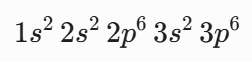
That leaves us with 3 electrons to place (21 – 18 = 3). Even though the 3d orbital feels like it belongs to an inner shell, the 4s orbital actually fills up first because it sits at a slightly lower energy level during the filling process. So, two electrons pack into the 4s orbital, and the final electron slots into the 3d orbital.
Mastering these basic configurations makes dealing with complex coordination complexes later on a breeze.
Common Misconceptions about D-Block Elements
Let’s clear the air on a few things that trip up a lot of students during preparation to cover General characteristics of d-block elements.
As per General characteristics of d-block elements, a big mistake people make is thinking that “d-block elements” and “transition metals” mean the exact same thing. They don’t! The d-block actually includes the lanthanides and actinides (the inner transition metals) if you look at how the periodic table is built.
More importantly, to be called a true transition metal, an element must have a partially filled d subshell in its atomic state or in its common oxidation states. This means elements like Zinc (Zn, Z=30), Cadmium (Cd, Z=48), and Mercury (Hg, Z=80) are technically d-block elements, but they aren’t classified as transition metals because their d orbitals are completely full (d10) both as neutral atoms and in their common +2 ions. Because of this, they miss out on classic transition properties like forming vibrant, colorful compounds.
Another trap is assuming that every single d-block element shows variable valency. While elements like Iron or Manganese are absolute chameleons with their oxidation states, Zinc, Cadmium, and Mercury pretty much stick to a predictable +2 state.
Keeping these nuances straight will save you from silly mistakes in the exam room.
Application of D-Block Elements in Real-World Scenarios
To really understand why General characteristics of d-block elements behave the way they do, it helps to see them in action outside the lab.
Imagine a fictional city called Smokey Hills, where thousands of cars idle in traffic every day. To keep the air breathable, engineers install catalytic converters in every exhaust system. Inside these devices, metals like platinum, palladium, and rhodium go to work. Because these transition metals can effortlessly swap oxidation states, they grab toxic carbon monoxide and nitrogen oxides, quickly changing them into harmless nitrogen and carbon dioxide before they escape into the air.
Away from cars, let’s think about a fictional aerospace startup designing a next-generation rocket nozzle. The engine has to survive mind-boggling heat and pressure. The engineers don’t just use regular iron; they mix it with chromium and manganese to create super-alloys that resist rusting and warping. They also coat the parts with zirconia (ZrO2), a high-performance ceramic derived from the d-block element zirconium.
All of these real-world uses rely entirely on the general characteristics of d-block elements—specifically their ability to share electrons flexibly and endure extreme environments.
General Characteristics of D-Block Elements for IIT JAM – Key Points
-
Definition: D-block elements have valence electrons entering the d-orbitals. True transition metals must have a partially filled d-subshell in their elemental or common ionic form.
-
Electronic Configuration: Follows the general formula (n-1)d1-10,ns1-2 (with a few exceptions like Chromium and Copper due to extra stability of half-filled and fully-filled shells).
-
Variable Oxidation States: Caused by the tiny energy gap between (n-1)d and ns orbitals.
-
Magnetic Properties: Can be diamagnetic (all electrons paired) or paramagnetic (unpaired electrons present), calculated using the spin-only formula.
-
Catalytic Activity: Driven by their ability to adopt multiple oxidation states and form unstable intermediate complexes.
Exam Strategy – Tips for IIT JAM Preparation
Cracking the General characteristics of d-block elements is all about strategy, not just mindless staring at your notes.
First, make sure you can write down the electronic configurations of the 3d, 4d, and 5d series in your sleep. Pay extra attention to the anomalies like Copper and Chromium while covering General characteristics of d-block elements.
Next, focus heavily on the periodic trends: how atomic radii change, why ionization energies spike, and how electronegativity behaves across the rows. Don’t just memorize the trends; understand why they happen (hint: General characteristics of d-block elements usually involve shielding effects and effective nuclear charge).
At VedPrep, we always tell our students that practice beats passive reading every single time. Try tackling a mix of JAM questions and foundational CSIR NET problems to test your limits. Grab a timer, sit down with previous years’ question papers, find your weak spots, and patch them up early.
General Characteristics of D-Block Elements for IIT JAM – Periodic Trends
When you move across a period or down a group in General characteristics of d-block elements, d-block elements show some distinct shifts in their physical properties.
As you move from left to right across a period, the atomic radius decreases. This happens because electrons are being added to the inner d-orbital while the nuclear charge keeps going up. The poor shielding by d-electrons means the nucleus pulls the outer electrons in tighter.
Because the atomic radius shrinks and the nucleus holds onto those electrons with a stronger grip, the ionization energy increases across a period. Based on General characteristics of d-block elements, it simply takes more effort to yank an electron away.
Down a group, things get interesting. Normally, you’d expect the atomic size to grow significantly. However, because of the filling of 4f orbitals (which shield poorly) in the heavier elements—a phenomenon known as the Lanthanide Contraction—the atomic sizes of the 4d and 5d series end up remarkably similar. This also impacts their electronegativity, which tends to increase down a group from the 3d to 5d series because the heavier atoms have a much higher effective nuclear charge packed into a relatively compact space.
Here is a quick summary table to keep in mind:
| Property | Trend Across a Period (Left to Right) | Trend Down a Group (Top to Bottom) |
| Atomic Radius | Decreases | Increases from 3d to 4d, stays nearly same for 5d |
| Ionization Energy | Increases | Increases overall (especially for 5d due to lanthanide contraction) |
| Electronegativity | Increases | Increases |
Final Thoughts
Mastering the general characteristics of d-block elements isn’t about memorizing endless tables—it is about seeing the underlying pattern of how those d-orbitals handle electrons. Once you connect the dots between electronic setups and real-world behaviors like magnetism or catalysis, you stop guessing and start deducing the right answers automatically. As per General characteristics of d-block elements, the inorganic section of the IIT JAM can feel overwhelming, but breaking it down systematically transforms it into one of the fastest, highest-scoring parts of your paper.
To learn more in detail from our faculty, watch our YouTube video:
Frequently Asked Questions
Why are Zinc, Cadmium, and Mercury not considered transition metals?
Because their d-orbitals are completely full (d10) both in their ground state and in their steady +2 oxidation states. Since they lack partially filled d-orbitals, they miss out on classic transition properties like variable valency and forming colored ions.
What is the general electronic configuration of d-block elements?
The standard textbook formula is (n-1)d1-10 , ns1-2. Here, "n" represents the outermost shell, and "n-1" refers to the inner, penultimate d-shell that is actively being filled.
Why do d-block elements show variable oxidation states?
The energy gap between the (n-1)d orbitals and the ns orbitals is tiny. Because they are so close in energy, electrons from both the outer s-shell and the inner d-shell can participate in chemical bonding, leading to multiple oxidation states.
Which 3d series element shows the maximum number of oxidation states?
Manganese (Mn, Z=25) takes the crown here. With an electronic configuration of 3d5, 4s2, it has 7 valence electrons available for bonding, allowing it to flash oxidation states anywhere from +2 all the way up to +7 (like in KMnO4).
Why does Sc not show variable oxidation states despite being a transition metal?
Scandium (3d1, 4s2) loses all three valence electrons at once to achieve a highly stable, noble gas-like Argon core. This makes +3 its only dominant and stable oxidation state.
How do you calculate the magnetic moment of a d-block ion?
You use the spin-only formula: μ = √n(n+2) BM, where n is the number of unpaired electrons and BM is Bohr Magnetons.
What is the difference between paramagnetic and diamagnetic behavior?
If an ion has one or more unpaired electrons in its d-orbitals, it is paramagnetic and gets pulled into a magnetic field. If all electrons are neatly paired up, it is diamagnetic and slightly repelled by magnetic fields.
Why do most transition metal complexes look so colorful?
It is all thanks to d-d transitions. When ligands attach to a transition metal, they split the d-orbitals into different energy levels. When white light hits the complex, an electron absorbs a specific wavelength of light to jump from a lower d-orbital to a higher one. The color we see is the complementary color of the light absorbed.
What gives d-block elements their excellent catalytic abilities?
Two things: their knack for shifting between different oxidation states effortlessly, and their ability to provide a large surface area for reactants to adsorb onto. This lets them form unstable intermediate complexes that lower the activation energy of a reaction.
How does atomic radius change across a 3d transition series?
As you move from left to right, the atomic radius initially decreases because the nuclear charge increases while the d-electrons shield poorly. Near the middle, the radius stays relatively constant as increased nuclear pull is balanced by electron-electron repulsions. Finally, at the very end (like Zinc), the radius increases slightly due to strong inter-electronic repulsions in the fully paired d10 shell.
What is the Lanthanide Contraction, and how does it affect the d-block?
The Lanthanide Contraction is the steady decrease in atomic size across the lanthanide series due to the notoriously poor shielding of the 4f electrons. Because of this, the atomic sizes of the 4d (Second) and 5d (Third) transition series end up almost identical (for example, Zirconium and Hafnium have nearly the same radius).
Why do 5d elements have higher ionization energies than 4d elements?
Blame the Lanthanide Contraction again. Because the 5d elements experience a massive increase in nuclear charge without effective shielding from the intervening 4f electrons, the outer electrons are clutched incredibly tightly by the nucleus, making them much harder to remove.