
Preparing for the IIT JAM Biotechnology paper can feel like trying to map an entire ecosystem in your head. One area that frequently shows up in high-scoring sections is immunology, specifically Vaccines. Whether you are prepping for IIT JAM, CSIR NET, or GATE, cracking how vaccines interact with our immune biology is a massive step toward securing a top rank.
Syllabus: Immunology and Vaccinology for IIT JAM
If you look at the official IIT JAM syllabus, this topic usually sits neatly inside Unit 5 (Immunology). It is a heavyweight section because examiners love testing how theoretical biology translates into actual medical applications.
To really get a grip on this, you will need to wrap your head around how different types of vaccines spark an immune response, how we calculate their real-world impact, and how they are developed. Standard textbooks like Janeway’s Immunobiology or Plotkin’s Vaccines are excellent references. But let’s be honest—when you are balancing multiple subjects, you need a clear, conceptual breakdown first. That is exactly what we focus on at VedPrep: cutting through the heavy academic jargon so you can understand the core science.
Core Concept: Types of Vaccines For IIT JAM
Let’s break down the four main categories of Vaccines you will encounter in the exam. To make this simple, think of your immune system as a security team training to spot an intruder.
1. Inactivated Vaccines
These contain pathogens that have been completely killed (usually using heat or chemicals).
- The Analogy: Imagine training a security team by showing them a static, lifeless mannequin dressed like a burglar. It is completely safe—the mannequin can’t break anything—but the team still learns what the target looks like.
- Examples: Inactivated Poliovirus Vaccine (IPV), Hepatitis A vaccine.
- Exam Note: They are highly stable and safe, but because the pathogen cannot multiply, the immune response isn’t as strong. You usually need booster shots to keep protection high.
2. Live Attenuated Vaccines
These use a weakened, live version of the pathogen.
- The Analogy: This is like letting a clumsy, slow-motion actor pretend to break into the building. They won’t actually hurt anyone, but the security team gets a highly realistic, live-action drill.
- Examples: MMR (Measles, Mumps, and Rubella), Varicella (chickenpox) vaccine.
- Exam Note: They give incredible, long-lasting immunity because they mimic a real infection. The catch? They can be risky for people with compromised immune systems.
3. Subunit Vaccines
Instead of the whole pathogen, these use just a specific piece—like a specific surface protein or a sugar.
- The Analogy: Think of showing your security team just the specific, unique jacket that the burglar always wears.
- Examples: Hepatitis B vaccine (using the HBsAg surface antigen), Hib vaccine.
4. Conjugate Vaccines
Sometimes, a pathogen’s outer coating hides it from the immune system, especially in young children. Conjugate vaccines fix this by chemically linking that weak antigen to a strong, easily recognizable carrier protein.
- The Analogy: It is like putting a bright neon flashing sign on top of that burglar’s jacket so the security team cannot possibly miss it.
- Examples: Pneumococcal Conjugate Vaccine (PCV).
Worked Example: Solved Question on Vaccine Efficacy
Exam questions often ask you to calculate vaccine efficacy (VE). Efficacy tells us how well a vaccine performs under perfect, controlled clinical trial conditions.
Let’s look at a typical problem: In a controlled trial, 150 out of 1,000 unvaccinated individuals caught a disease. Meanwhile, only 30 out of 1,000 vaccinated individuals caught it. What is the vaccine efficacy?
Step-by-Step Calculation
- Find the incidence rate in the unvaccinated group (Iu):
Iu = 150/1000 = 0.15 - Find the incidence rate in the vaccinated group (Iv):
Iv = 30/1000 = 0.03 - Use the Relative Risk Reduction formula:
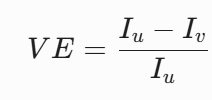
VE = (0.15 – 0.03)/0.15 = 0.12/0.15 = 0.8 or 80%
The vaccine efficacy is 80%, meaning the vaccine reduces the risk of contracting the disease by 80% compared to the unvaccinated group.
To help you practice with different data points and visualize how incidence rates change efficacy, we built this quick interactive tool below.
Misconception: Common Mistakes in Understanding Vaccine-Related Concepts
A classic trap that students fall into during exams is confusing efficacy with effectiveness. They sound like the same thing, but in immunology, they aren’t.
- Efficacy is the percentage reduction of disease in a perfect, pristine lab trial environment.
- Effectiveness is how well the vaccine performs out in the chaotic, real world where people might miss doses, have varied health conditions, or store the vials incorrectly.
No vaccine is 100% effective, and that is why herd immunity matters so much. If a large enough chunk of the population gets vaccinated, the chain of transmission breaks, protecting those who cannot build a strong immune response on their own.
Application: Real-World Applications of Vaccines For IIT JAM
The real magic of immunobiology lies in how it changes global health history. The absolute gold standard example is the global eradication of smallpox in 1980. By deploying vaccines systematically across the planet, the World Health Organization managed to completely wipe out a natural killer.
Today, research is moving faster than ever. From developing mRNA platforms during the COVID-19 pandemic to refining existing delivery systems (like nasal sprays or single-dose patches), the field is constantly shifting. When you are writing your papers, keep this big picture in mind: you aren’t just memorizing pathways; you are studying the machinery that keeps societies safe.
Exam Strategy: Tips for Studying Vaccines For IIT JAM
When you sit down to study this unit, do not just try to memorize facts line by line. Here is a better game plan:
- Compare side-by-side: Make a quick table matching vaccine types with their structural components and real-world examples. Questions often ask you to identify which vaccine belongs to which category.
- Focus on the “Why”: Do not just learn that a conjugate vaccine uses a carrier protein—understand why a polysaccharide coating on its own fails to activate T-cells efficiently.
- Practice the math: Get comfortable with the relative risk formulas. A quick numerical question here is an easy way to pick up marks if your concepts are sharp.
At VedPrep, we always remind our students that consistency beats cramming. Breaking down complex topics into bite-sized, logical concepts makes retention much easier when exam day arrives.
Key Concepts in Immunology and Vaccinology
To secure those top marks, make sure you can confidently talk about these core concepts:
- Innate vs. Adaptive Immunity: How our immediate, non-specific defenses hand over the baton to highly specific B and T cells.
- Immunological Memory: The creation of long-lived memory cells that remember a pathogen years after vaccination or infection.
- Immunogenicity: The ability of a substance (like a vaccine antigen) to provoke an immune response in the first place.
Final Thoughts
Ultimately, vaccines are the single most successful public health intervention in human history. They train our bodies to fight off dangerous invaders before we ever face the actual danger. By understanding the molecular mechanisms behind this protection, you aren’t just prepping to clear an exam—you are building the foundation needed to contribute to the next generation of biopharmaceuticals and medical research.
To learn more in detail from our faculty, watch our YouTube video:
Frequently Asked Questions
Why do live attenuated vaccines provide longer-lasting immunity than inactivated vaccines?
Live attenuated vaccines contain a weakened but live pathogen that can actually replicate inside the body. This mimics a natural, low-grade infection, giving the immune system prolonged exposure and stimulating both humoral (antibody) and cell-mediated (T-cell) immune responses. Inactivated vaccines cannot replicate, so the exposure is brief and primarily stimulates a humoral response.
What is the purpose of an adjuvant in a vaccine?
An adjuvant is a chemical compound (like aluminum salts) added to a vaccine to boost the body's immune response to the antigen. They are especially crucial in inactivated or subunit vaccines, which might otherwise be too weak to trigger a robust defense on their own.
Why are live attenuated vaccines contraindicated for immunocompromised individuals?
Because the pathogen is still alive, a healthy immune system easily keeps it in check while learning its structure. However, in someone with a severely weakened immune system, even this weakened pathogen can replicate uncontrollably and potentially cause the actual disease.
What exactly is a conjugate vaccine, and when is it used?
A conjugate vaccine chemically links a weak antigen (like a bacterial capsular polysaccharide) to a strong carrier protein. This is done because certain bacteria have sugary coatings that a child's immature immune system can't easily detect. The strong protein carrier tricks the immune system into recognizing the whole complex.
Which type of immune response is primarily activated by an inactivated vaccine?
Inactivated vaccines primarily trigger an exogenous pathway of antigen presentation. The dead viral or bacterial particles are engulfed by antigen-presenting cells (APCs) and presented via MHC Class II molecules, driving a humoral immune response (B-cells and antibodies).
What is the structural basis of the Hepatitis B vaccine?
The Hepatitis B vaccine is a recombinant subunit vaccine. It uses a specific surface antigen protein called HBsAg (Hepatitis B Surface Antigen), which is produced in genetically engineered yeast cells. Since it contains no viral DNA, it is entirely non-infectious.
What is toxoid, and how does it differ from a standard vaccine?
A toxoid is a bacterial toxin that has been suppressed or inactivated (usually by formalin or heat) so it is no longer poisonous, but it still maintains its structure to trigger an immune response. It trains the body to fight the dangerous toxin rather than the bacterium itself (e.g., Tetanus and Diphtheria vaccines).
Why do modern mRNA vaccines require lipid nanoparticles (LNPs)?
mRNA is a highly unstable molecule that would be instantly degraded by enzymes (RNases) in our extracellular fluids if injected alone. Furthermore, mRNA is negatively charged, making it hard to cross cell membranes. Lipid nanoparticles act as a protective delivery vehicle, shielding the mRNA and helping it fuse with the host cell membrane.
What is the difference between active and passive immunity in vaccinology?
Active immunity happens when a vaccine introduces an antigen, forcing your own immune system to actively produce antibodies and memory cells (long-lasting). Passive immunity involves directly injecting pre-made antibodies (like anti-tetanus serum or antivenom), providing immediate protection that fades quickly because your body never learned how to make them.
What are DNA vaccines, and how do they work inside a cell?
DNA vaccines inject a plasmid containing the genetic blueprint for a specific pathogen antigen. The plasmid must enter the host cell's nucleus to be transcribed into mRNA, which is then translated into the antigen protein in the cytoplasm to spark an immune response.
Why is the Salk polio vaccine (IPV) preferred over the Sabin polio vaccine (OPV) in eradication phases?
The Sabin vaccine (OPV) is a live attenuated oral vaccine. While it provides excellent gut immunity, in rare instances, the live virus can mutate back into a virulent form in under-vaccinated communities (vaccine-derived poliovirus). The Salk vaccine (IPV) is an inactivated injection, meaning it is completely dead and carries zero risk of mutating or causing paralysis.
What are DNA/RNA expression vectors in the context of vaccine design?
These are modified, harmless viruses (like an Adenovirus) used as a vehicle to carry the genetic code of a target pathogen's antigen into human cells. The host cells read this code, manufacture the antigen, and trigger an immune response. The viral vector itself is typically engineered so it cannot replicate inside human cells.
How does "Immunological Memory" prevent reinfection?
During the primary immune response (triggered by a vaccine or infection), a subset of B and T cells differentiate into Memory B and T cells. These cells persist in the body for years in a resting state. If they encounter the actual pathogen later, they bypass the slow initial activation phase and mount a secondary response that is significantly faster, stronger, and produces higher-affinity antibodies.
What is the difference between monovalent and polyvalent vaccines?
A monovalent vaccine is designed to immunize against a single microorganism or a single strain of a pathogen (e.g., a specific strain of influenza). A polyvalent (or multivalent) vaccine is engineered to protect against multiple strains or serotypes of the same pathogen simultaneously (e.g., the quadrivalent flu vaccine or the 13-strain pneumococcal vaccine).