

Dentition in Mammals For RPSC Assistant Professor refers to how teeth are arranged in the upper and lower jaws. If you are preparing for the RPSC Assistant Professor exam, you already know that evolution doesn’t happen in a vacuum. A mammal’s teeth are essentially its survival toolkit, beautifully shaped by millions of years of dietary pressures and environmental shifts.
When we look at Dentition in Mammals, we aren’t just looking at bone and enamel; we are looking at a species’ ecological biography. Mammalian teeth stand out because they aren’t uniform. Instead, they are split into distinct, specialized tools: incisors, canines, premolars, and molars.
Analyzing tooth structure gives us a direct window into how a mammal interacts with its world. Think of it like a biological multi-tool. A lion needs a high-powered meat slicer, while a deer needs a heavy-duty grain mill. By looking closely at tooth morphology (the study of tooth shape and structure), we can easily map a mammal’s exact role in its ecosystem. Take hypsodonty, for instance. This is a condition where teeth have high crowns and keep growing throughout life. You see it all the time in rodents and grass-eating ungulates like horses. It’s a brilliant adaptation that stops their teeth from wearing down to the gums while grinding up tough, silica-heavy plants.
For competitive exams like CSIR NET, IIT JAM, GATE, and specifically the RPSC Assistant Professor exam, mastering this topic is a non-negotiable. You can count on encountering questions that tie these anatomical features directly to evolutionary biology and ecology. Here at VedPrep, we always tell our students: don’t just memorize the terms—understand the why behind the anatomy.
Types of Dentition in Mammals For RPSC Assistant Professor
When you look at the sheer variety of mammals on Earth, their dental setups are incredibly diverse. At its core, Dentition in Mammals is just the way teeth develop and sit in the mouth. Most mammals go through two distinct sets of teeth over their lives: deciduous (your primary or baby teeth) and permanent (secondary) Dentition in Mammals.
Deciduous teeth show up early on during infancy. They are smaller, a bit more fragile, and eventually drop out to make room for the permanent set as the animal grows up. The permanent teeth are built for the long haul, designed to last the rest of the animal’s life.
Beyond just the sets of teeth, mammals have highly specialized dental roles:
- Incisors: These are the front, chisel-like teeth designed for crisp clipping and gnawing.
- Canines: The sharp, pointed daggers used for gripping, piercing, and tearing meat.
- Premolars & Molars: The heavy machinery at the back meant for crushing and grinding.
To keep track of all this, zoologists use a dental formula. This is just a simple numerical code that counts the teeth in one quadrant (one half of a single jaw) of the mouth. For example, a notation like 3/3 or 1/1 tells you exactly what is happening in that specific section.
[One half of Upper Jaw] -> I . C . PM . M
—————————————–
[One half of Lower Jaw] -> I . C . PM . M
We see these variations clearly when comparing lifestyles. A tiger relies on long, lethal canines to secure its prey, whereas a cow uses a broad, flat row of back teeth to pulverize grass. Having a clear grasp of these variations is exactly what will help you breeze through the animal anatomy sections of your RPSC Assistant Professor exam.
Dental Formula: Understanding the Structure of Mammalian Teeth
As per Dentition in Mammals, the dental formula is essentially a shorthand way of mapping out a mammal’s mouth. Instead of writing a long paragraphs describing every tooth, we use a fractional notation. The top numbers represent the upper jaw, and the bottom numbers represent the lower jaw. Because mammalian mouths are perfectly symmetrical left-to-right, the formula only counts one side of the mouth. To get the total number of teeth, you just add up all the numbers in the formula and multiply by two.
We use four basic abbreviations: I for Incisors, C for Canines, P (or PM) for Premolars, and M for Molars.
Let’s look at ourselves as a quick example. The standard human dental formula is:
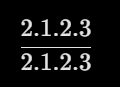
This means on any given side of your mouth, top and bottom, you have 2 incisors, 1 canine, 2 premolars, and 3 molars. Multiply that whole set by two, and you get our classic 32 teeth.
Every mammalian group tweaks this formula to fit its lifestyle. Carnivores pack their jaws with sharp cutting edges, while herbivores often drop the canines entirely, leaving a wide gap called a diastema. Even within primates or rodents, the formulas shift drastically based on lineage, making this tool incredibly useful for identifying and classifying species.
Worked Example: Calculating the Dental Formula of a Mammal
Let’s look at a typical problem you might face in Dentition in Mammals.
Sample Question: A mammal has 4 incisors, 1 canine, 4 premolars, and 6 molars in its upper jaw. In its lower jaw, it has 6 incisors, 1 canine, 4 premolars, and 6 molars. What is its dental formula, and what is the total number of teeth?
To solve this, remember that the numbers given for the jaws are usually totals across the entire upper and lower jaw. Because a dental formula only represents one half of the jaw, we need to divide those numbers by 2 before writing the formula.
Step-by-Step Calculation
- Upper Jaw Breakdown (Total / 2):
- Incisors: 4 ÷ 2 = 2
- Canines: 2 ÷ 2 = 1 (Assuming 1 on each side, meaning 2 total)
- Premolars: 4 ÷ 2 = 2
- Molars: 6 ÷ 2 = 3
- Upper quadrant string: 2.1.2.3
- Lower Jaw Breakdown (Total / 2):
- Incisors: 6 ÷ 2 = 3
- Canines: 2 ÷ 2 = 1
- Premolars: 4 ÷ 2 = 2
- Molars: 6 ÷ 2 = 3
- Lower quadrant string: 3.1.2.3
- Writing the Final Formula:
We stack the upper jaw over the lower jaw in the standard I.C.PM.M order:
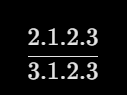
- Finding the Total Tooth Count:
- Add up the top row: 2 + 1 + 2 + 3 = 8
- Add up the bottom row: 3 + 1 + 2 + 3 = 9
- Total for one side: 8 + 9 = 17
- Total for the whole mouth: 17 × 2 = 34 teeth
Misconception: Common Mistakes in Understanding Dentition in Mammals For RPSC Assistant Professor
As per Dentition in Mammals, a very common mistake students make during exam preparation is using the terms “dentition” and “dental formula” interchangeably. They are related, but they mean completely different things.
- Dentition in Mammals is the broad, overarching term. It covers the biological development, the microscopic structure, the shape, the size, and the evolutionary history of the teeth.
- Dental formula is simply the mathematical shorthand used to count them.
Think of it like a house. “Dentition in Mammals” is the complete architectural style, the materials used, and the layout of the rooms. The “dental formula” is just the basic blue-print number showing the bedroom-to-bathroom ratio. Confusing the two can cost you easy marks on conceptual questions, so keep that distinction clear in your notes.
Application: Dentition in Mammals For RPSC Assistant Professor
To make sense of how this works in the field, let’s look at a fictional scenario. Imagine a paleontologist working at a new dig site in the thar desert. She uncovers a fossilized jaw fragment. It’s missing the front section, but the back teeth are intact. They are incredibly flat, wide, and show deeply grooved ridges with heavy enamel wear.
Right away, she can rule out a pure carnivore. Those flat ridges are built for a grinding motion, meaning this animal spent its life chewing abrasive plant matter. By matching the specific cusp patterns on those molars to known evolutionary lineages, she can pinpoint exactly where this creature fits on the mammalian family tree and reconstruct what the ancient local climate looked like.
This is exactly how scientists use dental anatomy in paleontology, wildlife conservation, and forensic odontology. Teeth are incredibly tough and survive in the fossil record long after bones crumble, making them our best clues for mapping out extinct ecosystems and protecting endangered species today.
Exam Strategy: Tips for Mastering Dentition in Mammals For RPSC Assistant Professor
When you are diving into Dentition in Mammals, flashcards and sketch pads are your best friends. Don’t try to passively read through chapters of text. Instead, draw out basic diagrams of heterodont dentition (having different types of teeth) and diphyodonty (growing two successive sets of teeth) to build a solid visual memory.
At VedPrep, we recommend keeping a master cheat sheet for the most frequently tested groups:
| Mammalian Group | Key Dental Feature | Common Formula Example |
| Marsupials (e.g., Opossum) | High tooth count, primitive setup | 5.1.3.4/4.1.3.4 |
| Rodents (e.g., Rat) | Ever-growing incisors, no canines | 1.0.0.3/1.0.0.3 |
| Canids (e.g., Dog) | Well-developed carnassial teeth for shearing | 3.1.4.2/3.1.4.3 |
| Humans | Generalized, omnivorous setup | 2.1.2.3/2.1.2.3 |
Make sure you focus heavily on tooth morphology—knowing the difference between enamel, dentin, and pulp—and learn to identify the dental trends of major mammalian orders.
RPSC Assistant Professor Syllabus Coverage: Dentition in Mammals For RPSC Assistant Professor
In the broad landscape of higher education biology exams, Dentition in Mammals is a core pillar. If you are tracking the CSIR NET syllabus alongside your RPSC preparation, you will find this material fits perfectly into Unit 5 (System Physiology – Animal) and links closely with evolutionary concepts in Unit 11.
For the RPSC Assistant Professor exam, the examiners expect a deep, functional understanding of vertebrate evolution. You will want to focus on:
- Homology vs. Analogy: Understanding how a bat’s molar shares a common structural origin with a whale’s ancient teeth, despite looking completely different today.
- Histology: The structural layout of a tooth, focusing on how ameloblasts form enamel and odontoblasts lay down dentin.
Key Textbooks for RPSC Assistant Professor: Mammalian Dentition
If you want to look up standard references to verify fine details or view high-quality Dentition in Mammals, a few classic textbooks stand out.
While general physiology books like Lehninger: Principles of Biochemistry are excellent for metabolic pathways, and Zoology by Miller & Harley gives a fantastic general overview of the animal kingdom, you need specialized resources for deep morphological topics. We highly recommend looking at Mammalogy by T.A. Vaughan or Dentition and Tooth Wear in Vertebrates by S.R.H. Smith. These texts give you the precise, advanced data that helps turn a good exam attempt into a top-rank selection.
Final Thoughts
Wrapping your head around Dentition in Mammals doesn’t have to feel like pulling teeth. Once you look past the dense terminology, you realize that a dental formula is just nature’s way of writing a species’ survival story in shorthand. For the RPSC Assistant Professor exam, success lies in connecting these anatomical patterns directly to their evolutionary purpose—seeing how a single tooth cusp or a gap in a jawbone reflects millions of years of adaptation.
To know more in detail from our faculty, watch our YouTube video:
Frequently Asked Questions
What are the main types of teeth in mammals?
The main types of teeth in mammals are incisors (front teeth), canines (pointed teeth), premolars (side teeth), and molars (back teeth). Each type of tooth has a specific function, such as cutting, piercing, or grinding food.
What is the difference between Chordata and Non-Chordata?
Chordata refers to animals that possess a notochord, a dorsal nerve cord, and pharyngeal slits at some stage in their development. Non-Chordata, on the other hand, do not possess these characteristics. Chordata includes vertebrates and some invertebrates, while Non-Chordata includes a wide range of invertebrate phyla.
What is the significance of dentition in taxonomy?
Dentition is an important characteristic in taxonomy, particularly in the classification of mammals. The arrangement and morphology of teeth can be used to distinguish between different species and higher taxonomic groups. In Chordata, dentition is used to classify vertebrates into different groups.
What is the role of dentition in mammalian evolution?
Dentition has played a significant role in mammalian evolution, with different dental adaptations allowing mammals to exploit various food sources and environments. The evolution of teeth has been closely tied to the evolution of mammalian diversity.
How does dentition vary across different mammalian species?
Dentition varies widely across different mammalian species, with some species having highly specialized teeth adapted to specific diets or environments. For example, herbivores often have broad, flat molars for grinding plant material, while carnivores have sharp, pointed teeth for piercing and tearing flesh.
What is the relationship between dentition and diet in mammals?
There is a close relationship between dentition and diet in mammals. Different types of teeth are adapted to different types of food, and the arrangement and morphology of teeth can be used to infer the dietary habits of a species.
What is the role of taxonomy in understanding dentition?
Taxonomy plays a crucial role in understanding dentition, as it provides a framework for classifying and comparing different species based on their dental characteristics. By studying dentition within a taxonomic context, researchers can gain insights into the evolution and diversity of mammalian teeth.
How does Chordata relate to dentition?
Chordata, a phylum that includes vertebrates and some invertebrates, is characterized by the presence of a notochord and dorsal nerve cord. Dentition is an important characteristic in Chordata, particularly in vertebrates, where teeth are used for a variety of functions, including feeding and defense.
How can dentition be used to identify mammalian species?
Dentition can be used to identify mammalian species by examining the arrangement and morphology of teeth. This is particularly useful in fossil records, where teeth are often the only preserved remains. By analyzing dental characteristics, researchers can identify and classify different species.
What are some common dental adaptations in mammals?
Some common dental adaptations in mammals include the presence of specialized teeth, such as tusks or fangs, and the modification of tooth shape and size to suit specific diets or environments. For example, some mammals have evolved teeth that are highly specialized for grinding or crushing food.
How does dentition relate to the RPSC Assistant Professor exam?
Dentition is an important topic in the RPSC Assistant Professor exam, particularly in the context of taxonomy and evolution. Candidates should be familiar with the different types of teeth, dental adaptations, and the significance of dentition in mammalian classification.
What are some recent advances in the study of dentition in mammals?
Recent advances in the study of dentition in mammals include the use of advanced imaging techniques, such as CT scans, to study dental morphology and the development of new methods for analyzing dental data. These advances have shed new light on the evolution and diversity of mammalian dentition.
How does dentition relate to developmental biology?
Dentition is closely related to developmental biology, as the development of teeth involves a complex interplay of genetic and environmental factors. Studying dentition can provide insights into the developmental processes that shape the morphology of teeth and the evolution of dental adaptations.
What are some potential applications of dentition research?
Potential applications of dentition research include the development of new treatments for dental diseases, the conservation of endangered species, and the study of human evolution. Dentition research can also inform our understanding of the evolution of mammalian diversity and the adaptation of mammals to different environments.