

If you are gearing up for the RPSC Assistant Professor exam, you already know that the syllabus is vast. Ecological pyramids sit comfortably under the ‘Ecology’ unit—specifically Unit 5 of the CSIR NET / NTA syllabus, which RPSC heavily draws from. Mastering this is non-negotiable if you want to crack questions on ecosystem structures and functions.
Ecological Pyramids For RPSC Assistant Professor: A Comprehensive Concept
So, what exactly are we looking at here? Think of ecological pyramids as the ecosystem’s report card. They are graphical charts that show how energy flows and how biomass is distributed across different trophic levels (basically, who eats whom in a food chain).
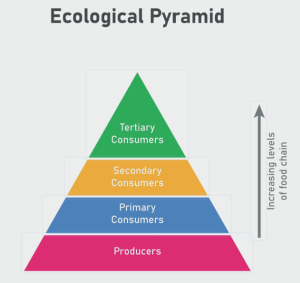
You have three main types to keep track of:
- Pyramid of Numbers: This simply counts the heads. It shows the total number of individual organisms at each level.
- Pyramid of Biomass: This measures the actual weight. It looks at the total mass of living organisms at each stage.
- Pyramid of Energy: This tracks the power supply, showing how much energy moves up from one level to the next.
Here is the catch that examiners love to test you on: energy transfer is incredibly inefficient. Only about 10% of the energy from one level makes it to the next. This is Lindeman’s 10% rule. It explains why food chains are usually pretty short—by the time you reach the top, there is barely any energy left to sustain another level.
Misconceptions About Ecological Pyramids For RPSC Assistant Professor
A common trap many students fall into is thinking these pyramids only apply to land-based ecosystems. That is a myth. You can build an ecological pyramid for pretty much any environment where organisms interact, including lakes, rivers, and oceans.
The real trick lies in the data and the quirks of nature, not the location. For example, in an open ocean, the pyramid of biomass is actually inverted (upside down).
Let’s visualize this: Imagine a massive ocean where tiny phytoplankton reproduce and get eaten at a lightning-fast pace. At any single moment, if you were to weigh all the phytoplankton, their total biomass would be way less than the weight of the whale sharks eating them.
Understanding these little evolutionary twists is exactly what you need to avoid silly mistakes on exam day. These pyramids are versatile tools for looking at feeding relationships and helping with conservation work, as long as you know the exceptions to the rules.
Worked Example: Ecological Pyramids For RPSC Assistant Professor in Exams
Let’s look at a practical problem you might run into during your RPSC exam prep.
Question: In a forest ecosystem, the energy stored in the biomass of trees is 1000 kcal/m²/year. The energy stored in the biomass of herbivores is 10 kcal/m²/year, and that of carnivores is 1 kcal/m²/year. Construct a pyramid of energy for this ecosystem and explain the trend.
Solution: The pyramid of energy is always upright. Why? Because energy is lost as heat at every single step due to metabolic processes like respiration, alongside natural death and decay. You cannot create energy out of nowhere, so the base is always the largest.
Top Carnivores (Secondary Consumers) → 1 \ kcal/m²/year
Herbivores (Primary Consumers) → 10 \text{ kcal/m2/year
Trees (Producers) → 1000 kcal/m²/year
The sharp drop from 1000 to 10 to 1 shows energy loss in action. Questions like this test whether you can apply theoretical concepts to hard numbers under exam pressure.
Ecological Pyramids For RPSC Assistant Professor: Applications and Importance
These charts aren’t just for passing exams; they have massive real-world value in conservation biology and environmental management. Wildlife managers use them to see how human interference—like building a highway or pesticide runoff—messes with the local food web.
However, these pyramids do have limits. They assume standard, neat ecosystems. But nature is rarely neat. They struggle to accurately map out complex food webs or account for omnivores (like humans or bears) that feed at multiple levels at the same time. Even with these limitations, they are still an essential tool for researchers trying to preserve biodiversity.
Ecological Pyramids For RPSC Assistant Professor: Study Tips and Important Subtopics
When you are mapping out your study schedule for Ecological pyramids, don’t try to memorize everything at once. Break the topic down into these core pillars:
- The structural differences between pyramids of number, biomass, and energy.
- Upright vs. inverted pyramid scenarios (e.g., parasitic food chains or marine systems).
- The 10% energy transfer rule and thermodynamic constraints.
- How to read and analyze raw ecological data charts.
A good study hack we recommend at VedPrep is to sketch out quick concept maps. Connect a specific ecosystem (like a pond) directly to its corresponding biomass and number pyramids. Practice with past years’ question papers to see how these concepts are framed in actual exam questions.
Ecological Pyramids For RPSC Assistant Professor: Key Concepts and Relationships
To wrap your head around Ecological pyramids completely, you need to understand the structural layout of trophic levels.
| Trophic Level | Typical Organisms | Role in Ecosystem |
| Base (Level 1) | Plants, Phytoplankton | Primary Producers (Capture sunlight) |
| Level 2 | Deer, Zooplankton, Insects | Primary Consumers (Herbivores) |
| Level 3 | Frogs, Small Fish, Foxes | Secondary Consumers (Carnivores) |
| Top (Level 4) | Lions, Eagles, Orcas | Tertiary Consumers (Apex Predators) |
These levels show how nutrients and energy cycle through nature. While taxonomic or functional overlaps can complicate things, mastering this basic framework gives you the foundation you need to handle any twist an examiner throws at you.
Ecological Pyramids For RPSC Assistant Professor and Exam Preparation
Preparing for the RPSC Assistant Professor exam requires an analytical mindset. You won’t just face direct definitions; you will need to apply your knowledge to real-world ecological issues, like tracking how pollution builds up across levels or how habitat loss shrinks the predator population at the top.
Our team at VedPrep has put together a quick-reference summary table to keep these distinct structures clear in your mind during last-minute revisions:
| Type of Pyramid | What it Tracks | Can it be Inverted? |
| Pyramid of Numbers | Population count at each level | Yes (e.g., a single tree supporting thousands of insects) |
| Pyramid of Biomass | Total dry weight of living matter | Yes (e.g., phytoplankton and whale populations in marine systems) |
| Pyramid of Energy | Total energy flow over time | No. Always upright due to the laws of thermodynamics. |
Ecological Pyramids For RPSC Assistant Professor: Case Studies
Looking at actual Ecological pyramids case studies can make these concepts stick much better than dry theory.
Take the Serengeti grassland ecosystem. Researchers have built massive pyramids of numbers and biomass there to map out the balance between vast fields of grass, millions of herbivores like wildebeests, and top predators like lions. It helps conservationists see if the predator-prey ratio is staying healthy.
At VedPrep, we often use these real-world examples in our study modules to show how human activities distort these shapes. For instance:
- Forest Logging: Cutting down primary timber completely alters the pyramid of numbers, instantly shrinking the base and causing a crash in higher trophic levels.
- Aquatic Runoff: Industrial pollution can destroy sensitive fish populations, creating an unnatural bottleneck in the energy pyramid.
Using these kinds of case studies in your prep turns abstract concepts into clear, logical ideas, helping you walk into your exam with total confidence.
Final Thoughts
When you are diving into the core concepts of Ecological pyramids, standard textbooks are your best friends. Eugene P. Odum’s Ecology and Charles J. Krebs’ Ecology and Evolution are the gold standards. They give you a deep, no-nonsense look at ecological principles, breaking down how numbers, biomass, and energy shift across trophic levels.
Since this topic pops up across multiple competitive exams like CSIR NET, IIT JAM, CUET PG, and GATE, getting a solid grip on it gives you a massive advantage. At VedPrep, we always tell aspirants that being able to analyze and interpret this data quickly is what sets the top scorers apart.
To know more in detail from our faculty, watch our YouTube video:
Frequently Asked Questions
What are the types of ecological pyramids?
There are three main types of ecological pyramids: pyramid of numbers, pyramid of biomass, and pyramid of energy, each representing a different aspect of ecosystem structure and function.
What is the pyramid of numbers?
The pyramid of numbers represents the number of individuals at each trophic level in an ecosystem, often showing a decrease in numbers from producers to top consumers.
What is the pyramid of biomass?
The pyramid of biomass represents the total mass of living matter at each trophic level, often showing a decrease in biomass from producers to top consumers.
What is the pyramid of energy?
The pyramid of energy represents the amount of energy transferred from one trophic level to the next, with energy decreasing at each level due to the second law of thermodynamics.
What is ecology?
Ecology is the study of the relationships between living organisms and their environment, including other organisms and physical factors.
What is the importance of ecological pyramids in ecology?
Ecological pyramids are important tools in ecology for understanding ecosystem structure and function, and for analyzing the relationships between different components of an ecosystem.
How do ecological pyramids relate to food webs?
Ecological pyramids can be used to understand the relationships between food webs and ecosystem structure, including the flow of energy and nutrients through ecosystems.
How are ecological pyramids used in exams?
Ecological pyramids are often used in exams to test understanding of ecosystem structure and function, as well as to assess ability to analyze and interpret data.
What are some common exam questions on ecological pyramids?
Common exam questions on ecological pyramids include identifying types of pyramids, interpreting pyramid diagrams, and explaining the relationships between different trophic levels.
How can ecological pyramids be used to assess ecosystem health?
Ecological pyramids can be used to assess ecosystem health by analyzing changes in ecosystem structure and function over time, and by identifying potential stressors or disturbances.
What are some best practices for interpreting ecological pyramids?
Best practices for interpreting ecological pyramids include carefully labeling components, analyzing changes in ecosystem structure over time, and considering the limitations and assumptions of pyramid representations.
What are some common mistakes when drawing ecological pyramids?
Common mistakes when drawing ecological pyramids include incorrect representation of trophic levels, failure to show energy flow or biomass transfer, and inaccurate labeling of components.
What is the relationship between ecological pyramids and ecosystem services?
Ecological pyramids can be used to understand the relationships between ecosystem structure and ecosystem services, such as carbon sequestration, nutrient cycling, and biodiversity conservation.
How do ecological pyramids relate to ecological stability?
Ecological pyramids can be used to understand the relationships between ecosystem structure and ecological stability, including the resilience of ecosystems to disturbances and changes.