
Preparing for the RPSC Assistant Professor exam can feel like a marathon, especially when you’re diving deep into the molecular world. If you’re targeting biochemistry, two proteins will constantly cross your path: Hemoglobin and Myoglobin. These aren’t just dry textbook topics—they are the literal life-support systems keeping our tissues alive. Whether you’re balancing your prep with regular college lectures or studying full-time, getting a rock-solid grip on these molecules will give you a massive advantage in competitive exams like CSIR NET, IIT JAM, and CUET PG.
Syllabus: RPSC Assistant Professor Exam Syllabus
The topic of hemoglobin and myoglobin falls squarely under the Biochemistry unit of the RPSC Assistant Professor exam syllabus.
To really master Hemoglobin and Myoglobin, we recommend picking up standard, trusted textbooks. Lehninger Principles of Biochemistry by David L. Nelson and Michael M. Cox is fantastic for visualizing structural transitions. For a deeper look at cellular context, Biochemistry by Bruce Alberts et al. is an absolute gold mine.
The core areas such as Hemoglobin and Myoglobin you need to watch out for include protein architecture, how enzymes speed up reactions (kinetics), and how cells process energy (metabolic pathways). Crack these open early in your study cycle because a deep understanding here is what separates top rankers from the rest in RPSC, CSIR NET, and IIT JAM.
Overview: Hemoglobin and Myoglobin For RPSC Assistant Professor
Let’s break down Hemoglobin and Myoglobin. Hemoglobin and Myoglobin are red-colored proteins responsible for managing oxygen, but they have completely different day jobs.
- Hemoglobin (Hb) is your body’s long-distance delivery network. It lives inside your red blood cells and carries oxygen all the way from your lungs to distant tissues. It’s a team player, built from four separate protein chains (globins)—specifically, two alpha (α) chains and two beta (β) chains. Each chain holds onto a specialized chemical ring called a heme group, which features a central iron atom that acts as the magnet for oxygen.
- Myoglobin (Mb), on the other hand, is a solo operator. Found tucked away inside muscle tissues, its main job is to stockpile oxygen so your muscles don’t run out of breath during a heavy workout. Structurally, it’s just a single polypeptide chain wrapped around a single heme group. Because it doesn’t have to share the load, myoglobin holds onto oxygen with a much tighter grip than hemoglobin.
The magic behind Hemoglobin and Myoglobin comes down to that iron-rich heme group. But because hemoglobin is a four-part team, it behaves uniquely. When one oxygen molecule binds to the first heme group, it causes a structural shift that makes it way easier for the next three oxygens to snap into place. We call this cooperativity. Myoglobin, being a lone wolf with only one heme group, doesn’t do teamwork—it simply binds oxygen in a straightforward, all-or-nothing fashion.
Hemoglobin and Myoglobin For RPSC Assistant Professor Exam Preparation
Let’s clear up a classic trap that examiners love to set. Many students mistakenly assume that myoglobin shows cooperative binding just because hemoglobin does. We see this confusion pop up all the time when grading practice tests at VedPrep. Let’s set the record straight: myoglobin does not have cooperativity. As per Hemoglobin and Myoglobin, cooperativity requires communication between different subunits. Since myoglobin is a single-chain protein with nowhere to pass the message, it can’t exhibit cooperative behavior. It’s a multi-subunit luxury reserved for tetrameric proteins like hemoglobin.
When you’re designing your study notes, remember that hemoglobin isn’t a one-size-fits-all molecule. It comes in a few variations:
- Adult Hemoglobin (HbA): The standard version (α₂β₂) running through your veins right now.
- Fetal Hemoglobin (HbF): Found in developing babies, built with two alpha and two gamma (γ) chains, giving it a much stronger pull for oxygen so it can steal it from the mother’s blood.
- Hemoglobin A2 (HbA2): A minor adult variant made of alpha and delta (δ) chains.
Myoglobin doesn’t have these wild structural variations; it stays consistent in muscle tissues. However, it does have huge clinical importance. For instance, if a patient suffers severe muscle trauma—a condition called rhabdomyolysis—damaged muscle cells burst and leak myoglobin into the bloodstream. This leads to myoglobinuria (myoglobin escaping into the urine), which can severely stress the kidneys.
Here is a quick snapshot to keep these core differences clear in your mind:
| Characteristics | Hemoglobin | Myoglobin |
| Structure | Tetrameric (4 subunits) | Monomeric (1 subunit) |
| Location | Red Blood Cells (RBCs) | Muscle Tissues (Heart & Skeletal) |
| Function | Oxygen Transport | Oxygen Storage |
| Binding Curve | Sigmoidal (S-shaped) | Hyperbolic |
Keeping these distinctions razor-sharp is your ticket to scoring high marks from Hemoglobin and Myoglobin.
Myoglobin: A Storage Site for O₂ in Heart and Skeletal Muscles For RPSC Assistant Professor
To grasp how myoglobin operates in our heart and skeletal muscles, let’s look at a fictional, hypothetical scenario.
A Quick Analogy
Imagine a high-end restaurant kitchen. The main water line supplies the kitchen continuously, but the head chef keeps a heavy, 10-gallon emergency water barrel right next to the stove. If the main line pressure drops during the frantic dinner rush, the chef doesn’t panic—they just open the tap on the barrel to keep cooking without a pause.
In this imaginary setup, myoglobin is that emergency water barrel. It sequesters oxygen from passing blood capillaries and hoards it tightly inside the muscle cell. Because its structural pocket holds oxygen so firmly, myoglobin refuses to let go under normal, restful conditions. But the moment you sprint for a bus or lift heavy weights, local oxygen levels plunge, and myoglobin immediately releases its stash to keep your cells from switching to painful anaerobic metabolism.
When researchers plot this behavior on a graph, they get a hyperbolic curve. This math tells us that myoglobin grabs oxygen incredibly fast even at very low partial pressures, making it the perfect local storage vault for hardworking tissues.
Hemoglobin: A Transport Molecule for O₂ in RBCs For Hemoglobin and Myoglobin For RPSC Assistant Professor
If myoglobin is the stationary storage vault, hemoglobin is the fleet of armored delivery trucks moving through heavy traffic. Its four-subunit structure (the pair of αβ dimers) is engineered for efficient loading and unloading.
Let’s scale down to the lungs. Here, the partial pressure of oxygen is high. Hemoglobin opens up its structure—shifting from a tight, low-affinity state (T-state) to a relaxed, high-affinity state (R-state). It snaps up four oxygen molecules to become oxyhemoglobin and sets off on its journey through the circulatory system.
When those delivery trucks reach the deep, hard-working tissues where oxygen levels are low, the reverse happens. As per Hemoglobin and Myoglobin, the oxygen drops off, the protein shifts back to its tense structure, and it heads back to the lungs for another round. Without this elegant, dynamic flipping mechanism, your tissues would suffocate because a simple protein would either hold oxygen too tightly or drop it off too early.
Worked Example: Hemoglobin and Myoglobin For RPSC Assistant Professor
Because biochemistry exams love numerical problems that test your conceptual depth, let’s walk through a practical calculation using the standard binding equation.
A sample of myoglobin has an oxygen-binding constant (K) of 105 M⁻¹. If the total concentration of myoglobin is 10⁻⁴ M, what fraction of myoglobin will be bound to oxygen when the free oxygen ligand concentration [L] is 10⁻³ M?
To find the bound fraction (θ), we use the standard binding isotherm equation:
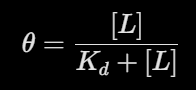
Where:
- [L] is the ligand (oxygen) concentration (10⁻³ M).
- Kd is the dissociation constant, which is simply the inverse of the binding constant (K).
Step 1: Calculate Kd
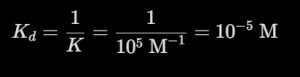
Step 2: Substitute the values into the fraction equation
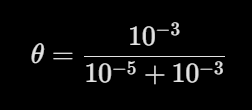
To make the math simple, let’s factor out the terms:

Under these specific conditions, approximately 99% of the myoglobin molecules are saturated with oxygen. Notice that the total concentration of the protein (10⁻⁴ M) didn’t even enter the equation—the binding fraction depends purely on the ligand concentration and the protein’s affinity!
Bohr Effect and Oxygen Dissociation Curves For Hemoglobin and Myoglobin For RPSC Assistant Professor
The Bohr effect is one of nature’s smartest regulatory designs. As per Hemoglobin and Myoglobin, it explains how hemoglobin alters its shape depending on the chemical environment of the blood. When your tissues work hard, they generate carbon dioxide (CO₂) and lactic acid. This extra acid drops the local blood pH.
Hemoglobin responds to this acidic environment by reducing its grip on oxygen. Protons bind to specific amino acids on the protein, stabilizing the structural “T-state” and forcing it to drop its oxygen cargo right where it’s needed most.
High Metabolic Activity ➔ More CO₂ & Low pH ➔ Hb Drops Oxygen Easily (Right Shift)
When you look at this on an oxygen dissociation curve, it explains the famous sigmoidal (S-shaped) curve of hemoglobin:
- The Right Shift: Increased temperature, higher CO₂, and lower pH shift the curve to the right. This means hemoglobin has a lower affinity for oxygen and unloads it easily.
- The Left Shift: Lower temperatures and higher pH shift the curve to the left, meaning hemoglobin holds onto oxygen tightly (which happens in the lungs).
When you’re studying for the RPSC exam, don’t just memorize which way the curve shifts. Visualize why it shifts. Understanding the chemistry behind the inflection points will help you breeze through tricky, experimental questions.
Example: Hemoglobin and Myoglobin For RPSC Assistant Professor
When you transition from pure biochemistry theory to the medical world, the roles of these molecules become even more fascinating. Doctors rely heavily on these structural properties for daily diagnostics:
- Anemia: Low hemoglobin counts or faulty red blood cells directly impair the body’s long-distance oxygen transport line, leaving patients fatigued and short of breath.
- Myocardial Infarction (Heart Attack): When heart muscle cells are starved of blood, they become damaged and leak their internal contents. Because myoglobin is small and highly concentrated in the heart, detecting elevated myoglobin levels in the blood is one of the earliest emergency markers for a heart attack.
When studying at VedPrep, we always recommend practicing with case-study questions. Try connecting a protein’s structural defect directly to its real-world symptoms—it makes the facts stick infinitely better than raw memorization.
Study Tips and Important Subtopics for RPSC Assistant Professor Exams For Hemoglobin and Myoglobin
As you streamline your revision schedule, make sure you don’t map out your study time evenly across every single page of your textbook. Prioritize the high-yield subtopics that examiners return to year after year:
- The structural transitions between the T (Tense) and R (Relaxed) states of hemoglobin.
- The exact role of 2,3-BPG in stabilizing the T-state and modifying oxygen affinity.
- Comparative binding kinetics—be ready to compare hyperbolic vs. sigmoidal curves seamlessly.
- The coordinate chemistry of the iron atom within the porphyrin ring before and after oxygenation.
A great way to lock these concepts of Hemoglobin and Myoglobin is to sketch out active concept maps. Draw the hemoglobin molecule in the center and connect it visually to variables like pH, CO₂, and fetal development. To give your preparation an extra edge, feel free to explore the free lecture videos and mock tests curated by our team at VedPrep.
Final Thoughts
Mastering the structural and functional nuances of Hemoglobin and Myoglobin is more than just checking off a box on the RPSC Assistant Professor syllabus—it is about building the conceptual depth required of a future educator. The beauty of these biomolecules lies in how tiny, molecular shifts directly dictate complex physiological outcomes, from the way your muscles store emergency energy to how your blood adapts to chemical changes during a workout. As you continue your preparation, keep focusing on the structural “why” behind every curve and equation rather than relying on raw memorization.
To know more in detail from our faculty, watch our YouTube video:
Frequently Asked Questions
What is myoglobin and where is it found?
Myoglobin is a protein found in muscles that stores oxygen for use during intense, short-duration activities. It is particularly abundant in skeletal and cardiac muscle.
What is the structure of hemoglobin and myoglobin?
Both hemoglobin and myoglobin are globular proteins. Hemoglobin is a tetrameric protein composed of four polypeptide chains, while myoglobin is a monomeric protein with a single polypeptide chain. Both contain a heme group.
What is the role of the heme group in hemoglobin and myoglobin?
The heme group in both hemoglobin and myoglobin is responsible for binding oxygen. It contains an iron ion that can coordinate with oxygen, allowing the proteins to transport or store oxygen.
How do hemoglobin and myoglobin differ in their oxygen-binding properties?
Hemoglobin exhibits cooperative oxygen binding, meaning its affinity for oxygen increases as it binds more oxygen molecules. Myoglobin, on the other hand, has a non-cooperative, hyperbolic oxygen-binding curve, indicating a constant affinity for oxygen.
How are hemoglobin and myoglobin related to bioinorganic chemistry?
Hemoglobin and myoglobin are key subjects in bioinorganic chemistry due to their role in oxygen transport and storage, which involves the coordination chemistry of the heme group's iron ion.
How does the structure of hemoglobin facilitate its cooperative oxygen-binding behavior?
The quaternary structure of hemoglobin, composed of four subunits, allows for cooperative oxygen binding. The binding of oxygen to one subunit influences the oxygen-binding affinity of the other subunits.
How can questions about hemoglobin and myoglobin be applied in RPSC Assistant Professor exams?
Questions about hemoglobin and myoglobin can test a candidate's understanding of biochemistry, physiology, and bioinorganic chemistry, which are relevant to teaching and research positions in biological sciences.
What type of questions about hemoglobin and myoglobin can be expected in inorganic and analytical chemistry contexts?
In inorganic and analytical chemistry contexts, questions might focus on the chemical structure, the role of the heme group, and methods for analyzing hemoglobin and myoglobin levels or functions.
What are some potential research topics related to hemoglobin and myoglobin for an Assistant Professor in Biochemistry?
Research topics could include investigating the effects of environmental factors on hemoglobin and myoglobin function, developing new methods for their analysis, or exploring their roles in disease mechanisms.
What are common misconceptions about the functions of hemoglobin and myoglobin?
A common misconception is that hemoglobin and myoglobin serve the same function; while both are involved in oxygen handling, they operate at different levels (transport vs. storage) and have different structures.
How can one avoid confusing the cooperative and non-cooperative binding properties of hemoglobin and myoglobin?
Understanding the physiological roles and structural differences between hemoglobin and myoglobin can help. Hemoglobin's cooperative binding allows for efficient oxygen release to tissues, whereas myoglobin's non-cooperative binding suits its storage role.
What is a common mistake made when interpreting the results of hemoglobin and myoglobin assays?
A common mistake is failing to account for factors that can influence assay results, such as sample handling, storage conditions, and the presence of interfering substances.
What are some advanced topics related to hemoglobin and myoglobin in bioinorganic chemistry?
Advanced topics include the detailed mechanism of oxygen binding, the role of mutations in altering protein function, and the application of inorganic chemistry principles to understand and manipulate these proteins.
How do recent studies on hemoglobin and myoglobin contribute to our understanding of human health and disease?
Recent studies have shed light on the implications of hemoglobin and myoglobin in various diseases, such as cardiovascular diseases and muscle disorders, and have explored their potential as therapeutic targets.