
If you are eyeing that RPSC Assistant Professor post, you already know that Unit 7 (Ethology) of the syllabus is a major deal. It directly aligns with the CSIR NET/NTA framework, focusing heavily on how animals behave, talk to each other, and organize their societies. To get a rock-solid grip on these topics, standard books like Principles of Zoology by Cleveland P. Hickman et al. and Zoology by Eldridge B. Johnson et al. are your best bets. Here at VedPrep, we always tell our students that mastering the intricacies of social life in insects is one of those high-yield areas that can really boost your score in the competitive exam.
Social life in insects For RPSC Assistant Professor: An Introduction
Think about human cities for a second. We have builders, farmers, leaders, and doctors, all working together so the city runs smoothly. Social insects figured out this lifestyle millions of years before we did. They live in highly organized colonies where everyone has a specific job, they raise their young together, and they talk to each other constantly.
When studying social life in insects, you will notice a strict hierarchy. Usually, a single queen runs the show, focusing entirely on laying eggs to keep the colony growing. The rest of the colony is divided into different “castes”—groups of insects that look and act differently based on their designated duties.
You will find these fascinating setups in bees (Apidae), ants (Formicidae), wasps (Vespidae), and termites (Isoptera). Their social setups run from basic group living to mind-bogglingly complex societies. The golden standard here is eusociality. This is just a fancy scientific word for a ultimate team-player society where individuals sacrifice their own chance to have babies to help the collective group survive. It is the ultimate evolutionary strategy.
Social life in insects For RPSC Assistant Professor: Types
Let’s look at how different insect orders handle their daily lives to understand Social life in insects.
Take the order Isoptera (termites), for example. They are absolute masters of structure. A termite colony has a strict caste system with workers, soldiers, and a queen. Everyone knows their place, which keeps the colony running like a well-oiled machine.
Then we have Hymenoptera, which includes your bees, wasps, and ants. If you have ever watched an ant trail on your porch, you have seen their incredible communication in action. They use complex chemical signals to tell their nestmates where the good food is.
Even in the order Hemiptera, some aphids show basic social tendencies. They crowd together on plants and use chemical alarms to warn each other of danger. Some even show polymorphism, meaning they physically develop different body shapes to handle different chores. At VedPrep, we recommend keeping these specific orders at the top of your mind, because exam examiners love testing you on these structural variations.
Caste Systems in Social Insects: Termites, Bees, Wasps, and Ants
To really understand the social life in insects, we need to look closer at the caste system. In the insect world, your physical body matches your job description.
- Termites: Their soldiers have massive heads and giant jaws designed purely for combat. On the flip side, the workers are smaller, focusing on building tunnels and feeding the young. The queen grows to a massive size, turning into a literal egg-laying factory.
- Bees: Honeybee hives are a classic exam favorite. You have the female workers doing all the heavy lifting (foraging, cleaning, nursing), the male drones whose only job is to mate with a queen, and the queen herself, who keeps the hive populated.
- Ants and Wasps: Ants take this a step further with major and minor workers. Think of major workers as the heavy-lifters or guards, while minor workers handle the delicate indoor tasks.
To make this crystal clear, let’s imagine a fictional scenario. Picture a tiny, miniature corporate office inside an anthill. The “CEO” (the queen) stays in the back office, signing off on new population growth. The “Security Team” (major workers) stands at the entrance wearing heavy armor, while the “Logistics and HR Team” (minor workers) runs around organizing the breakroom and checking on the nursery. If the security team runs out of supplies, they don’t complain; they rely on logistics to feed them. This extreme teamwork is exactly what makes social life in insects such a successful survival strategy.
Worked Example: Social Insects and Pheromones
Let’s look at a typical problem you might encounter in your preparon while covering social life in insects.
Question: A forager ant of the species Lasius niger returns to its nest and performs a complex dance, which triggers the release of a pheromone trail. This trail helps recruit 20 additional ants to follow the same path to a food source. If each recruited ant has a 0.5 probability of laying down the same pheromone trail on its return, what is the expected number of ants that will reinforce the pheromone trail?
Let’s break it down:
Don’t let the biology context trick you; this is a straightforward probability question at its core. As per the social life in insects, we can solve this easily by using the expected value formula from statistics:
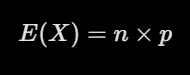
Where:
- n = number of trials (the 20 newly recruited ants)
- p = probability of success for each ant (0.5)
Let’s plug in the numbers:
E(X) = 20 × 0.5 = 10
Answer: The expected number of ants that will reinforce the trail is 10.
Final Thoughts
Preparing for the RPSC Assistant Professor exam can feel like an absolute marathon, but breaking down complex behavioral patterns into simple, real-world analogies makes all the difference. At VedPrep, we believe that mastering the nuances of social life in insects isn’t just about memorizing facts—it’s about understanding how evolutionary pressures shape incredible teamwork and survival strategies in the natural world.
To learn more in detail from our faculty, watch our YouTube video:
Frequently Asked Questions
What are the characteristics of social insects?
Social insects exhibit characteristics such as cooperative breeding, division of labor, and communication. They often live in complex societies with distinct castes, like workers, soldiers, and queens.
How do insects communicate?
Insects communicate through various methods, including chemical signals (pheromones), sound (stridulation), and visual cues. These signals help coordinate behavior, warn of threats, and attract mates.
What is the role of pheromones in insect social life?
Pheromones are chemical signals that convey information between insects. They play a crucial role in marking trails, alerting to danger, and regulating social behavior, such as attracting mates or marking territory.
What are some examples of social insects?
Examples of social insects include bees (e.g., honeybees), wasps (e.g., paper wasps), ants (e.g., army ants), termites, and certain beetles (e.g., dung beetles).
How do social insects organize their colonies?
Social insects organize their colonies into complex societies with distinct castes, such as workers, soldiers, and queens. Each caste has specific roles and responsibilities, ensuring colony survival and efficiency.
What is the significance of social life in insects?
Social life in insects is significant because it allows for cooperative breeding, efficient foraging, and enhanced defense against predators. This social organization is crucial for the survival and success of many insect species.
What is the difference between Non-Chordata and Chordata?
Non-Chordata and Chordata are two distinct phyla in animal taxonomy. Non-Chordata, also known as invertebrates, lack a notochord (precursor to a spinal cord), while Chordata, which includes vertebrates, possess a notochord at some stage in their development.
How does taxonomy relate to social life in insects?
Taxonomy is essential for understanding social life in insects, as it provides a framework for classifying and understanding the relationships among different insect species. Social insects belong to various taxonomic groups, including Hymenoptera (ants, bees, wasps) and Isoptera (termites).
What is the significance of Taxonomy: Non-Chordata?
Taxonomy: Non-Chordata is significant because it encompasses a vast group of animals, including insects, that lack a notochord. Understanding the taxonomy of non-chordates, including insects, is crucial for studying their evolution, diversity, and social behavior.
How do social insects fit into the phylum Arthropoda?
Social insects, such as bees, ants, and termites, belong to the phylum Arthropoda, which also includes other invertebrates like crustaceans and arachnids. Arthropods are characterized by their jointed limbs and exoskeletons.
What are some key characteristics of Non-Chordata?
Non-Chordata, or invertebrates, exhibit a range of characteristics, including the absence of a notochord, often a segmented body, and a variety of body plans. This group includes insects, crustaceans, arachnids, and more.
How does social life in insects relate to RPSC Assistant Professor exams?
Understanding social life in insects is essential for RPSC Assistant Professor exams, as it relates to topics in zoology, entomology, and ecology. Questions may focus on insect behavior, ecology, and evolution.
What are some common exam questions on social insects?
Common exam questions on social insects may include: 'Describe the social structure of a bee colony,' 'Explain the role of pheromones in insect communication,' or 'Compare and contrast the social behavior of ants and termites.'
What are some recent advances in the study of social life in insects?
Recent advances in the study of social life in insects include the discovery of new social insect species, advances in understanding insect communication and cooperation, and the application of genomic and bioinformatics tools to study insect social evolution.